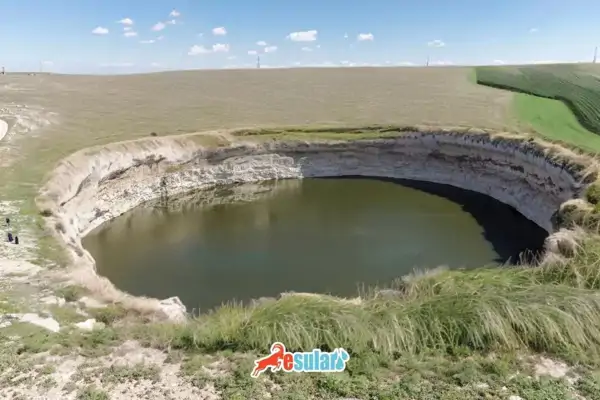
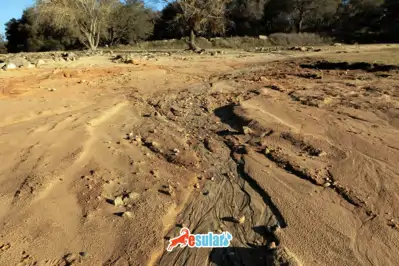
Sinkholes are large and deep natural pits formed as a result of the erosion of underground karstic rocks by water. These pits, which have started to be seen frequently in agricultural lands in recent years, cause sudden losses and concern. Especially the excessive use of groundwater and incorrect irrigation techniques accelerate the formation of these depressions. Farmers face the risk of experiencing serious losses due to these deep pits that may suddenly occur in their fields, and this situation negatively affects agricultural activities. The increase in sinkholes causes fear and panic as well as the decrease of arable lands. In this article, we will talk about the formation and causes of sinkholes.
What is a Sinkhole?
A sinkhole is a pit formed by sudden collapses as a result of the expansion of underground cavities over time and the surface becoming unable to carry these cavities. These pits usually occur in karstic terrains where the potential of water to dissolve rocks is high. Sinkholes generally appear on the surface in the form of sudden and large depressions and can sometimes be hundreds of meters wide and deep. The formation of sinkholes begins with the chemical erosion of underground rocks by water. Eroded rocks create large cavities underground. Over time, these cavities become unable to support the soil on the surface and sudden collapses occur. Sinkholes can be a result of both natural erosion processes and human impacts. While they occur naturally in karstic regions, human impacts such as unconscious groundwater use, mining activities, and unplanned construction can also accelerate sinkhole formation. For more detailed information about the effects of sinkhole formation on agriculture, you can visit our article: https://esular.com/obruk-olusumu-ve-kuraklik-tarimin-surdurulebilir-gelecegini-nasil-etkiliyor
Why Does a Sinkhole Form?
Groundwater chemically dissolves soluble rocks like limestone, and cavities form with erosion. These cavities grow over time and become unable to carry the surface.
The biggest factor in the formation of sinkholes is excessive water use, unconscious irrigation in agricultural lands, or sudden changes in water levels. This situation reduces the strength of the underground layer, leading to sinkhole formation.
Erosions lead to the erosion of underground rocks and the formation of large cavities.
Mining activities accelerate sinkhole formation by leading to the weakening of the rock structure and the expansion of underground cavities.
Unplanned structures and infrastructure projects cannot support underground cavities, and sudden collapses occur.
Changes in natural water flows contribute to the weakening of rocks and the formation of cavities.
The chemical reaction of underground rocks with water and their dissolution causes the growth of cavities and the formation of sinkholes.
Earthquakes are another factor in the formation of sinkholes. Movements and vibrations occurring in the earth's crust prepare the ground for the collapse of weak structures. Especially large earthquakes can cause changes in groundwater levels and the breaking of underground rocks.
Can Sinkhole Formation Be Prevented?
Climatic, volcanic, and tectonic factors affecting sinkhole formation cannot be prevented, but this risk can be reduced by paying attention to human-induced factors. Some measures that can be taken to prevent sinkhole formation are as follows;
Excessive groundwater use is one of the main causes of sinkhole formation. Controlling excessive water extraction for agricultural irrigation and industry can prevent the formation of underground cavities.
To protect the groundwater level, water management strategies should be developed and sustainable use of water should be ensured. Irrigation should be carried out in the most efficient way with modern techniques. You can contact us to get information about our water management and agricultural solutions.
In risky areas, geotechnical and geophysical investigations should be carried out to detect the underground structure and cavities.
Careful planning of residential and agricultural areas in regions carrying sinkhole risk can prevent the formation of large depressions. The construction of heavy structures should be limited in risky areas.