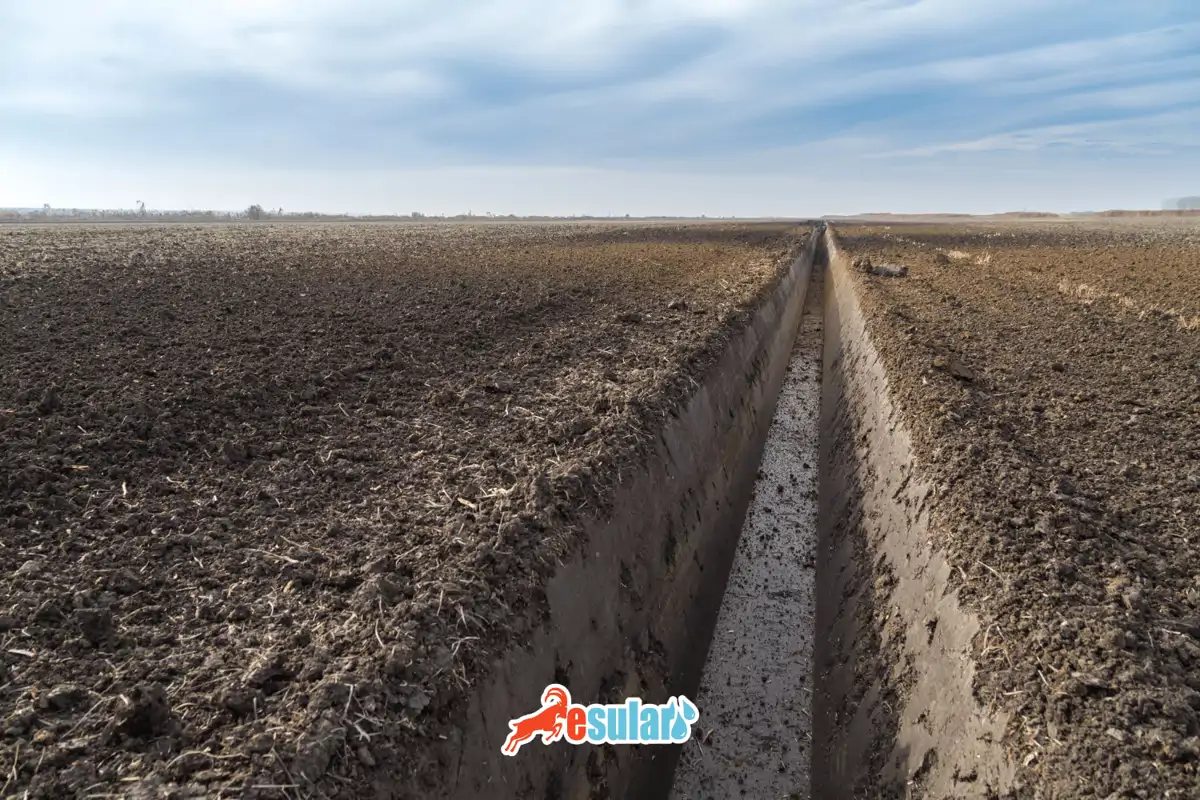
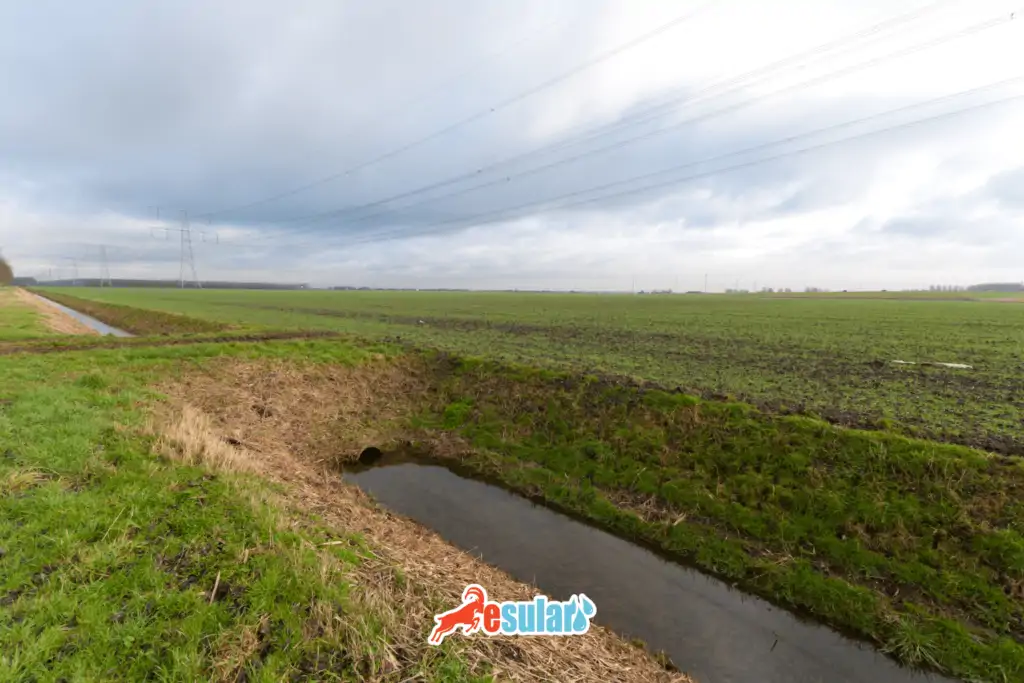
Drainage is the process of effectively removing water from a specific area. Drainage systems, generally used in agricultural areas, construction sites, and gardens, ensure the discharge of excess water accumulated in the soil. This aims to ensure that plant roots are not exposed to excessive water and to improve the soil structure. Drainage systems increase plant health and productivity by preventing water puddles caused by precipitation or irrigation. At the same time, drainage used in construction projects protects the foundations of buildings from water damage and prevents soil erosion. Drainage offers a useful solution in various areas by controlling unwanted water accumulation.
Agricultural Drainage
Drainage is the process of discharging and removing excess liquid from an environment. It is also synonymous with the term drying. In agricultural areas, the term used instead of liquid is water, and drainage replaces drying. However, when agriculture is concerned, the goal is not the complete removal of water, but the provision of a suitable environment for the plants to grow in the best way. Agricultural drainage refers to the process of removing excess water in agricultural areas with appropriate techniques without causing crop losses, negative effects on the soil, and without harming the environment. Simply removing excess water from the soil does not fully define agricultural drainage. Therefore, within the framework of sustainable agriculture principles,in addition to the aim of preventing soil salinization, all the engineering structures and cultural measures taken to provide the appropriatesoil-water and salt balancewhere the grown plants will not experience water stress are called agricultural drainage.
Expectations from Drainage
The general expectations from drainage can be summarized as follows:
A.To regulate the groundwater table level and groundwater flow in areas with high groundwater table levels,
To control or prevent water flow to wet areas,
To regulate the effect of artesianic pressures,
To remove surface waters,
To improve the soil and the environment by controlling the water table level in irrigated areas or areas where excess water is discharged, to support plant root development and vegetative growth, to provide land traffic during sowing, planting, and harvesting processes, and to improve water quality.
B.To remove excess water from construction surroundings, roads, playgrounds, and other physical development areas.
C.To prevent risks to health by regulating and controlling water levels, and to prevent health problems by keeping areas such as pesticide residues and mosquito breeding sites under control.
Excess water can accumulate both on the soil surface and underground. Irregularities of the land surface, bumps, or insufficient leveling can cause water to accumulate on the surface. The water mass, which cannot seep deep due to the effect of gravity, moves in different directions within the soil. These waters generally accumulate at the lowest points of flat lands, causing the water level to rise. Waters that seep into the soil as a result of irrigation and precipitation can accumulate on an impermeable layer, fill the soil pores, and rise to the soil surface. The upper limit of this water mass represents the groundwater table level.
Benefits of Drainage
Excess water completely fills the soil pores, disrupting the air and water balance in the soil. Prolonged anaerobic conditions can cause negative changes in the soil structure and adversely affect plant development. If high groundwater enters the plant root zone and remains for a long time, various negative effects occur on the soil and the plant. Therefore, the excess water in the root zone must be removed or drained in an appropriate time and in an appropriate manner. Appropriate time refers to a duration shorter than the occurrence of the effects of excess water that cause negativities in the soil and agricultural production. Appropriate removal defines the drainage system. In general, areas with drainage problems are coastal plains, river valleys, inland plains where precipitation is higher than evapotranspiration, and arid areas where secondary salinization and waterlogging occur due to poor water management. Artificial drainage to be established in these regions offers an appropriate and cost-effective solution. The general objectives and expected effects intended to be achieved with the establishment of these systems are listed below.As part of agricultural water management, it is aimed to increase plant yield and maintain soil fertility. These goals of agricultural drainage are as follows:
Removal of excess water from both the surface and underground,
Removal of soluble salts together with excess water in the soil profile,
Keeping the groundwater level at the desired level.
In saline areas with high water tables:
To control the water table and soil salinity at the desired level,
To maintain productivity in areas that are submerged and salinized.
Under special conditions, drainage systems provide these advantages:
Ease of machinery entering the field for field work and longer working days,
Increased variety of crops grown every year,
Ability to grow more crops,
Ability to grow high-value plants.
Secondary advantages of drainage systems are:
Lowering groundwater levels provides healthier and cleaner water to those living in residential areas.
Removal of stagnant water reduces the causes of many diseases by eliminating the habitats of mosquitoes and pests.
Removal of surface water and high groundwater facilitates entry to the land and increases the duration of agricultural work.
Improvement of environmental conditions; a lower groundwater table and reduced salinity prevent the deterioration of environmental conditions.
Effects of Excess Water
Excess water, namely high groundwater, is a problem that causes a series of negative effects in agricultural areas. High groundwater requires the installation of drainage systems, especially in rainy regions, to reduce the effects of excess water. At the same time, the expansion of irrigation areas and the increase in secondary salinization have made drainage mandatory in irrigated agricultural regions as well.
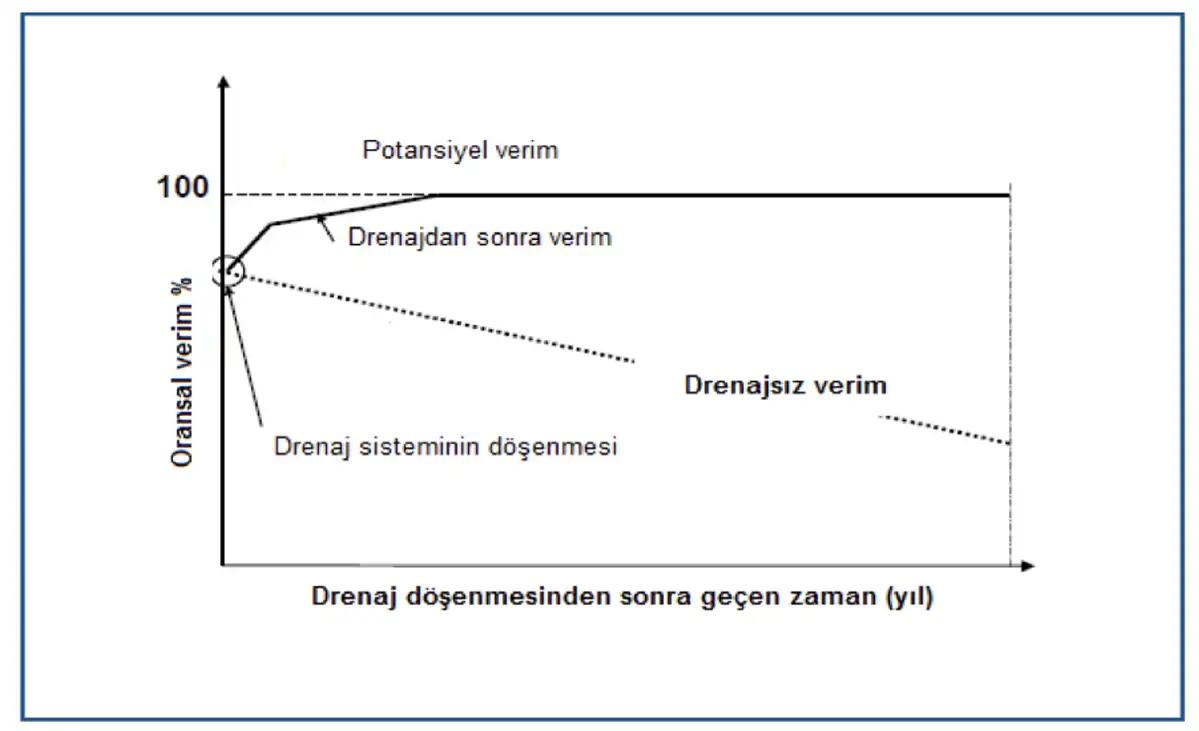
Figure 1: Effect of drainage on yield
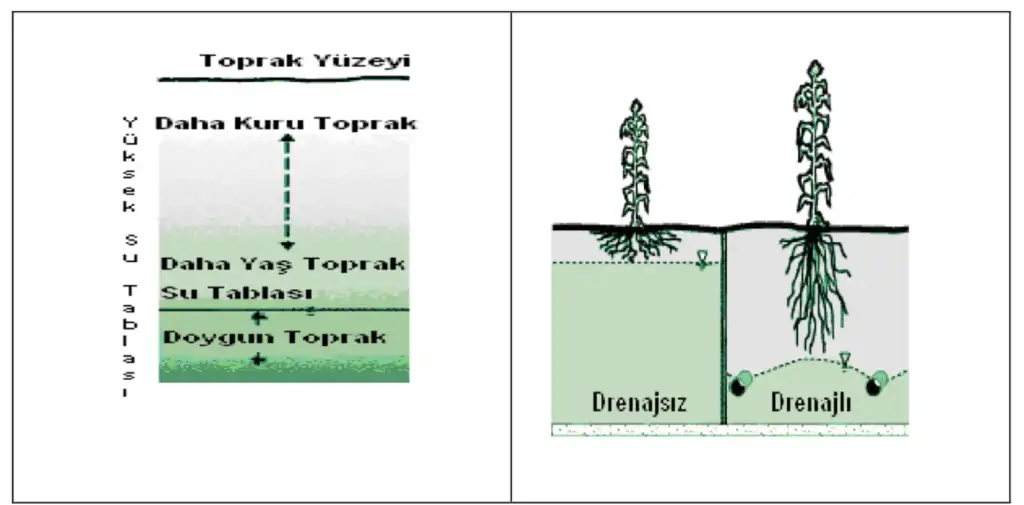
Direct effects lead to a series of negative situations in agricultural areas. These situations include the prevention of vehicle traffic or agricultural operations on the land, the late arrival of soils to tilth, the difficulty of tillage and agricultural activities, the delay of sowing time, the limitation of the plant root zone due to high groundwater table level, and the damage to plant roots remaining in water due to lack of air. As a result of these effects, decreases in product yield can be seen. Figure 2 schematically shows the moisture profile and plant root development in a drained and undrained soil under high groundwater table conditions. While the soil moisture status changes depending on the position of the groundwater, weak development is observed in plants due to a small root zone caused by high groundwater table level in undrained soil, while healthy plants with a developed root system are observed in drained soil.
Figure 2: Effect of drainage and groundwater in the soil
Indirect effects are a result of the physical, chemical, and biological effects caused by the high water table in the soil. Dissolved salts in the groundwater can reach plant root zones and sometimes the soil surface through capillary rise. With the evaporation of water and absorption by plants, the salt concentration of the groundwater increases. This situation can cause salts to accumulate in the soil and reach levels that will damage plants. These events are observed more commonly, especially in regions with flat lands where summers are dry and hot. On the other hand, lowering the groundwater table level too deep can increase plant water requirements. Especially in coarse-textured soils where capillary rise is low, product reductions caused by water shortage and accordingly water insufficiency in some regions can be seen during the summer period.
In the first stage, while high groundwater table levels lead to a decrease in yield in both soil types, deep water table levels cause an increase. However, in clayey soils, when the groundwater table level drops to a depth of 100-120 cm, it causes an increase in yield, while in sandy soils, a drop of the groundwater table level below 60-70 cm can cause significant product loss. In addition, while the drop of the groundwater table level further down in clayey soils does not lead to a decrease in yield, it can cause significant product losses in sandy soils. While these limits vary according to soil structure and plant species, the rapid or slow drop of the water level to depths can cause a decrease in the product in both cases. In the case of a deep water table, the main reason for the decrease in the product is water deficiency. To solve this problem, it may be necessary to build appropriate drainage systems or increase the capacity of irrigation canals, especially in arid regions.