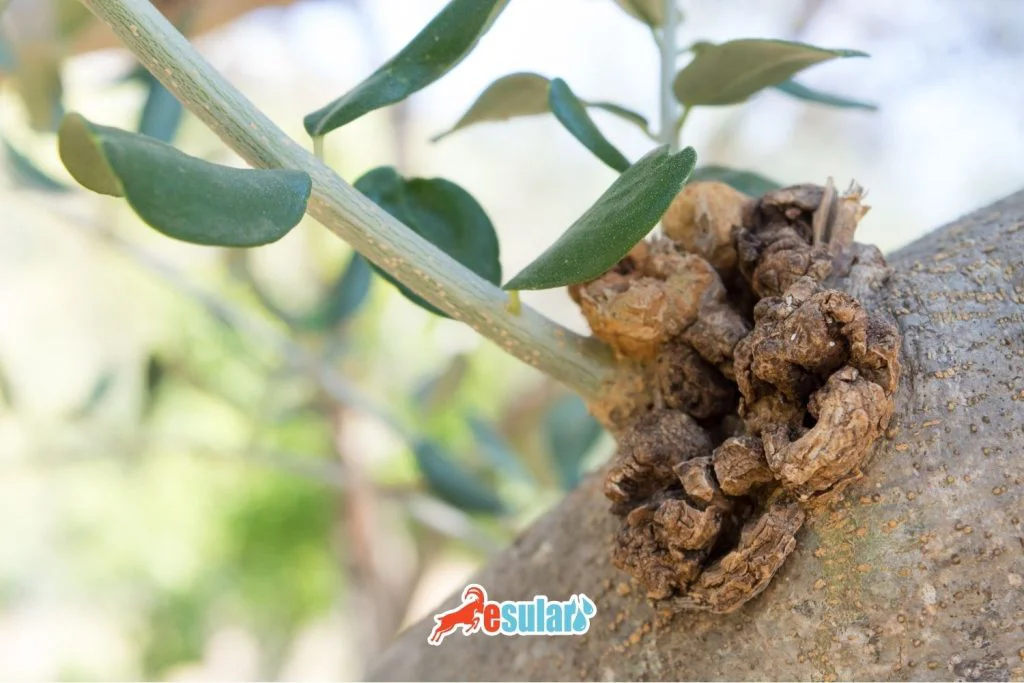
Olive knot is a disease that seriously threatens the health and productivity of olive trees. The causal agent of this disease is a bacterium called Pseudomonas savastanoi pv. savastanoi. Olive knot, which is one of the primary concerns of olive producers worldwide, is common especially in regions with a Mediterranean climate. Olive knot causes the formation of tumor-like galls on the branches, shoots, and trunk of the tree. These galls negatively affect the general health and productivity of the tree by destroying the plant's water and nutrient transport system. Over time, infected branches dry out and the tree's fruit production decreases significantly. Understanding the spread routes, symptoms, diagnosis methods, and control strategies of the disease is of vital importance for olive growers. In this article, the definition and biology of olive knot will be emphasized, and the effects of the disease on olive trees will be discussed in detail. Furthermore, information will be provided about methods and preventive measures that can be used in combating the disease.
What are the Symptoms of Olive Knot?
Olive knot shows distinct symptoms on various parts of olive trees. These symptoms are important for identifying the disease and intervening early. The main symptoms of olive knot are as follows:
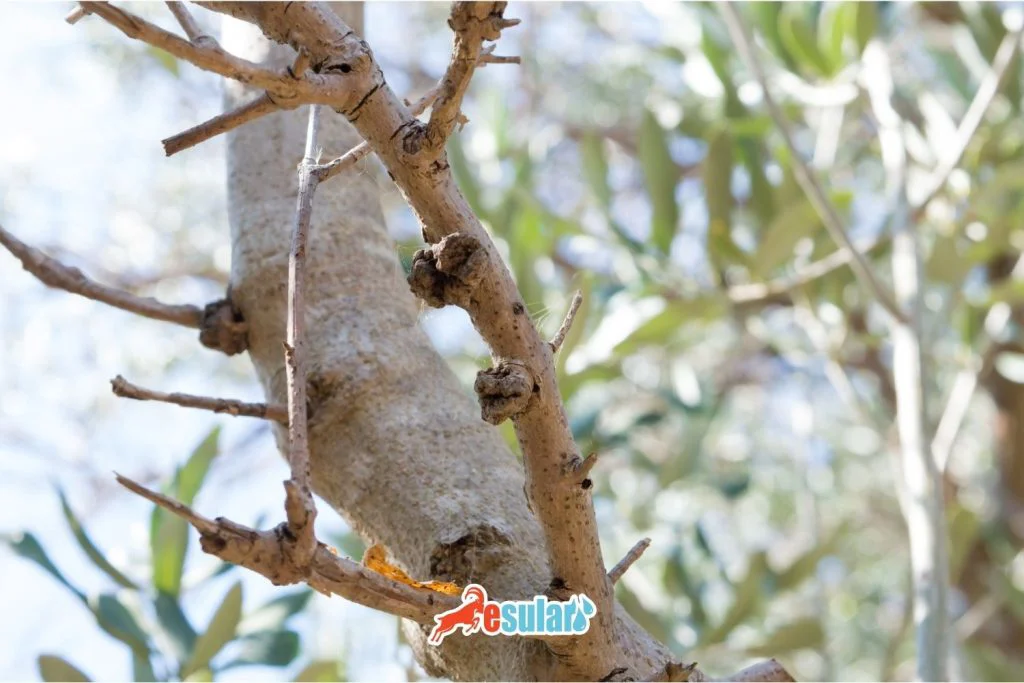
Tumor-Like Galls (Galls): The most prominent symptom is tumor-like galls appearing on branches, shoots, and the trunk. These galls are usually small, soft, and green in color initially, becoming brown and hard over time. These galls create stress in the tree by destroying the plant's water and nutrient transport system.
Drying of Branches: Infected branches dry out over time. This symptom can be more prominent especially in young shoots. Drying branches negatively affect the general health of the plant and reduce fruit yield.
Growth Retardation: A general growth retardation can be observed in infected trees. The nutrient and water transport capacity of diseased branches decreases, which prevents the general growth and development of the tree.
Wilting and Yellowing in Leaves: Over time, leaves on infected branches begin to wilt and turn yellow. This situation further worsens the general health of the plant by reducing the tree's photosynthetic capacity.
Flower and Fruit Losses: As the disease progresses, flowering and fruit set decrease. This leads to a serious decline in olive yield.
Being aware of olive knot symptoms ensures early diagnosis of the disease and effective control. Early intervention makes it possible for olive trees to remain healthy and preserve their productivity.
Spread Routes of the Disease
The spread routes of Olive Knot (Pseudomonas savastanoi pv. savastanoi) disease can be explained as follows:
The disease agent enters the plant as a result of blows to olive branches during harvest, pruning processes, or mechanical injuries. Especially in humid conditions, these wounds create an ideal environment for the bacteria to enter the plant.
Rain can cause bacteria to spread over the plant surface through water accumulation on the plants. It can also spread from infected branches to healthy branches on the same tree in this way.
When infected branches come into contact with each other, bacteria can be transmitted to healthy plant parts with the help of wind. This causes the disease to spread rapidly.
Diseased scions obtained from nurseries can cause the disease to be carried to new olive groves. This situation is an important factor in the spread of the disease.
Pruning tools being contaminated with the disease can cause the disease to be transmitted to healthy branches.
Inappropriate agricultural practices such as intensive nitrogen fertilization and wrong irrigation techniques can weaken the resistance of plants against the disease and increase the risk of spread.
These spread routes can cause Olive Knot to spread rapidly in olive groves and lead to serious economic losses. Therefore, effective control and prevention strategies should be implemented.
Other Plants Susceptible to Knot Disease
Olive (Olea europaea)
Jasmine (Jasminum spp.)
Pomegranate (Punica granatum)
Myrtle (Myrtus communis)
Ash (Fraxinus spp.)
Mock Privet (Phillyrea spp.)
Ligustrum (Ligustrum spp.)
Osmanthus (Osmanthus spp.)
Forsythia (Forsythia spp.)
Control Methods for Olive Knot
Suitable areas should be selected for olive planting.
Healthy saplings and scions should be used.
Drainage channels should be opened to prevent water accumulation.
Pruning processes should be carried out on non-rainy and dry days.
Pruning tools should be disinfected with 10% sodium hypochlorite.
Nitrogen fertilizers should be used carefully, and excessive fertilization should be avoided.
The use of poles should be avoided in olive harvest.
Pruning residues should be destroyed by burning.
First 5% copper sulfate, then grafting mastic should be applied to pruning cut areas.
Olive Varieties Resistant to Olive Knot
Olive varieties known to be more resistant to olive knot are as follows: