What are Wireless Valve Control Devices? A New Era in Agricultural Irrigation
Agricultural irrigation has been one of the most fundamental and indispensable activities of farmers throughout human history. However, global climate change, decreasing water resources, and increasing energy costs seriously threaten the sustainability of traditional irrigation methods. Problems such as manual valve opening-closing operations, the lack of flexibility in irrigation programs, and inefficient water use increase the burden on farmers' shoulders. At this very point, wireless valve control devices are initiating a radical transformation in agricultural irrigation, offering rational and sustainable solutions to modern farmers.
These smart devices allow you to manage your irrigation valves remotely and wirelessly. In this way, irrigation processes are optimized, water waste is minimized, and labor costs are significantly reduced. As Esular, one of Turkey's leading companies in the field of agricultural technologies, the wireless valve control units we have developed offer our farmers a unique irrigation experience with LoRa-based long-range wireless communication technology. In this comprehensive guide, we will examine in detail what wireless valve control technology is, how it works, the advantages it offers, critical criteria for system selection, the step-by-step installation process, wide application areas, and Esular's superior solutions in this field. Our goal is to introduce our farmers to this revolutionary technology and help them build a more efficient, profitable, and sustainable agricultural future.

Challenges of Traditional Irrigation Management: Why is Wireless Control Needed?
In order to fully grasp the value and urgency offered by wireless valve control systems, it is of great importance to deeply understand the problems created by traditional irrigation methods that are still common in today's agriculture. Many farmers try to manage irrigation valves by opening and closing them manually or with simple timers, which brings along serious productivity losses and operational challenges.
Main Problems of Manual Irrigation Management:
- Intensive Time Loss: In large agricultural lands, physically reaching each irrigation zone and opening and closing the valves one by one can take hours, or even days. This situation limits the time the farmer can devote to other critical agricultural activities such as planting, fertilization, and spraying, and reduces overall operational efficiency.
- High Labor Cost: The necessity of having constant personnel to carry out irrigation operations manually significantly increases operating costs, especially in large-scale agricultural enterprises. The need for additional personnel for night irrigations increases this cost even further, not to mention the difficulty of finding qualified labor.
- Risk of Over or Under Irrigation: Manual control leads to the inability to accurately adjust the irrigation duration and amount according to the actual needs of the plant. This situation leads to either the waste of valuable water resources, leaching of soil nutrients, and plant root rot with over-irrigation, or plant stress, growth retardation, and therefore yield loss with insufficient irrigation. Both scenarios mean serious economic losses for the farmer.
- Difficulty of Night Irrigation and Safety Risks: Irrigating during the night hours when electricity tariffs are lower is ideal for saving on energy costs. However, this requires personnel to work at night, which carries both occupational safety risks and negatively affects the work-life balance of the personnel.
- Inability to Intervene in Sudden Weather Conditions: It is not possible in traditional systems to instantly change the irrigation program in sudden weather changes such as unexpected rain, strong wind, or extreme heat. This situation can lead to water waste or damage to plants by receiving excessive water as irrigation continues.
- Data Deficiency and Optimization Difficulty: In manual systems, critical irrigation data such as when and how much water was given to which region generally cannot be recorded. This lack of data prevents the analysis of past performance, the optimization of irrigation strategies, and the establishment of future agricultural planning on scientific foundations.
- Uneven Water Distribution: When valves are opened manually in sequence in large agricultural areas, the hydraulic balance of the irrigation system may be disturbed. This situation causes some areas to receive too much water while others remain insufficient. This imbalance leads to non-homogeneous plant development and yield differences across the field.
Wireless Valve Control Technology: Working Principle and Components
A wireless valve control system is an integrated solution consisting of multiple smart components connected to each other via wireless communication, designed to remotely manage and automate agricultural irrigation processes. This system connects the valve control units in the field to each other and to a cloud-based management platform via a central gateway, offering farmers full control and flexibility.
System Components
1. Valve Control Unit (Field Device)
This unit is the main device mounted on or next to the irrigation valve that performs the physical opening-closing operation of the valve. Esular's valve control units are designed and optimized to withstand harsh field conditions:
- Solenoid Valve Driver: The system supports 9V DC or 12V DC latch-type solenoid valves commonly found on the market. Latch-type valves consume energy only at the moment of opening and closing commands. This feature ensures the maximization of battery life and offers long-term uninterrupted operation.
- Operation with Long-Life Battery: It is powered by high-capacity lithium or alkaline batteries to operate smoothly even in remote field locations without electricity infrastructure. Esular devices can operate reliably for 2-3 irrigation seasons with a single set of batteries, which reduces maintenance costs and frequency.
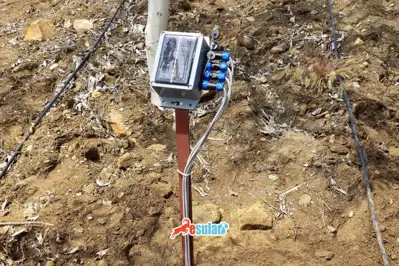
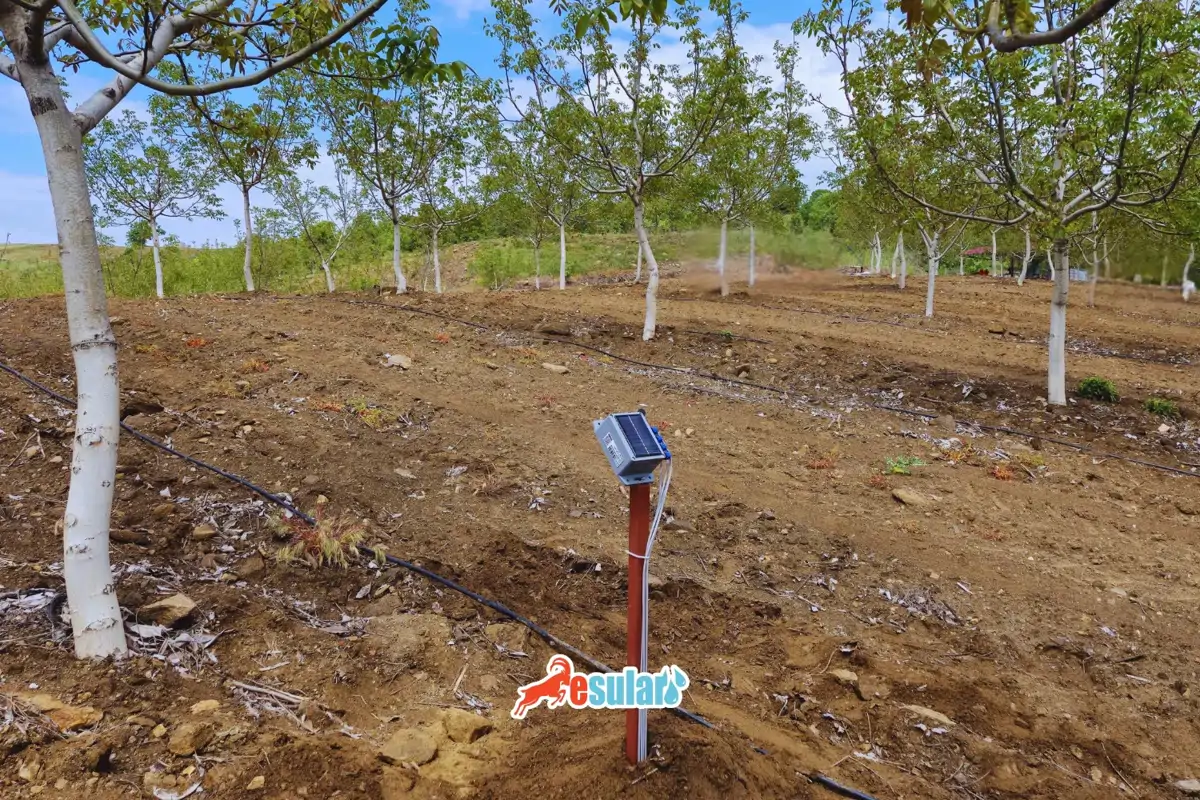
- Solar Panel Support: Optionally, it can be supported by a solar panel with a power of 1-5W. In this way, the need for battery replacement is completely eliminated, and the device is constantly charged with solar energy, providing an uninterrupted energy source. This feature makes a significant contribution to sustainable agricultural practices.
- Wireless Module (LoRa Technology): The LoRa (Long Range) technology preferred by Esular provides reliable, low-power wireless communication over a wide range of 2-5 km. In unobstructed, open terrains, this distance can reach up to 10 km. This allows large agricultural areas to be managed through a single gateway and eliminates cabling costs.
- High Protection Class: The units, which have an IP65 or higher water and dustproof class, show high resistance against harsh field conditions such as rain, dust, mud, and UV rays. This guarantees long-lasting and trouble-free operation of the devices.
2. Central Gateway
The gateway acts as a bridge between all valve control units in the field and the cloud platform. Esular gateways offer robust and versatile functions:
- LoRa-GSM/LTE Bridge: It collects LoRa signals coming from field devices and securely transmits this data to the cloud server via the GSM/4G LTE mobile communication network. In this way, farmers can manage their irrigation systems from anywhere in the world.
- Multi-Device Management: A single gateway has the capacity to manage dozens, even hundreds of valve control units at the same time. This offers a central and integrated management opportunity for large agricultural enterprises.
- Local Automation and Data Storage: Even if the internet connection is lost, it can continue to run pre-programmed irrigation tasks locally. It also transfers the collected data to the cloud when the connection is restored.
- Sensor Integration: It collects data from soil moisture sensors, meteorological stations, and other IoT devices, making irrigation decisions smarter and more precise.
3. Cloud Platform and Mobile Application
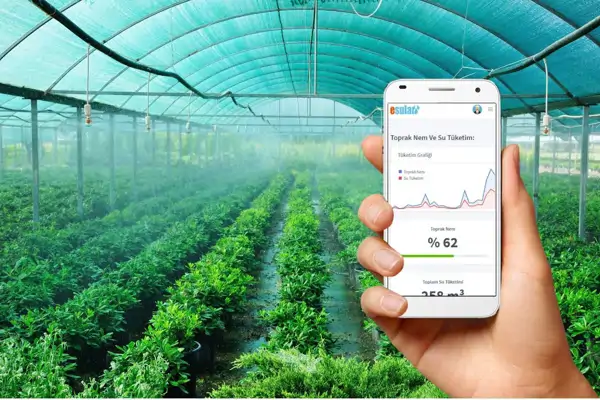
These are user-friendly interfaces developed by Esular where users monitor and manage their irrigation systems remotely. Both the web-based platform and the Android/iOS compatible mobile application offer the following possibilities:
- Real-Time Monitoring: Viewing the instant on/off status of all irrigation valves, water flow, pressure, and sensor data in real-time from a single screen.
- Remote Control: Instantly opening or closing any irrigation valve with a single touch from anywhere in the world.
- Flexible Scheduled Irrigation: Creating, editing, and canceling automatic irrigation programs with daily, weekly, monthly, or special timing. Defining special programs for different regions according to plant type, soil structure, and development stage.
- Sensor-Based Smart Automation: Automatically triggering or stopping irrigation according to sensor data such as soil moisture, air temperature, and amount of precipitation. For example, irrigation starts when soil moisture falls below a certain threshold and stops when sufficient moisture is reached.
- Historical Data Analysis and Reporting: Continuously optimizing irrigation strategies by receiving detailed reports on irrigation history, water consumption, energy expenditures, and system performance.
- Alarms and Notifications: Receiving instant mobile application or e-mail notifications in cases such as leaks that may occur in the system, low battery level, loss of communication, or abnormal pressure, thus enabling rapid intervention.
Communication Protocols: LoRa vs WiFi vs Zigbee vs GSM
Different communication technologies used in wireless valve control systems each have their own unique strengths and weaknesses. Factors such as the size of the area where the system will be installed, energy needs, and data transfer speed are of critical importance for the selection of the right technology.
As Esular, we prefer LoRa (Long Range), which is the most suitable and advantageous technology for agricultural irrigation applications. The long range offered by LoRa eliminates the need for cable laying in large agricultural areas, while its very low power consumption extends the battery life of field devices to years. This reduces operating costs and offers a sustainable solution. While technologies such as WiFi and Zigbee have a shorter range, GSM/LTE, although it offers unlimited range, shortens battery life due to high power consumption in field devices and requires monthly SIM card costs. LoRa offers the most ideal balance in terms of range, battery life, and cost-effectiveness for agricultural enterprises.
Advantages of Wireless Valve Control Devices
Wireless valve control systems offer versatile advantages that provide not only operational convenience but also direct financial and environmental benefits to agricultural enterprises. These advantages bring sustainable solutions to the fundamental problems faced by modern agriculture, such as water scarcity, energy costs, and labor shortages.
Water and Energy Savings
Wireless valve control systems offer significant savings to farmers by ensuring more conscious and efficient use of water and energy resources:
- Up to 30-50% Water Savings: Thanks to smart irrigation algorithms based on data from integrated soil moisture sensors and meteorological stations, plants receive water only when and in the amount they need. This can reduce water consumption by 30% to 50% by preventing over-irrigation. This rate is of vital importance, especially in regions experiencing water scarcity, and contributes to the protection of water resources.
- 20-40% Energy Cost Reduction: The ability to perform irrigation automatically during the night hours when electricity tariffs are more affordable provides a 20% to 40% reduction in energy costs. It also increases energy efficiency by preventing pumps from running unnecessarily and optimizing irrigation durations. The ability to perform night irrigation without the need for personnel creates additional savings.
- Fast Leak Detection and Prevention: The system instantly detects anomalies in water flow or pressure drops, identifies potential leaks, and automatically stops irrigation. In this way, water losses and infrastructure damage are prevented before they grow.
- Rain Sensor and Weather Integration: Thanks to integration with rain sensors or meteorological stations, irrigation is automatically stopped when precipitation starts. This prevents unnecessary water use and prevents plants from being exposed to excessive water. At the same time, with Esular's weather integration, irrigation plans can be automatically adjusted according to future precipitation forecasts.
Increase in Efficiency and Productivity
Smart valve control systems increase efficiency and product quality at every stage of agricultural production:
- Irrigation Management Independent of Time and Place: Farmers can easily manage their irrigation systems via the mobile application or web platform even if they are away from the field. This gives farmers the opportunity to focus on other agricultural activities, spend more time with their families, or turn to different business areas.
- Precise and Regional Irrigation: Special water amount, duration, and frequency can be adjusted for each irrigation zone. Optimized irrigation programs can be created for different plant types, soil structures, and development stages. This precision ensures that plants reach exactly the nutrients and water they need.
- Even Water Distribution and Homogeneous Development: The system ensures homogeneous plant development across the field by providing controlled water to all regions simultaneously or sequentially. This creates standardization in product quality and size.
- 15-30% Yield Increase: Irrigation performed at the right time, in the right amount, and in the right way minimizes plant stress. Plants that are not under stress grow healthier, become more resistant to diseases, and as a result, give 15% to 30% higher quality and more abundant products. This is an important factor that directly affects the farmer's profitability.
Cost Reduction and Return on Investment
Investment in wireless valve control systems is an investment that pays for itself in a short time and provides continuous gain in the long run:
- Labor Savings: The need for personnel required for manual valve opening-closing and irrigation monitoring operations is eliminated or minimized. This provides a great advantage, especially in regions where there is difficulty in finding seasonal workers.
- Maintenance Cost Reduction: Thanks to instant monitoring of system performance and fault notifications, small problems are detected and intervened before they turn into major failures. This reduces repair and maintenance costs and extends the life of the system.
- Fast Return on Investment (ROI): When water, energy, and labor savings are combined with increased productivity, the investment made in wireless valve control systems generally pays for itself within 1-2 irrigation seasons for a medium-sized agricultural enterprise. This period can be even shorter in large-scale enterprises.
- Long System Life: Wireless control systems produced with high quality and durable materials can serve for 10 years or more with correct maintenance and use. This guarantees the long-term sustainability of the investment.
Esular Wireless Valve Control System: Technological Superiorities
As Esular, the wireless valve control system we have developed specifically for the unique needs of Turkish agriculture and global competitive conditions offers a unique solution to our farmers by combining the most advanced technologies in the sector with user-friendly interfaces. The main features that distinguish Esular from its competitors are as follows:
LoRa-Based Long Range and Reliable Communication
Esular's wireless valve control units use the industry-standard LoRa (Long Range) technology to provide uninterrupted and reliable communication over an impressive range of 2-5 km in open terrain and up to 10 km in ideal conditions. This long-range feature completely eliminates the expensive and laborious cable laying cost and time in large agricultural areas. A single Esular gateway covers a large number of valve control units, allowing even large farms to be managed effectively from a central point. Thanks to low power consumption, field devices offer long battery life, which minimizes maintenance requirements.
Smart Irrigation Automation and Precise Control
The Esular system is much more than a simple remote control; it is a truly smart irrigation decision support system. Working integrated with Esular soil moisture sensors and meteorological stations, it takes dynamic and automatic irrigation decisions according to the real water needs of the soil and the plant:
- Moisture Threshold Value Irrigation: Irrigation starts automatically when the soil moisture level falls below the determined critical lower threshold and stops when it reaches the optimum upper threshold. This guarantees that plants always remain at the ideal moisture level.
- Time-Adjusted and Seasonal Irrigation: Farmers can create automatic irrigation programs at specific times of the day, for specific durations, or on specific days of the week. Seasonal program changes can be easily made according to plant development stages.
- Regional and Plant-Oriented Control: Each irrigation zone can be managed independently according to different plant types, soil structures, and microclimate conditions. In this way, each plant receives water according to its own special needs, water waste is prevented, and yield is maximized.
- Weather Integration: Irrigation programs are dynamically adjusted with instant and forecasted weather data coming from Esular meteorological stations. For example, when rain is expected, irrigation is automatically postponed or canceled.
Sustainable and Uninterrupted Operation with Solar Energy
Esular valve control units offer an environmentally friendly and sustainable energy solution with optional 1-5W solar panel support. Thanks to solar panel integration:
- Need for Battery Replacement is Eliminated: The solar panel constantly charges the device's batteries, making the battery life unlimited, which reduces maintenance costs and operational burden to zero.
- Uninterrupted Operation in Remote Locations: Uninterrupted operation of valve control units is ensured even in agricultural areas far from the grid without electricity infrastructure.
- Environmental Footprint is Minimized: The use of renewable energy contributes to environmentally friendly agricultural practices by reducing your business's carbon footprint.
- Near-Zero Energy Cost in the Long Run: After the initial installation cost, the energy consumption of the valve control units becomes almost zero thanks to solar energy, which provides significant financial gains in the long run.
Full Control in the Palm of Your Hand with Esular Mobile Application
Esular's user-friendly mobile application, compatible with both Android and iOS operating systems, and web-based management platform bring your irrigation system to the palm of your hand:
- Instant Status Monitoring: Easily viewing the status of all irrigation valves (on/off), sensors (moisture, temperature, pressure), and pumps in real-time on graphics and maps.
- One-Touch Remote Control: Instantly opening, closing any valve or pump system, or changing the irrigation program.
- Detailed Irrigation Schedule and Programming: Creating weekly, monthly, or special irrigation schedules, editing existing programs, and planning future irrigation scenarios.
- Instant Notifications and Alarms: Receiving instant push notifications and e-mail warnings in critical situations such as low battery level, leak, loss of communication, abnormal pressure, or frost risk in the system.
- Comprehensive Performance Reports: Continuously improving irrigation strategies by providing access to detailed statistics such as past irrigation data, water and energy consumption analyses, and efficiency reports.
- User-Friendly Interface: The opportunity to simply manage complex agricultural technologies with a clear and intuitive interface.
Considerations in Choosing a Wireless Valve Control System
There are wireless valve control solutions of many different brands and models on the market. Within this wide range, choosing the system most suitable for the specific needs of your agricultural enterprise is of critical importance for you to fully receive the return on your investment and ensure long-term success. Here are the basic criteria you should pay attention to when choosing a wireless valve control system and Esular's approach to these issues:
1. Communication Range and Reliability
- Size of Your Agricultural Area: The communication range of the system to be selected must be suitable for the size and topography of the agricultural area you own. While longer ranges can be obtained in flat terrains, obstacles such as wooded areas, hills, or buildings can shorten the range.
- LoRa Technology Advantage: Systems using LoRa technology, such as Esular, offer the most suitable range and low power consumption balance for agricultural areas. This means being able to cover wider areas with fewer gateways.
- Two-Way Communication: Just sending commands is not enough; being able to receive feedback from the valve control unit (valve opened/closed, battery level, error status) is of vital importance for the reliability and controllability of the system. Esular systems offer two-way communication support.
2. Energy Management and Sustainability
- Battery Life and Replacement Frequency: Learn in detail about the battery life and battery replacement frequency of field devices. Systems offering battery life under 2 seasons can create additional labor and cost in the long run. Esular devices offer 2-3 seasons of battery life.
- Solar Panel Support: Solar panel support in remote locations or places without electricity infrastructure provides a great advantage by completely eliminating the need for battery replacement. This reduces operating costs and contributes to environmental sustainability.
- Low Power Modes: Evaluate how much energy the devices consume in standby mode and the quality of smart energy management algorithms.
3. Durability and Protection Class
- Resistance to Environmental Conditions: Field conditions are harsh and unpredictable. Make sure the devices you choose have at least an IP65 or higher water and dustproof class. This ensures that the devices are protected against rain, mud, dust, and harmful insects.
- Temperature and UV Resistance: It is important to have a wide operating temperature range (between -20°C and +60°C), especially in extreme heat or cold regions. In addition, a body material with UV resistance should be preferred to ensure long life under the sun.
4. Software and User Experience
- Ease of Use: Test the ease of use of the mobile application and web platform. Complex and hard-to-understand interfaces can lead to problems in the field and make adoption difficult. Esular offers an intuitive and user-friendly interface.
- Language Support: Systems offering local language support (Turkish) allow farmers to understand and use the system more easily.
- Updates and Technical Support: Check whether the manufacturer offers regular software updates and strong technical support. This guarantees that the system remains long-lasting and up-to-date.
- Data Security and Privacy: Review the manufacturer's policies for the security and privacy of your agricultural data.
5. Expandability and Integration
- Modular Structure: New valve control units, sensors, and other IoT devices should be easily added to the system. This offers the flexibility to expand your system as your business grows.
- Existing Infrastructure Compatibility: The system must be compatible with your existing irrigation infrastructure (pump, filter, drip irrigation, sprinkler). Esular systems can be easily integrated with standard solenoid valves.
- IoT Ecosystem Integration: Offering integration possibilities with other IoT devices in the smart farming ecosystem (soil moisture sensors, meteorological stations, camera systems) allows you to make more comprehensive and smart decisions.
Installation of the Wireless Valve Control System: Step-by-Step Guide
The installation of a wireless valve control system is a very simple and easily manageable process with correct planning and steps. While the Esular team provides full support to our farmers at every stage of the installation process, the following steps provide a general installation guide. This guide contains the basic information necessary for the system to work efficiently.
1. Field Analysis and Planning
- Detailed Agricultural Area Mapping: Map out the physical map of your agricultural area and clearly determine the irrigation zones (plots, fields, greenhouses). Mark the boundaries and characteristics of each region.
- Valve and Gateway Positioning: Carefully plan the existing locations of all irrigation valves, the most suitable placement point for the central gateway, and signal ranges. A high and central location where the gateway can see all field devices should be preferred.
- Irrigation Needs Analysis: Calculate the irrigation needs (amount of water, irrigation frequency) of each region according to the soil type in your region (sandy, clayey, loamy), the plant types to be grown (fruit, vegetable, grain), and local climate conditions (temperature, precipitation, wind).
- Existing Infrastructure Assessment: Evaluate your existing irrigation infrastructure (pipes, valves, pumps, filters) and determine the necessary adaptations for integration with the wireless system.
2. Gateway Installation
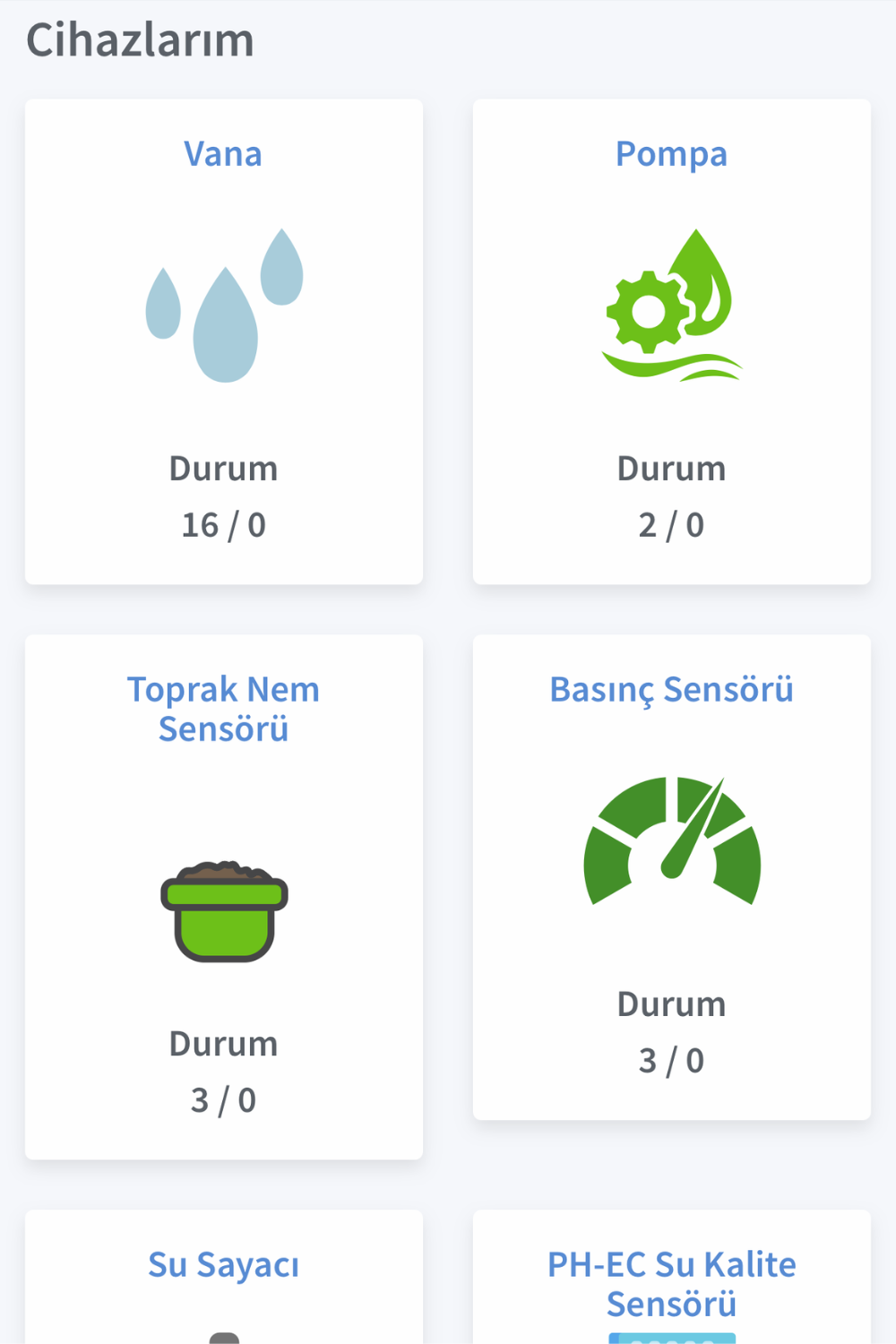
- Optimum Placement: Place the gateway at the highest point possible or a central location where it can receive strong signals from all field devices. A direct Line-of-Sight will increase the range.
- Signal Strength Check: Check the GSM/LTE signal strength before installation and provide the best connection by optimizing the antenna direction.
- Power Supply Connection: Connect the gateway's power supply. This can be an existing power line, or an optional solar panel and battery system for remote locations.
- Platform Registration and Connection Test: Register the device on the Esular cloud platform and verify that the internet connection is working smoothly. Perform communication tests with field devices.
3. Assembly of Valve Control Units
- Connection to Solenoid Valve: Carefully connect the Esular valve control unit to the existing solenoid valve in each irrigation zone. Make sure the connections are watertight.
- Protection and Placement: Place the control unit in its waterproof box and mount it in a location where it will not be exposed to direct sunlight or extreme weather conditions.
- Battery or Solar Panel Connection: Install the unit's batteries or make the solar panel connection securely.
- Communication Test: Verify that the communication of each valve control unit is working correctly by testing them separately with the gateway.
4. Sensor Integration
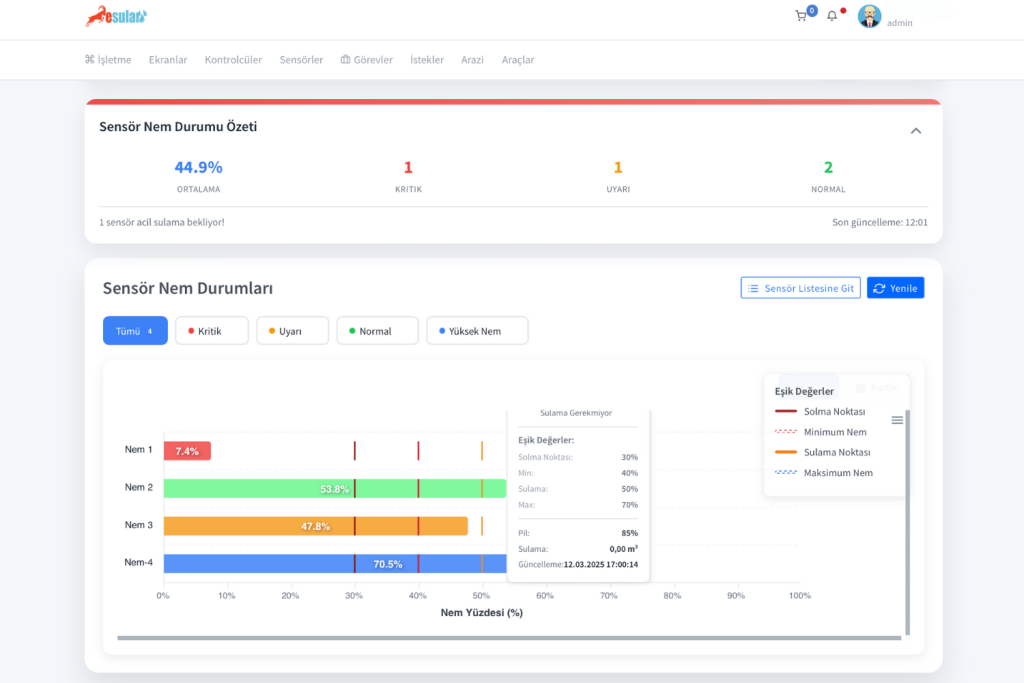
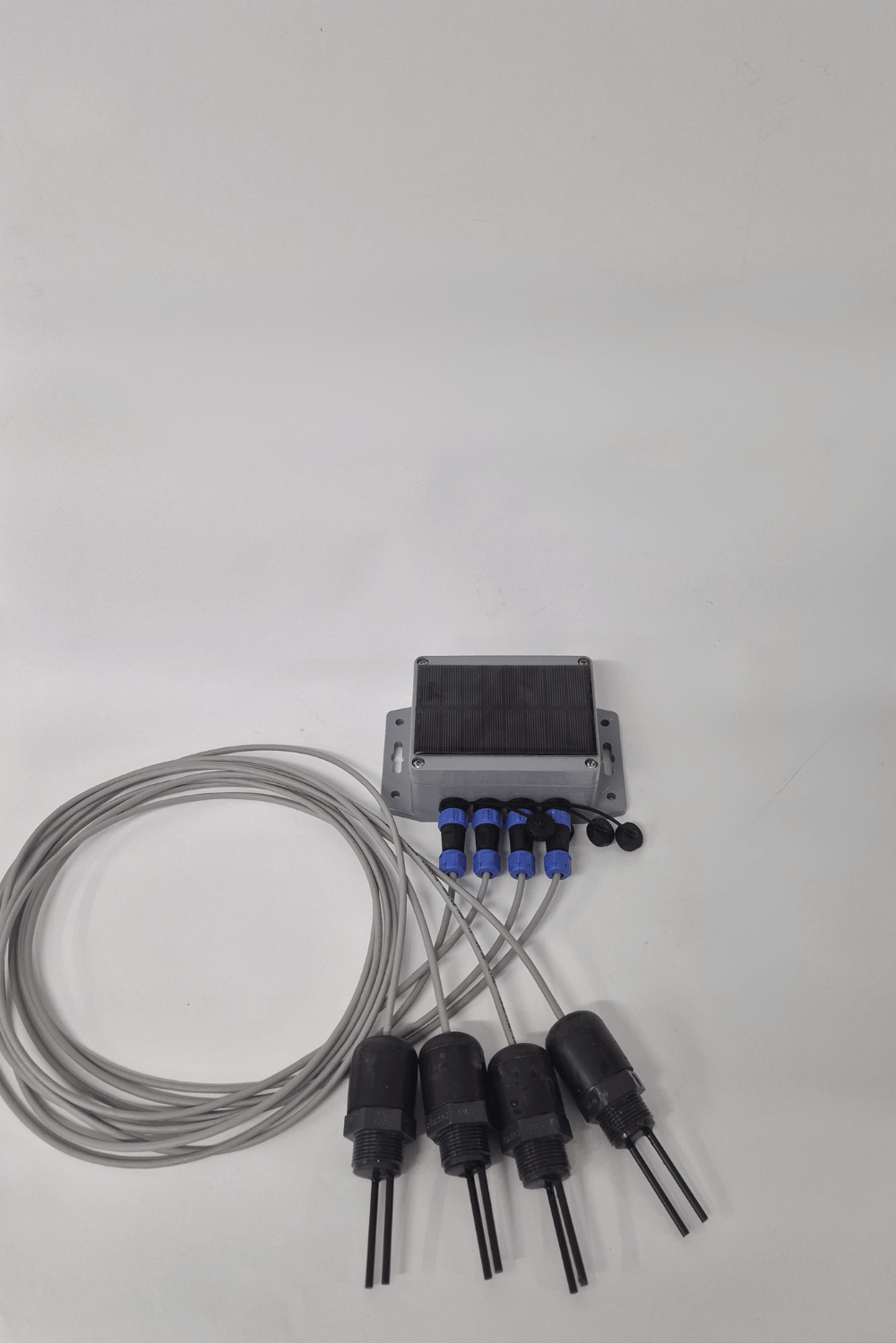
- Soil Moisture Sensors Placement: Place soil moisture sensors at strategic points representing irrigation zones, at depths where the plant root zone is active.
- Meteorological Station Installation: Install the meteorological station in an unobstructed location where it can accurately measure wind, precipitation, and sunlight.
- Introduction to the System and Calibration: Introduce all sensors to the Esular platform and perform the necessary calibrations for accurate data reading.
- Data Verification: Verify that the data coming from the sensors is accurate and consistent via the mobile application.
5. Creating Irrigation Programs
- Regional Irrigation Settings: Adjust the irrigation duration, frequency, and amount of water for each region according to the determined irrigation needs via the Esular mobile application or web platform.
- Sensor-Based Automation Rules: Define automatic irrigation start/stop rules based on sensor data such as soil moisture lower and upper thresholds, temperature limits, and precipitation expectations.
- Night Irrigation Programs: To save on energy costs, create night irrigation programs that will work without the need for personnel.
- Alarm and Notification Preferences: Configure alarms and notification preferences for anomalies in the system (leak, low battery, communication error).
Application Areas: Which Types of Agriculture is it Used in?
Wireless valve control systems have a wide range of applications in almost every field of agriculture, thanks to the flexibility, efficiency, and savings advantages they offer. These systems provide significant contributions to the modernization and sustainability of agricultural enterprises of different scales and types.
Open Field Agriculture
Wireless valve control offers great advantages in the cultivation of wide fruit orchards (apple, pear, olive, citrus, walnut), vegetable fields (tomato, pepper, eggplant), grain areas (wheat, corn, barley), and industrial plants (cotton, sunflower, sugar beet). Especially in areas of hundreds, even thousands of decares, it completely eliminates the high installation cost and time of traditional wired systems. It offers precise irrigation opportunities according to the needs of each plot by working in full compatibility with drip irrigation and sprinkler systems.
Greenhouse Agriculture
Optimum climate control and precise irrigation in greenhouses are of critical importance for obtaining high-quality and efficient products. Esular's greenhouse automation solutions manage wireless valve control in an integrated manner with systems such as temperature, humidity, ventilation (window control), and even CO2 levels. This prevents cable clutter inside the greenhouse, provides flexible area arrangement, and optimizes plant development. For example, integration with the smart greenhouse window control panel maintains the humidity and temperature balance by automatically regulating ventilation.
Landscape and Park Irrigation
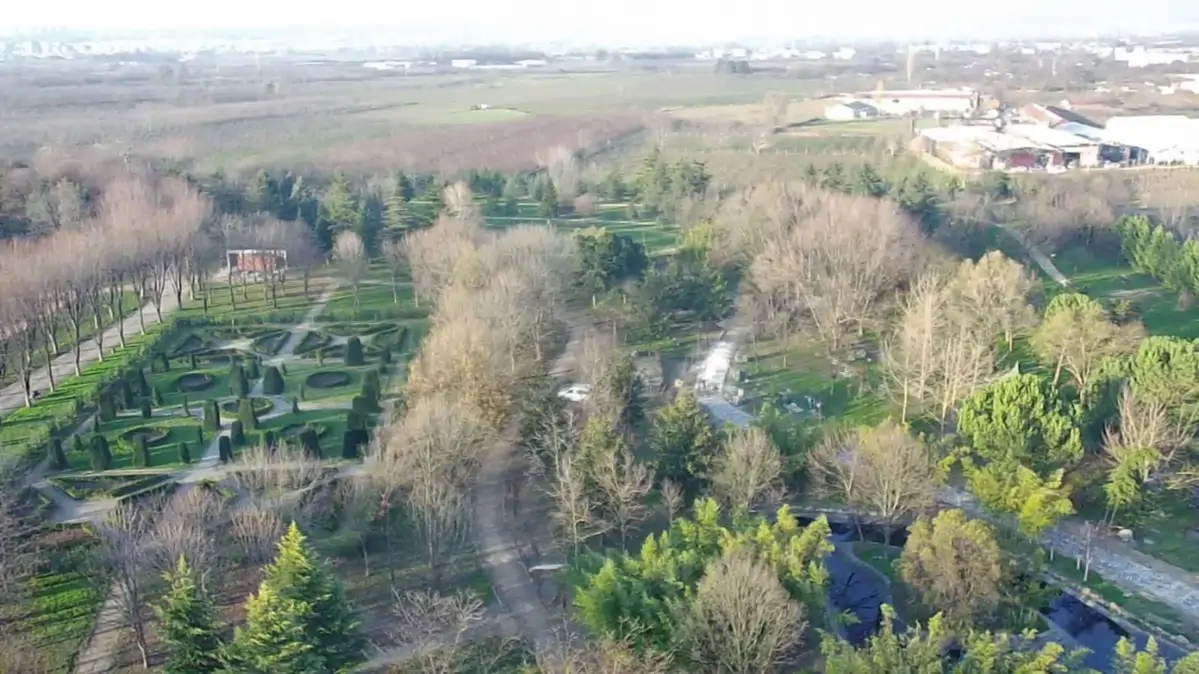
Wireless valve control offers efficient and aesthetic irrigation management in large green areas such as municipalities, residential sites, hotels, golf courses, highway edges, and large landscape areas. Regional irrigation programs can be created according to the different water needs of different plant types (grass, trees, shrubs, flowers). This provides a lively and healthy vegetation at every point of the landscape while preventing water waste. Remote control capability reduces the workload of maintenance teams and offers flexibility in irrigation timing.
Pivot Irrigation Systems
Center pivot and linear pivot irrigation systems are efficient methods used in irrigating large areas. Wireless valve control systems allow these pivot machines to be started and stopped remotely, the irrigation speed to be adjusted, and different irrigation dosages to be applied in different regions. This integration further increases the efficiency of pivot irrigation and reduces the need for manual intervention. You can examine the Esular guide for more detailed information about pivot irrigation systems.
Cost Analysis: How Much Does Wireless Valve Control Investment Earn?
In order to understand the return period and long-term financial benefits of investment in wireless valve control systems, it is essential to perform a comprehensive cost-benefit analysis. Although these systems require an initial investment, they pay for themselves in a short time with the savings and yield increase they provide.
Savings Items and Annual Profit Calculation
The table above shows the potential financial impacts of investment in a wireless valve control system for a medium-sized agricultural enterprise (for example, 100-500 decares). As can be seen, when direct savings in water, energy, and labor costs are combined with the increase in product yield, the total cost of the system generally pays for itself within 1-2 irrigation seasons. This return period can be even shorter in large-scale enterprises and in regions where water resources are more limited. In addition, reliable systems such as Esular continue to provide additional profit for years after the initial investment thanks to their long-lasting structures.
Conclusion: Step into the Wireless Future in Agricultural Irrigation
Wireless valve control devices are opening the doors of a new era that radically changes agricultural irrigation practices, increases efficiency, and protects resources. In today's world, where water resources are increasingly scarce, energy costs are rising, and it is becoming difficult to find qualified labor, smart and automatic irrigation solutions are no longer a luxury but a necessity for modern agricultural enterprises. This technology not only saves farmers time and effort but also directly affects their profitability by increasing product quality and quantity.
Esular's LoRa-based wireless valve control system is a long-range, low-energy consumption, durable, and easy-to-use solution designed specifically for the unique needs of Turkish agriculture. With the smart automation, sensor integration, and mobile management opportunities it offers, it allows our farmers to optimize their irrigation processes and use water and energy resources in the most efficient way. While contributing to environmental sustainability, it increases the competitive power of your business and offers a solid investment for the future.
To carry your agricultural enterprise into the future, save on water and energy costs, increase your efficiency, and make your irrigation processes smart, discover Esular's innovative solutions. To get more information about the wireless valve control system, receive a special offer for you, or have a free field analysis done, contact us now. Esular's expert team is with you to make your agriculture smarter, more efficient, and more sustainable!