Control of Walnut Diseases and Pests
Control of walnut diseases and pests is one of the most critical steps in walnut cultivation. To obtain the desired yield from walnuts at harvest, it is necessary to act meticulously in this step. Walnut trees are and will continue to be exposed to threats by a series of diseases and harmful organisms. This situation negatively affects product quality and yield. In this content, we will try to detail effective strategies to maximize walnut product quality and yield. Control of walnut diseases and pests is an important factor for a healthy walnut harvest. Continue reading our article for details about this important factor.
How to Control Walnut Diseases and Pests?
Walnut diseases and pests pose potential risks for walnut growers. These problems affect the health and yield of the trees. However, with the right information and precautions, it is possible to control these pests. In this article, you will find important information on how to deal with walnut diseases and pests. There are important steps to be taken for a healthy and productive walnut orchard. Accordingly, the steps for how to control walnut diseases and pests are as follows:
- Apply crop rotation to prevent the reproduction of diseases and pests in the production area.
- When purchasing production materials such as seedlings, saplings, and seeds, prioritize products that carry a Plant Passport and Certificate label, and are documented to be free from diseases and pests.
- Choose resistant varieties to reduce the effects of diseases and pests.
- Organize sowing time and other cultural operations in a way that minimizes the effects of diseases and pests.
- Avoid excessive and incorrect fertilization to prevent increasing the effects of diseases and pests.
- For effective control, first have the problematic disease and pest diagnosed.
- When you see any disease or pest you do not recognize, notify the provincial/district directorates as soon as possible.
- Conduct research to learn the economic damage threshold and control timing of the disease and pest for effective management.
- Follow the announcements of provincial/district directorates regarding the timing of control.
- Develop control strategies using traps, pheromones, and beneficial insects before using pesticides.
- Avoid purchasing non-prescription pesticides and do not apply chemical control without consulting technical experts.
- For harvest after spraying, comply with the waiting period specified on the pesticide label.
Frequently Seen Pests in Walnuts
Walnut small aphid
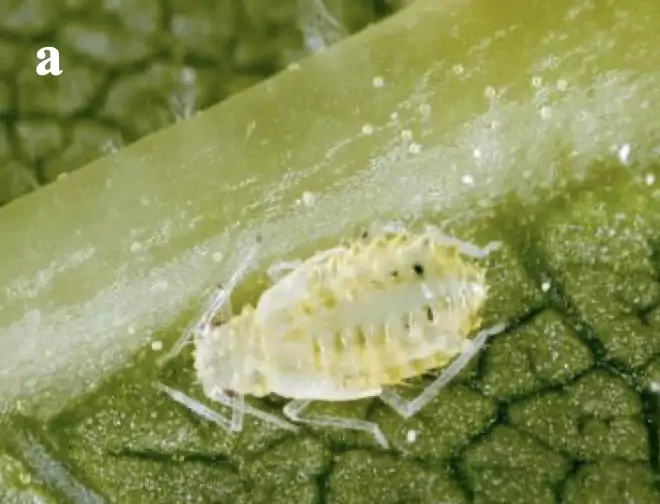
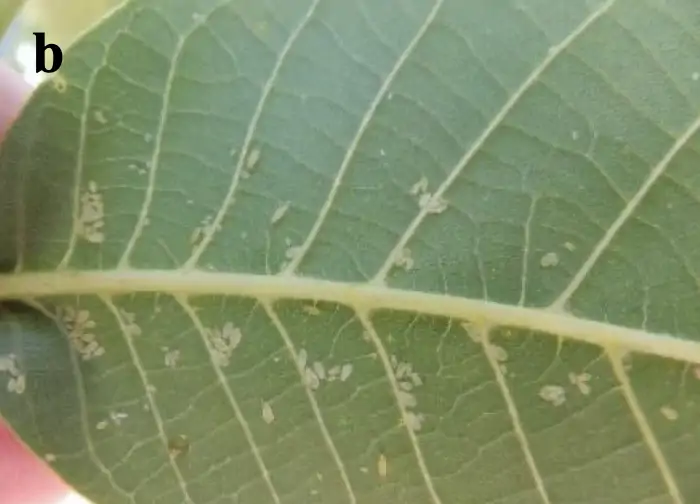
In winged and wingless females, the head, thorax, and abdomen parts of the walnut small aphid have pale lemon yellow or yellowish pink color tones. Antennal segments show a ringed structure. Cornicles and cauda are pale in color, and the length and width of the cornicles are equal. The body length is approximately 1.6-2.5 mm (Figure a). The C. juglandicola species, distinguishable from the P. juglandis species, forms colonies irregularly under walnut leaves (Figure b). This species spends the winter in the egg stage. All individuals emerging from eggs in the spring consist of females and reproduce without fertilization (viviparous) during the summer months; many generations emerge per year.
Walnut large aphid
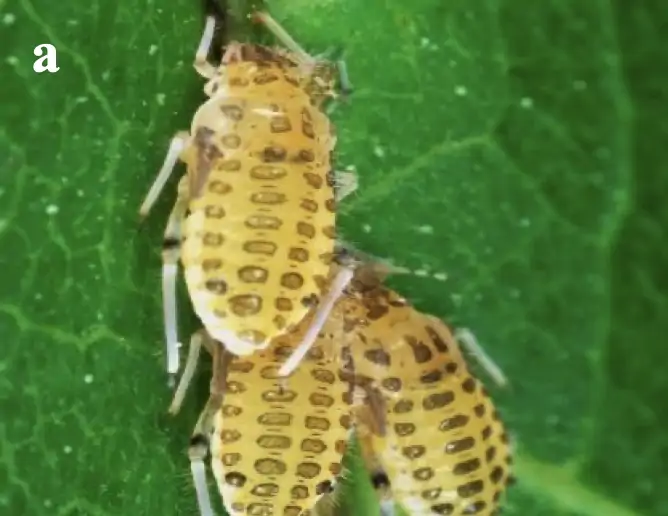
In wingless females of the walnut large aphid, the body is in yellow tones, with the upper part being green and orange. The head and thorax have dark brown color tones. The five-segmented antennae are yellowish and quite short relative to the body. The head and body are covered with long and thin hairs. With a yellow cauda, the body length is approximately 2-3.5 mm. In winged females, the head and thorax are dark brown or black. The abdomen has color tones ranging from light yellow-brown to black and dark-colored bands on the sides. Cornicles are brown, antennae are yellow, and segment tips are dark-colored. With a yellow cauda, the body length is about 2-3.5 mm (Figure a). The P. juglandis species has a holocyclic life cycle and feeds by settling along the midrib on the upper surface of the leaves (Figure b). They spend the winter in the egg stage, and all individuals emerging from the egg in the spring consist of females. They reproduce without fertilization (viviparous) throughout the summer and produce many generations per year.
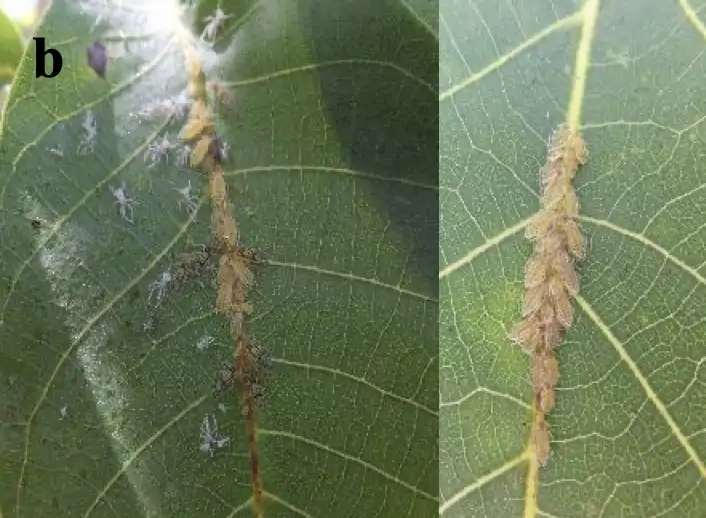
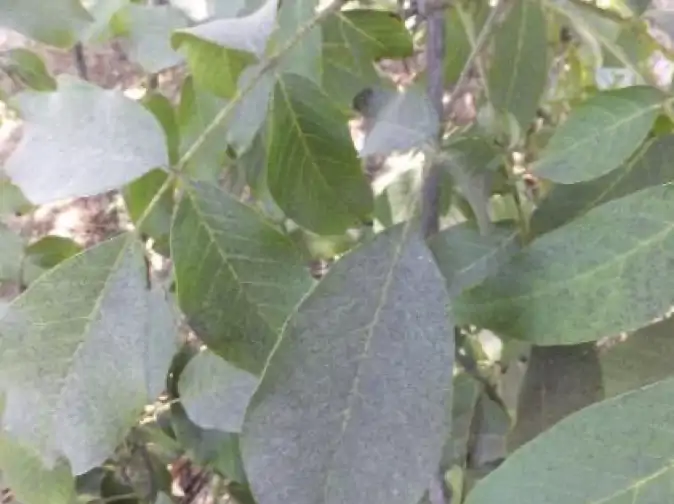
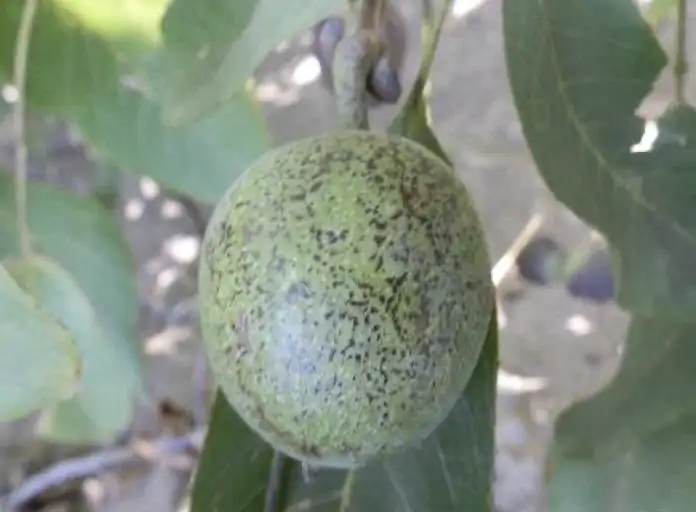
Walnut aphids feed by sucking the sap from the leaves and fruits of the walnut plant. As a result of this sucking process, chlorophyll is broken down and photosynthesis is adversely affected, causing yellowing in the leaves and shedding in dense populations. Additionally, due to the sweet liquid they secrete, sooty mold (kara balık) forms on leaves and fruits. This situation leads to the weakening of the tree, leaf deformation, and a decrease in product quality and yield (Figures 1-2). C. juglandicola and P. juglandis species are generally found together on the plant organs they feed on. If there is an infestation of 10-15% about 3-4 weeks before the fruit hull hardens, fruit development is hindered. If the infestation continues or increases near harvest at the end of summer, shriveling occurs in the inner part of the fruit, which reduces quality. Aphids create problems especially in orchards with dense planting, where regular pruning is not done, which contain high humidity, and where excessive and broad-spectrum insecticides are used. Although walnut aphids are not economically significant pests, they are seen in all regions where walnut cultivation is carried out in our country.
Control
Cultural measures: Regarding cultural measures to be taken in agricultural areas and orchards, dense planting, excessive irrigation, and the use of nitrogenous fertilizers should be avoided in newly established orchards. Additionally, care should be taken to clean weeds in and around the orchard, and air circulation should be provided within the orchard by pruning trees regularly. Furthermore, it has been observed that the application of Kaolin, performed to protect fruits from the sun, has a reducing effect on the aphid population.
Biological control: It is important to benefit from natural enemies, especially using insects belonging to the families Coccinellidae, Syrphidae, Chrysopidae, Anthocoridae, and Aphidiidae to biologically control walnut aphids. Nowadays, rather than the production of these species, indiscriminate pesticide use should be avoided in pest control during periods when inoculation or, most importantly, the activities of natural enemies are intense. If necessary, selective pesticides with minimum impact on the environment and natural enemies should be preferred. Additionally, perennial shelter plants (wild rose, blackberry, etc.) should be protected at the edges of the orchard for natural enemies. Furthermore, plants such as mint, wild carrot, and fennel, which are food sources (prey, pollen, nectar, etc.), should also be protected. For success in biological control, it is important to prevent ants from climbing trees, as they feed on the sweet liquid secreted by aphids.
Chemical control: Chemical control against walnut aphids is generally limited to a single spraying in the spring. In orchards known to have been infested from the previous year, 5 leaves taken from 20 trees determined to represent the orchard are checked. Spraying is recommended when 5 colonies are detected on 100 leaves. In the summer months, second and third sprayings can be done, considering the duration of the effect of the pesticide used. However, it should not be ignored that the aphid density generally decreases with the increase in temperatures in July.
Walnut leaf blister mite and Walnut leaf gall mite
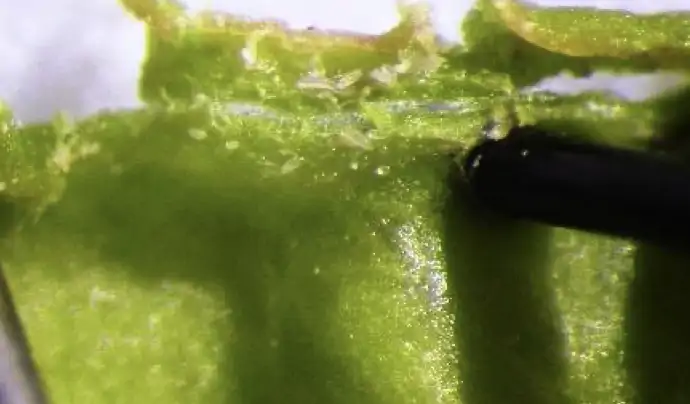
Eriophyidae mites, whose adults are yellowish-cream, transparent, and thin, have a carrot-like structure that is wide at the head and narrows towards the abdomen. Their sizes are approximately 0.1-0.3 mm, and male and female individuals are very similar to each other; they also move slowly. These mite species are known for the damage they cause to walnut leaves and fruits. In addition to the periods called Protogyne (summer form) and Deutogyne (winter form), which have two different adult stages, they also go through an intermediate stage called Nymphopupa to withstand unfavorable climatic conditions. These mites spend the winter as adults inside buds, under barks, and in cracks on the trunk. When leaf buds open in the spring, adult individuals begin to feed on young leaves and fruits. As a result of feeding, they lay eggs in the galls and blisters they create on the leaf and fruit. The eggs hatch within a week, and the emerging nymphs live by feeding inside the galls until they become adults. When they reach adulthood, they leave the galls and migrate to young leaves and fruits. The damage appears at the end of the summer season when it is most intense. In autumn, female forms are produced and fertilize themselves to spend the winter in protected places. They are generally spread through mechanical transport such as wind, birds, and insects. Additionally, sapling transportation plays an important role in carrying these species to clean areas. Walnut Eriophyidae mites produce many generations per year depending on climatic conditions. The images below show the appearance of nymph and adult individuals belonging to Eriophyidae sp. mites.
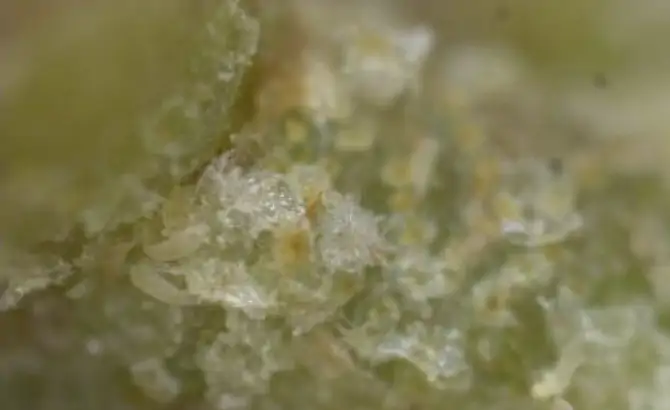
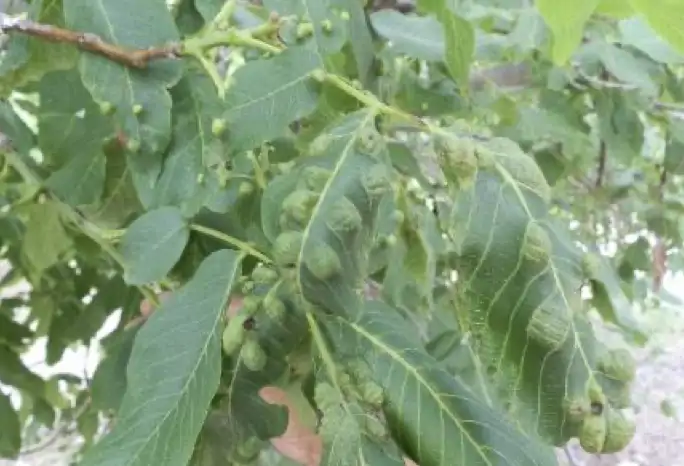
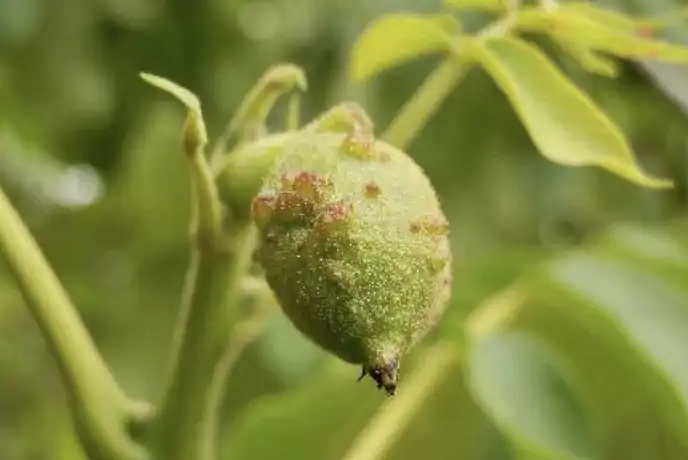
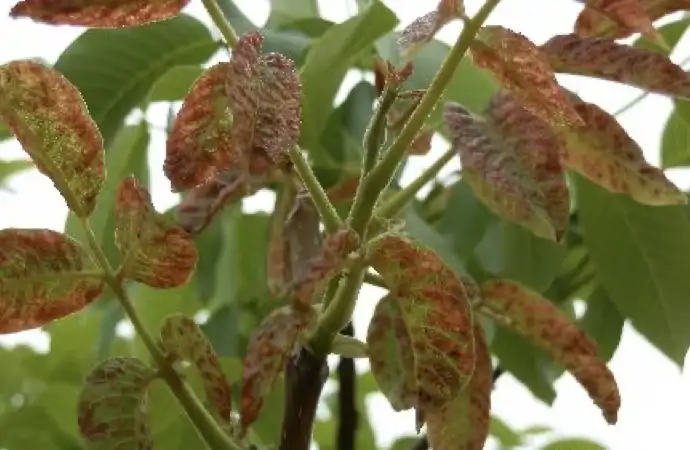
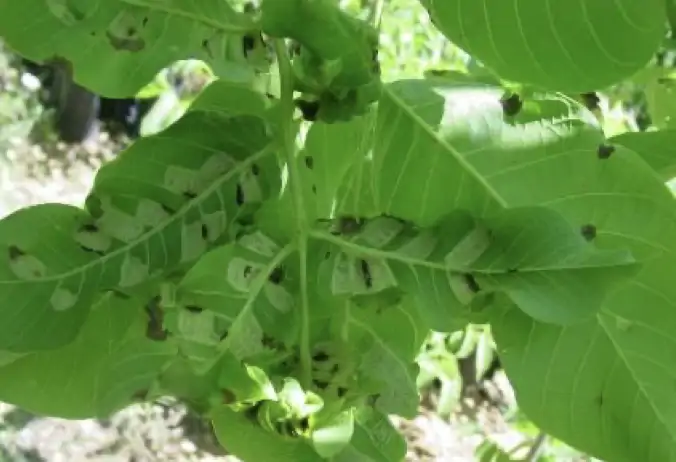
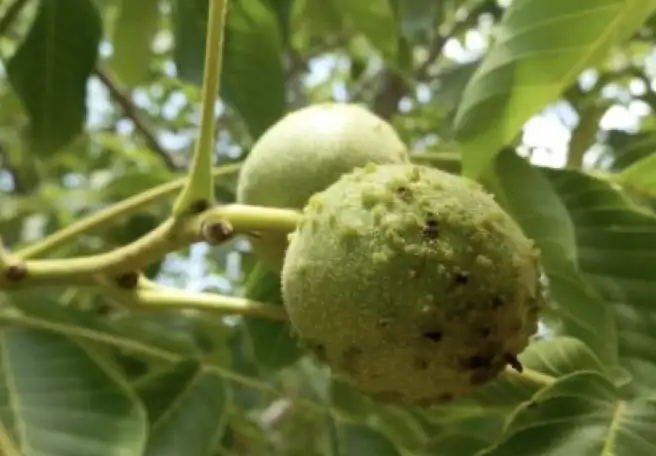
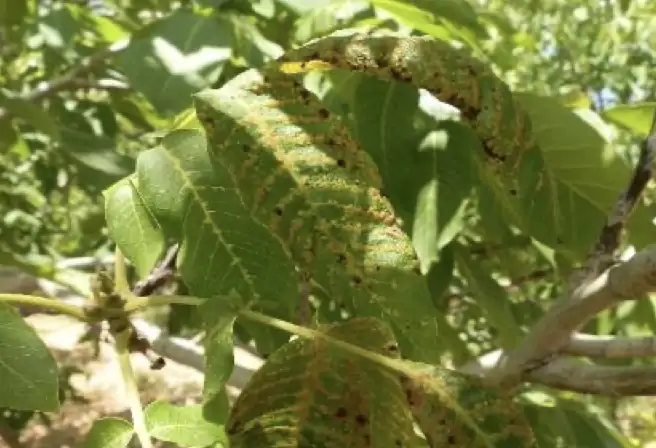
Walnut Eriophyidae mites feed on the sap they suck from walnut leaves and fruits. These species cause deformation (gall and blister) in the plant tissue with the toxic substance they secrete during sucking. For example, the walnut leaf blister mite (A. erinea) feeds only on the leaves and causes large galls on the upper surface of the leaf and erineums (fuzziness) on the lower surface (Figures 3-4). The walnut leaf gall mite (A. avanensis), on the other hand, usually feeds on the walnut leaf, creating small wart-like galls on the lower and upper surfaces, and similarly damages the fruit in dense populations (Figures 5-8). While the galls and blisters are initially light greenish in color, they turn red, brown, and black over time. In cases of high infestation, the leaves drop early and the shape of the fruit is distorted. The damage of these species is encountered in all our walnut-growing regions.
Control
Cultural measures: At the beginning of the cultural measures to control walnut Eriophyidae mites in agricultural practices and orchards: the saplings and graft scions to be used when establishing the orchard should be free from these pests. Regular maintenance of the orchard should be ensured, trees should be kept healthy at all times, and excessive use of nitrogenous fertilizers should be avoided. At the end of spring, infected shoots should be pruned, and together with the pruning residues, leaves falling in autumn should be collected and destroyed. In cases of mild infection, pruning and removing affected leaves and shoots from the orchard and destroying them is important for reducing the population. Additionally, weed control in and around the orchard should be carried out regularly.
Biological control: In order to protect the ecological balance, it is important to state that these mite species are kept under pressure by many effective predators in nature. Therefore, protecting predatory species and increasing their activity is essential. During periods when the activities of natural enemies are intense, unplanned pesticide applications should be avoided in pest control, and when necessary, selective pesticides with the lowest impact on the environment and natural enemies should be used. Additionally, perennial shelter plants (wild rose, blackberry, etc.) and plants providing food sources (mint, wild carrot, fennel, etc.) should be protected or grown around the orchard for natural enemies.
Chemical control: The general application against walnut Eriophyidae mites is that signs of galls are sought by examining leaves and fruits in the spring in orchards where infestation was previously known. In case of visible damage symptoms, spraying is performed. However, in orchards known to be infested, appropriate spraying times are determined during periods when intense infestation is observed every year. These periods are April-May, when adults migrate from their overwintering sites to leaves and fruits in the spring, and October-November, when they migrate from leaves and fruits back to plant organs to spend the winter. At least one spraying should be done when damage is seen in nurseries and young orchards (under 5 years old). If damage continues on newly emerging young leaves, one more spraying can be recommended, considering the effect duration of the pesticide and the damage situation.
Leopard Moth
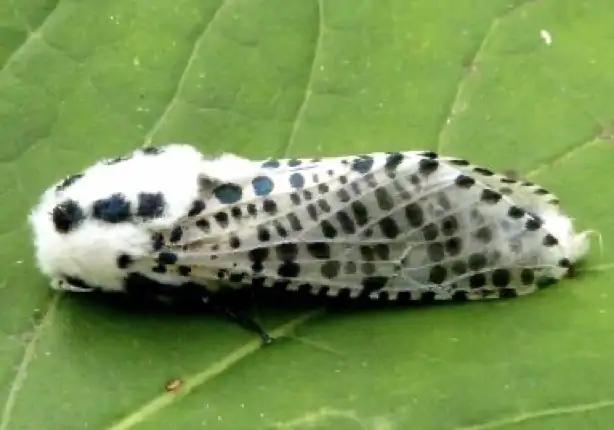
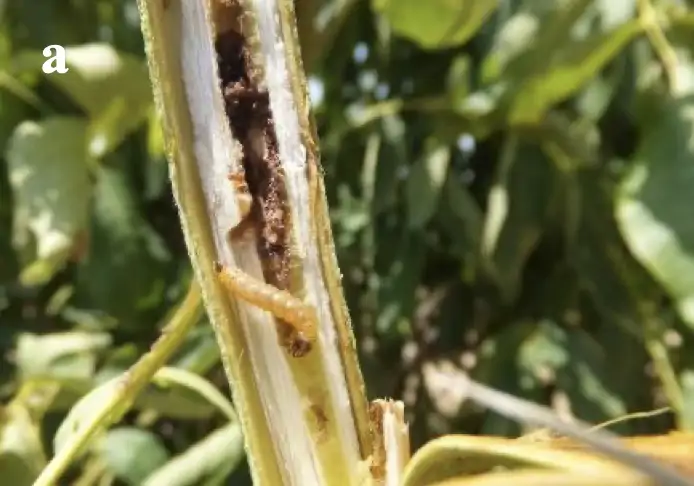
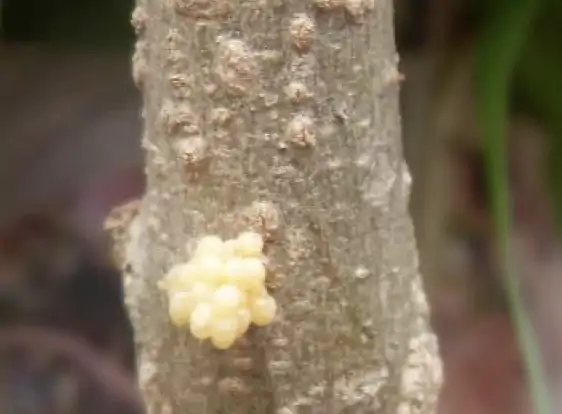
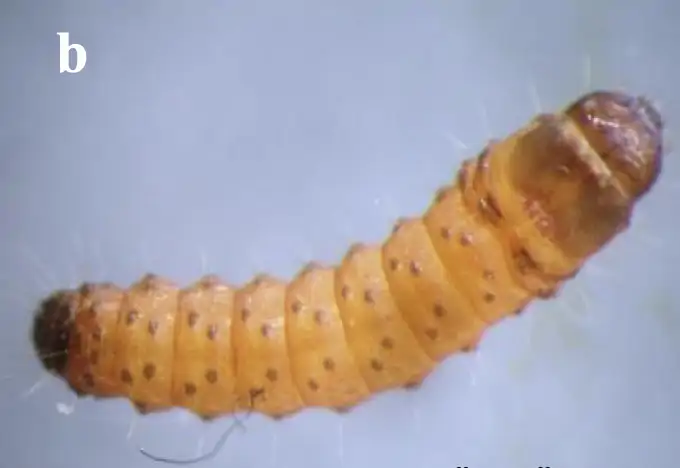
The wingspan of the adults is approximately between 41-43 mm. The front and hind wings are white, and there are many oval-shaped metallic blue spots on the front wings (Figure 9). The color of these spots may vary according to the plant species the larva feeds on. The antennae of female individuals are filiform and covered with white hairs. The antennae of male individuals are pectinate, and the white hairs on them are concentrated at the basal part. There are dense white hairs on the head and thorax, and 6 dark blue spots in two rows of 3 in the middle part. The abdomen is dark brown in color, and there are many white hairs between the segments. The egg is oval-shaped, approximately 0.8×0.9 mm in size, and reddish-yellow or reddish-brown in color (Figure 10). The young larva is pink, and the spots on it are very faintly visible (Figure 11a). The mature larva is approximately 8×45-60 mm in size, cylindrical-shaped, and dark yellowish-brown in color. The abdomen has 8 segments, and each segment has 4 pairs of black spots. There are two hairs on these spots, one short and the other long (Figure 11b).
Control
Cultural measures: Saplings and scions used in agricultural areas or orchards should be clean. Orchard maintenance should be done regularly and trees should be kept healthy. In May-June, weeds in the canopy projection should be controlled, and care should be taken to clean root suckers in fruit trees with root suckers like pomegranate. Trees should be pruned regularly every year, and during pruning, infested branches should be cut and destroyed. In orchards where density is low, larvae should be killed by inserting steel wire into galleries or by injecting a gas-forming insecticide (closing the gallery entrance with grafting wax or putty).
Biological control: The Leopard Moth has many natural enemies in nature. In order to protect these natural enemies and increase their effectiveness, a path should be taken to protect, support, and increase the activity of existing predators by correctly determining the pesticides and spraying times used against pests. Therefore, during periods when predator activity is intense during the year, indiscriminate spraying against other pests should be avoided. Instead of broad-spectrum plant protection products, selective (specific) ones should be preferred.
Chemical control: Since the larvae of the pests feed inside galleries in the wood tissue of the tree, their control is quite difficult. To make a spraying decision, the first butterfly emergence is monitored using sex pheromone traps. For this purpose, one monitoring trap per hectare is hung in the first or second half of May. Traps are checked 2-3 times a week. Trees should be sprayed between 10 and 15 days after the first adult catch (June). Spraying should be in the form of full coverage. In orchards that have started fruiting, sprayings near harvest can be integrated with other pomegranate pest control methods. For effective control against the Leopard Moth, management should continue for at least two years.
Pear lace bug
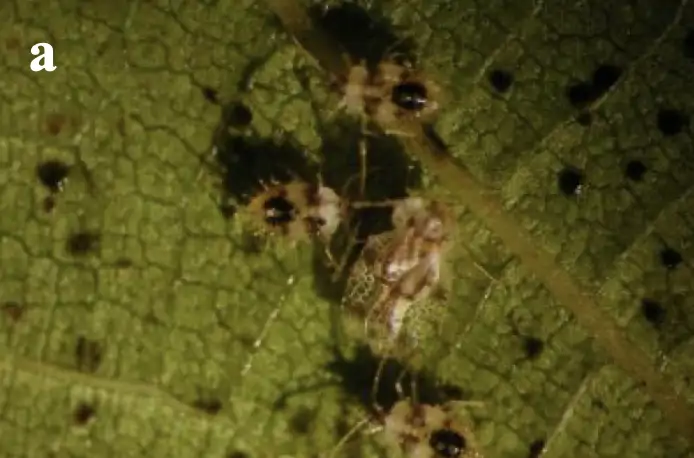
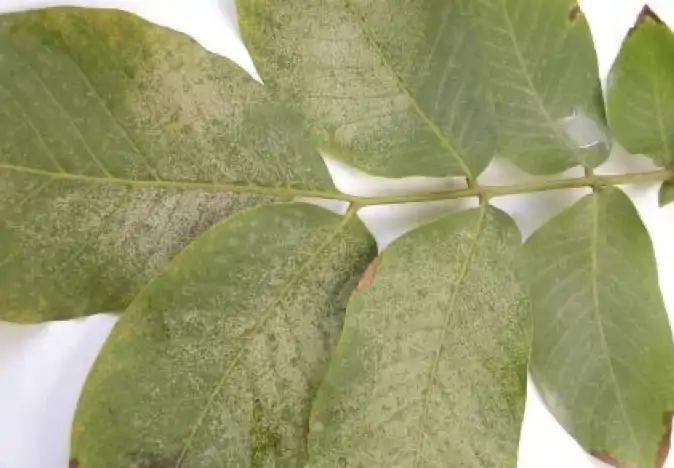
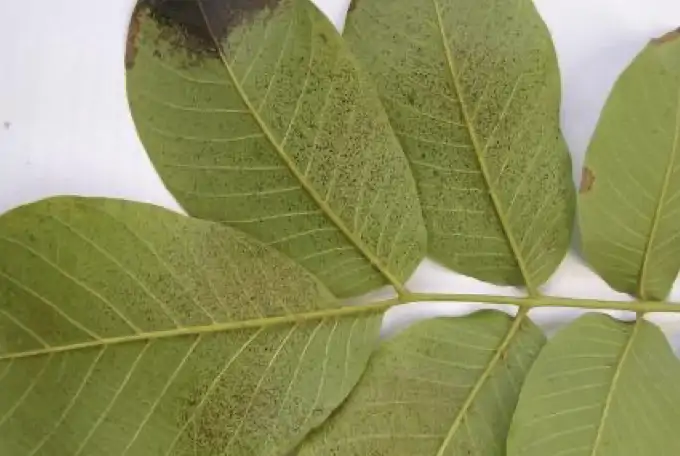
Pear lace bug adults have a wide and flat body and are 4-5×2.5 mm in size. Their upper wings, which have a transparent appearance, resemble a patterned honeycomb and are smoke-colored shaded. The chest and abdomen parts are brown-black, their legs are dark yellow in color, and their antennae are 5-segmented. The antennae cover a high pronotum and extend forward to encompass the head (Figure 12a). The eggs are shiny black in color and approximately 2 mm long. They spend the winter season as adults under tree barks, among stones in soil cracks and crevices, and under dried leaves. Starting from April, they leave these overwintering sites and move to fruit trees. These insects, which consume the sap of the leaves, mate after feeding for 10 days. Females lay eggs into the lower epidermis and tissue of the leaf starting from the beginning of May. The eggs are covered with a sticky liquid for protection purposes. 21-127 eggs are laid per female, and these eggs hatch starting from the beginning of June. Nymphs are born black, and their colors lighten as they molt. S. pyri molts five times and becomes an adult in average 22 days. Adults withdraw to overwintering sites to spend the winter season starting from October. This species produces 2-3 generations per year. The nymphs and adults of the Pear lace bug cause the breakdown of chlorophyll by sucking the leaf sap. As a result of this feeding, yellowish-white spots form on the leaves (Figure 12b). The dark-colored excrement formed under the leaf and the sweet substance they secrete prevent the leaf's respiration and lead to drying (Figure 12c). In cases of high density, trees cannot develop healthily, shoots cannot mature fully, fruits remain small, and this can cause a decrease in product quality and yield. The Pear lace bug is seen in fruit-growing regions in our country. However, it is generally a secondary pest that does not always cause economic damage.
Control
Cultural measures: The measures to be taken in agricultural practices and orchards are as follows: Dense planting should be avoided in new orchard establishments, excessive irrigation and nitrogenous fertilizer application should be carefully regulated, and weed cleaning in and around the orchard should be done regularly. Air circulation within the orchard should be ensured by pruning the trees regularly every year. Additionally, it has been observed that the Kaolin application, used to protect fruits from the sun, significantly reduces the Pear lace bug population.
Biological Control: Although there are a limited number of studies in our country regarding the natural enemies of the Pear lace bug, priority should be given to increasing their populations by protecting parasitoids and predators in nature. In the control of pests that cause problems in walnut orchards, environment-friendly, selective (specific) pesticides that do not harm parasitoids and predators should be preferred. Additionally, suitable shelter plants (for example wild rose, blackberry, etc.) and food sources (for example prey, pollen, nectar, etc.) should be planted or protected at orchard edges for natural enemies.
Chemical control: Starting from April, if the average number of adults emerging from overwintering is 1 or more on shoots selected from different directions of 10 determined trees, spraying should be applied. In June, if an adult+nymph density of 4 or more per leaf is detected during the period when the first generation nymphs are dense, a second spraying can be considered. However, if Codling moth and aphid control is being carried out in the same orchard, a separate spraying may not be necessary.
Frequently Seen Diseases in Walnuts
Walnut trees are valuable assets that enrich our orchards and offer delicious fruits. However, there are also some diseases that threaten this healthy and pleasant world. As walnut growers, recognizing these diseases and taking precautions is vital to keeping our orchards strong and productive. Recognizing walnut diseases and understanding their symptoms is the key to early intervention. You can access our detailed article on this subject via the link below. Additionally, you will discover various protection strategies including cultural measures, biological control, and chemical control methods, not just recognizing walnut diseases. This guide, full of tips, practical suggestions, and experiences on what we can do to protect our orchards from these diseases, will be a reference source for anyone who wants to be successful in walnut cultivation. Let's enjoy obtaining delicious and healthy fruits by protecting the health of your walnut trees!
Irrigation in Walnuts
Although Turkey has a leading position in walnut production, it has not yet reached the desired yield level. While the number of fruit-bearing walnut trees was 3.5 million in 2000, today it is approaching 9 million. However, this increase is not enough to meet the demand. Although the demand for Chandler type walnuts is especially high, irrigation is of great importance to increase productivity. In walnut irrigation, correct irrigation is very critical, especially in the spring months when the internal development of the fruits begins. Water scarcity during this period can stop the development of fruits and negatively affect yield and quality. If soil moisture is not sufficient, problems such as fruit kernel shriveling, darkening, and spotting can occur. In this period when interest in walnut cultivation has not decreased, it should be noted that irrigation is an indispensable factor in modern orchards. With correct irrigation, healthier and more productive walnut production will be possible.
How many days apart are walnuts irrigated?
- During the seedling planting stage, you should determine the interaction depth of the 15-20 liters of water used in each irrigation process within the soil and adjust the irrigation duration and amount accordingly.
- You should regularly observe how long the irrigation you perform keeps the soil of the seedling moist and adjust the irrigation frequency accordingly.
- In general, depending on the air temperature and precipitation status, it is recommended to perform seedling irrigation with 15-20 liters of water once every 10 days, once every 7 days, and especially on hot days, once every 3-5 days.
- Water stress experienced when irrigation is neglected can slow down the root, trunk, and branch development of the seedling and cause it to dry out.
- In addition to frequent irrigation, low irrigation can also damage the seedling. You should consider the moisture level in the soil regarding irrigation frequency and amount. You can benefit from esular's innovative soil moisture sensors in this regard.
- As stated above, the moisture level in the soil is the basic indicator for the amount and frequency of irrigation. You should create your irrigation plan based on observations made.
- In general, it is important to continue by reducing seedling irrigation intervals until September 15th. In hot regions, if there is dryness in the root zones of the seedling, that is, at a depth of 15-20 cm, an additional irrigation can be performed.
How much water does a walnut tree want?
Including annual precipitation, walnuts have an irrigation water need of 1200-1350 mm. The irrigation process continues from late spring until the harvest period. Rarely, in very dry periods or in regions where total precipitation is low, late autumn or winter irrigations may become mandatory. Water deficiency in the soil can negatively affect the fruit size and quality of walnuts. Walnut cultivation experiences reveal that irrigation is a fundamental factor in the production of high-quality kernel walnuts.
Smart irrigation in walnut cultivation
Walnut cultivation is adapting to modern agricultural practices to increase productivity and quality. At this point, smart irrigation technologies are replacing traditional irrigation methods. Smart irrigation plays an important role in walnut cultivation by using water resources effectively and sustainably. Unlike traditional irrigation methods, smart irrigation systems automatically manage irrigation processes by considering factors such as weather data, soil moisture measurements, and plant needs. In this way, water is used efficiently and water waste is prevented. In addition to providing water savings to farmers, smart irrigation offers the advantage of increasing productivity by providing optimal irrigation suitable for the plant growth cycle.
Walnut trees need water, especially during growth periods. Smart irrigation systems evaluate this need instantaneously and optimize plant health along with water efficiency. This technology provides farmers with significant savings not only in water costs but also in energy and labor costs. For walnut growers, smart irrigation systems are an important step in transitioning to sustainable agricultural practices. These systems support economic returns by increasing walnut productivity and quality, as well as reducing environmental impact by protecting water resources. Do not forget to check out our content below for more detailed information!