
Introduction: The Indispensable Part of Modern Agriculture: Esular Agricultural Climate Station Maxi
Success in modern agricultural practices is directly related to access to accurate and instantaneous data. Observing the field with traditional methods remains insufficient in the face of today's rapidly changing climate conditions and increasing operational costs. As Esular, the Esular Agricultural Climate Station Maxi Model, which we developed to be the biggest supporter of our farmers in this technological transformation, is an advanced technology package that measures the micro-climate in your field with centimeter precision. In this comprehensive guide, we will discuss in detail how you can install this high-technology device, which you have just taken out of its box, step-by-step without the need for professional technical support. Our goal is to ensure you fully understand the potential of the Esular Maxi Climate Station and to show how you can use it to increase productivity, sustainability, and profitability in your field. This station is not just a piece of hardware, but also the cornerstone of your smart farming strategies.
Why is an Agricultural Climate Station Vitally Important for Today's Agriculture?
Before proceeding to the installation, understanding what kind of revolution a system like the Esular Maxi Climate Station will create in your field is critical for fully grasping the value of your investment. The Esular Maxi Model is much more than just a thermometer or a rain gauge; it is a control center that holds the pulse of your field and enables you to make future-oriented decisions. This station, which forms the basis of precision farming practices, guides you at every stage of crop production.
Importance of Micro-Climate Data: Every field has a unique micro-climate within itself. This micro-climate may differ from general regional weather forecasts. Esular Maxi enables you to understand the real needs of your plants by detecting these local differences. For example, temperature and humidity changes in different parts of your field directly affect the spread rate of diseases or irrigation needs.
Plant Disease and Pest Management: Most plant diseases start and spread rapidly when a certain humidity and temperature threshold is exceeded. By monitoring this data in real-time, the Esular Maxi Climate Station allows you to create risk models for fungal diseases such as Botrytis (grey mold), Mildew (powdery mildew), and Rust (fungal diseases). When your station tells you "The fungal disease risk in your field is currently 85%," if you apply pesticide, you avoid unnecessary chemical use, reducing both costs and minimizing damage to the environment. This also applies to pests; certain temperature and humidity conditions can trigger the population increase of some harmful insects. Intervening at the right time with early warnings reduces chemical use and supports integrated pest management strategies.
Irrigation Optimization and Protection of Water Resources: Solar radiation, wind speed, temperature, and humidity information measured by the station calculate how much water evaporates from the plant and soil (evapotranspiration - ET0) using scientific methods. The Esular mobile application gives you the information "Your field lost 4 tons of water per decare today." Thanks to this precise data, you can determine the actual water needs of the plant for that day, and by providing exactly as much water as needed with smart irrigation systems, you both lower your water bill and prevent root rot. Considering the increasing water scarcity globally, such precision water management practices form the basis of sustainable agriculture. According to FAO (Food and Agriculture Organization of the United Nations) data, agriculture consumes approximately 70% of the world's freshwater resources. Optimizing this consumption is vital from both an economic and ecological perspective.
Early Warning Against Frost and Extreme Temperature Risk: Especially in orchards and early spring plantings, spring frosts can cause great destruction. Esular Maxi sends an instant notification to your phone when the temperature drops to a critical threshold (e.g., +2°C). In this way, you can operate your frost prevention systems (fogging, wind fans, under-cover heating, etc.) in time and prevent product loss. Similarly, extreme temperature warnings help you take measures such as shading or additional irrigation to protect your plants from heat stress.
In short, the Esular Agricultural Climate Station Maxi allows you to base every decision in your field on scientific data, enabling you to get more yield with fewer resources, minimize risks, and step into the future of smart farming.
Box Content: Let's Get to Know the Parts
When you open the Esular Maxi Climate Station box, you will encounter basic parts and assembly equipment, each designed to high-durability industrial standards. Spreading these parts on a flat surface and checking them before starting the installation will speed up the assembly process and allow you to detect possible deficiencies in advance.
Basic Components:
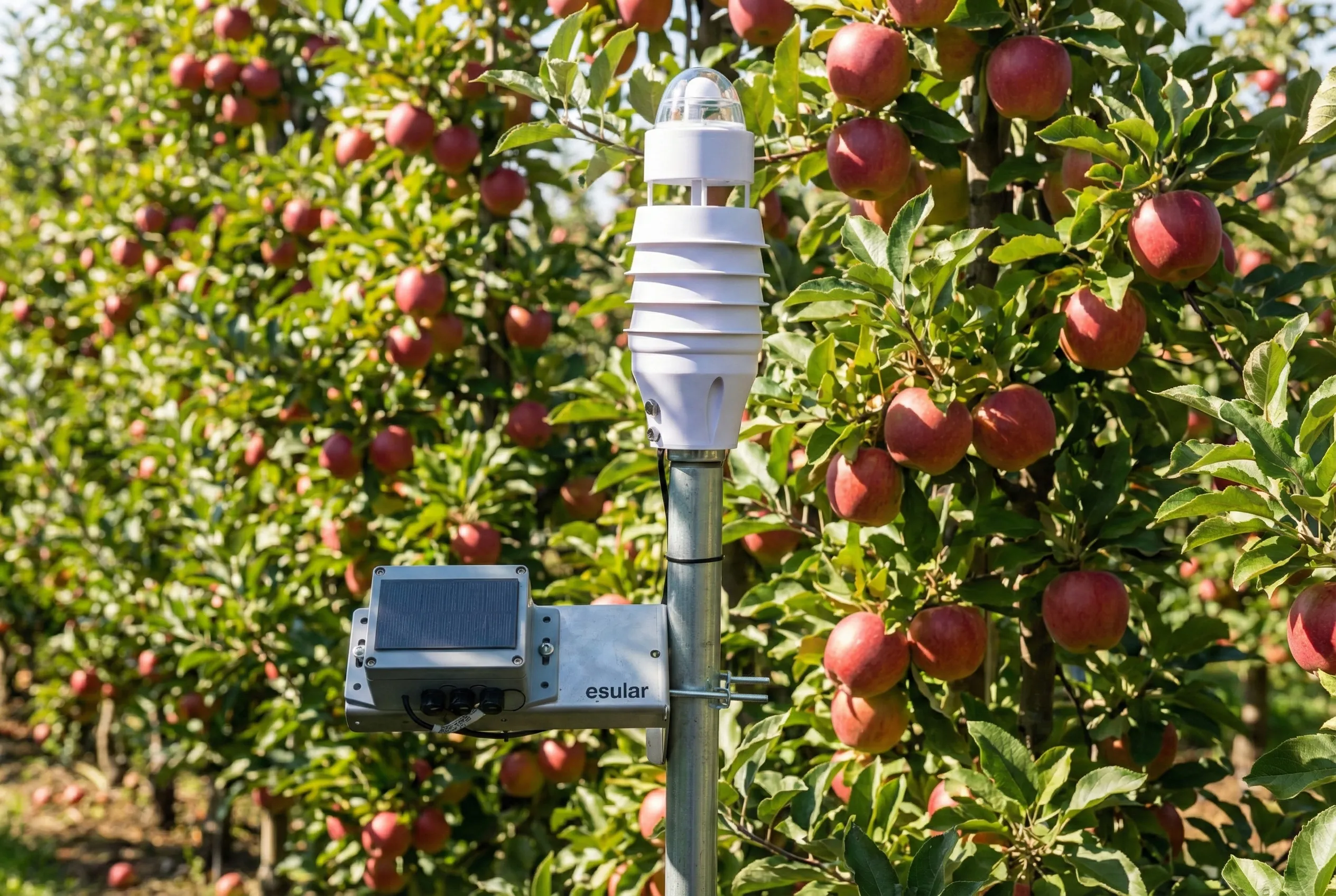
- Main Carrier Pipe and Fixing Base: The sturdy metal pipe that will carry all the sensors of the station and the three-legged or single-plate mounting base used for fixing to the ground. It offers long-lasting use with its wind-load resistant structure.
- Esular Control Device (Grey Box): The central processing unit that collects, processes, and wirelessly transmits all sensor data to the Esular cloud platform. It contains a communication module (LoRa/GSM) and a power management unit.
- Solar Panel: The high-efficiency panel that provides energy to the control device by converting sunlight into electricity. It is critical for an uninterrupted energy flow.
- Maxi Sensor Unit: The integrated sensor group that measures basic climate data such as air temperature, relative humidity, atmospheric pressure, and solar radiation. It is usually located inside a protective shield.
- Wind Speed and Direction Sensor (Anemometer and Wind Vane): Sensors that precisely measure the speed and direction of the wind. Indispensable for plant evapotranspiration and disease spread modeling.
- Precipitation Sensor (Pluviometer): The sensor measuring the amount of precipitation with millimeter precision, working on the tipping bucket principle. It is essential for accurate irrigation decisions and disease risk analysis.
- Mounting Clamps and Screws: U-clamps, nuts, and screws used to fix all parts to the main carrier pipe. They are made of stainless steel and are resistant to outdoor conditions.
After ensuring that all parts in the box are complete, you can start the installation.
Technical Specifications and Capacity Table
The Esular Agricultural Climate Station Maxi Model is designed to withstand harsh conditions in the field and has advanced technical features offering a wide range of precise data. The table below details the technical capacities and measurement ranges of the station's main components:
| Component/Sensor | Measurement Range / Capacity | Precision / Feature |
|---|---|---|
| Air Temperature | -40°C to +80°C | ±0.3°C Precision |
| Relative Humidity | 0% to 100% RH | ±2% RH Precision |
| Atmospheric Pressure | 300 to 1100 hPa | ±0.25% Precision |
| Solar Radiation | 0 to 2000 W/m² | Spectral Range 400-1100nm |
| Wind Speed | 0 to 60 m/s | ±3% Precision |
| Wind Direction | 0 to 360° | ±3° Precision |
| Precipitation (Pluviometer) | 0.2 mm per tip | Tipping Bucket Mechanism |
| Power Source | Solar Panel + Li-ion Battery | 30 Days Operation Without Sun |
| Communication | LoRaWAN / GSM (4G/NB-IoT) | Up to 10km Range (LoRa) |
These features ensure that the Esular Maxi model collects the most critical climate data in your field with the highest accuracy, forming a solid foundation for your precision farming decisions.
Step-by-Step Installation Process
The installation of the Esular Maxi model is designed with a "Plug-and-Play" logic, and the flawless execution of the mechanical assembly is vital for the accuracy of the data to be received. Here is the path you should follow step-by-step:
Step 1: Creating the Main Skeleton and Carrier Pipe
The station standing firmly on the ground is critical, especially for the accuracy of wind speed and direction measurements. A shaking or leaning pole will lead to errors in all sensor data. Therefore, this first step of the assembly must be done with great care.
Application: First, choose a suitable location for the station. Make sure there are no tall trees, buildings, or other obstacles around this location; such obstacles can prevent wind and solar radiation sensors from measuring accurately. Place the three-legged or single-plate fixing base on a flat surface you have chosen. Fit the long iron pipe into the socket in the middle of this base. Secure the pipe firmly to the base using the main screws from the box. If your field is in a very windy area or the ground is loose, it is recommended to provide additional fixing by pouring concrete on the base foot or by driving long stakes into the ground. Using a spirit level to ensure the pipe stands perfectly vertical (90 degrees) will provide a professional result. This guarantees that the wind sensors work correctly on the horizontal plane.
Step 2: Control Device and Solar Panel Integration
In this stage, we are preparing the energy management center of the system and integrating the data collection unit. The control device and solar panel work integrated with each other to form the uninterrupted power source of the station.
Assembly Detail: Take the grey Esular Control Device. There are screw holes on the back of the metal plate where the solar panel is attached. Align the control device here and secure it with the nuts and screws from the box. When tightening the screws, make sure they are tight enough not to damage the plastic casing of the device, but not so loose that they loosen in wind or vibration.
Cable Connection: Carefully join the white cable end coming from the control device with the white cable end coming from the solar panel. These sockets are specially protected (IP67 standard), which makes them resistant to water and dust. To prevent the pins inside the sockets from being damaged, align the arrow marks on them, press them together, and lock by turning the outer screw cap. This process contributes to the long-lasting operation of the device by ensuring its water-tightness.
Fixing to the Pole: Secure this unit with the panel to the iron pipe using U-clamps so that it is approximately 1.5 to 2 meters high from the ground. Positioning the solar panel to receive sunlight at the most direct angle ensures that you receive uninterrupted data even in winter months or cloudy weather. For Turkey, positioning it to face south is generally ideal. The angle of the panel should be optimized according to your latitude; generally, a steeper angle is preferred in winter months and a flatter angle in summer months.
Step 3: Assembly of the Top Sensor Arm (L Bracket)
The ability of the Maxi sensor unit and wind sensors to see the sky and wind from all directions without obstacles is the key to collecting accurate and reliable data. Therefore, the placement of the L bracket must be done meticulously.
Procedure: Place the L-shaped metal mounting bracket at the highest point of the pipe. Pass the U-clamps through the pipe and fit them through the holes of the L bracket. Tighten the nuts with a wrench. It is essential for the bracket to be at the very top of the pipe and for there to be no obstacles around it, especially so that the wind speed and direction sensors can perform 360-degree wind measurements. In addition, the solar radiation sensor should be able to receive maximum light without being shaded. Ensure that the L bracket is firmly fixed and will not shake in the wind.
Step 4: Placement of the Climate Station Maxi Sensor Unit
Now we are attaching the main sensor group, which is the most technological and sensitive part of the system, to the carrier L bracket. This unit measures basic climate parameters such as air temperature, relative humidity, atmospheric pressure, and solar radiation.
Assembly Detail: Place the Maxi Sensor Unit (usually white or light-colored, with a protective shield allowing air flow) into the appropriate socket at the end of the L bracket. Ensure the sensor unit is in the correct direction (usually with the solar radiation sensor facing south). Secure the sensor unit firmly to the L bracket with the small screws or clamps from the box contents. Avoid over-tightening the screws, but ensure the unit will not loosen in wind or vibration. Carefully lead the cable coming from the bottom of the sensor unit downwards along the main carrier pipe and leave it to be connected to the control device later. It is important that the surroundings of this unit are open and that it is not exposed to direct sunlight (thanks to the protective shield); otherwise, temperature and humidity measurements may be incorrect.
Step 5: Installation of the Precipitation Sensor (Pluviometer) and Precise Connection
The precipitation sensor must be on a flat surface and level to obtain accurate and reliable precipitation data. Otherwise, the tipping bucket mechanism inside will not work correctly and will make wrong measurements.
Assembly: Clamp the precipitation sensor to the pole at a position immediately above or next to the control device, but where it will not drip water onto other parts (solar panel or main sensor) and where no object will cast a shadow on it. Open the top cover of the sensor, remove the protective tapes (if any) inside, and ensure that the tipping bucket mechanism moves freely. Check with a spirit level that the sensor is perfectly level; this ensures that precipitation is collected evenly and measured accurately.
Cable Connection (Critical Step): Connect the cable coming from the precipitation sensor to the relevant port on the Esular Control Device. Use the waterproof white connection terminals (bead connectors) from the box for these connections. Place the cable ends into the terminal without stripping them and press the colored button on the terminal with the help of pliers. The gel inside will protect the connection from moisture and ensure electrical transmission. Ensure all connections are tight and waterproof. Loose connections can cause moisture to leak inside and cause the sensor to malfunction.
Step 6: Cable Arrangement and Field Safety
The final stage of installation is cable management for the long-lasting and trouble-free operation of the system. Birds, rodents, wind, or UV rays of the sun in the field can damage hanging cables, which can lead to data loss or system malfunctions.
Application: Lead the cables coming from all sensors down along the main carrier iron pipe in a taut and organized manner. Secure the cables firmly to the pipe every 20-30 cm using the plastic zip ties (tie-wraps) from the box. Hide and secure cable excesses by coiling them into the space behind the control device. This prevents cables from swaying and wearing in the wind, being gnawed by animals, or being damaged by agricultural machinery. It also extends their life by reducing the exposure of cables to direct UV rays of the sun. Ensure all connection points are waterproof and that cables do not rub against sharp edges.
Installation Video: Visual Support
To follow the above steps visually and better understand the practical details of the assembly, you can watch our training video below prepared by the Esular team. The video will make the installation process more understandable by showing each step live.
Efficiency Analysis: What Does Esular Maxi Climate Station Gain You?
Owning an Esular Maxi Climate Station is not just about buying a technological device, but about starting a comprehensive insurance policy for your field and making smart investments for the future. This system provides tangible economic benefits and sustainability advantages in your agricultural activities.
1. Up to 30% Savings in Spraying Costs and Healthier Products
Many farmers spray against plant diseases by looking at the calendar or observationally. However, plant diseases and pests develop and spread depending on specific humidity, temperature, and leaf wetness thresholds. By collecting real-time and precise micro-climate data, the Esular Maxi Climate Station creates risk models for fungal diseases (e.g., mildew, powdery mildew, rust) and pests. Thanks to these models, you spray when your station sends you specific warnings such as "The fungal disease risk in your field is currently 85%." This allows you to avoid unnecessary chemical use because you only intervene when the risk is high. In this way:
- Reduction in Chemical Use: You save up to 30% on chemical input costs by optimizing the number and amount of spraying.
- Eco-Friendly Approach: Less chemical use prevents the pollution of your soil and water resources, protects biodiversity, and helps you achieve your sustainable agriculture goals.
- Higher Quality Product: The reduction in chemical residues increases the market value of your products and offers healthier foods for consumers.
- Labor and Fuel Savings: You also save on labor and fuel costs with the elimination of unnecessary spraying trips.
2. Up to 40% Water and Energy Savings with Irrigation Optimization
The Esular Maxi Climate Station uses data from its solar radiation, wind speed, air temperature, and humidity sensors to calculate water loss from the plant and soil surface, namely evapotranspiration (ET0), using scientific formulas. Based on these calculations, the Esular mobile application provides you with precise information such as "Your field lost 4 tons of water per decare today, irrigation is recommended." Thanks to this precision irrigation management:
- Water Efficiency: By giving as much water as the plant actually needs, you prevent the waste of water resources. This is vital, especially in regions experiencing water scarcity.
- Energy Savings: You save up to 40% in electricity or fuel costs spent on irrigation by preventing unnecessary pump operation. This both lowers your operating expenses and reduces your carbon footprint.
- Plant Health: You minimize problems such as root rot, fungal diseases, or water stress caused by excessive or insufficient irrigation. Your plants always stay at the ideal humidity level.
- Yield Increase: Optimized irrigation improves the nutrient uptake of plants and supports healthy growth, providing an increase in overall product yield.
3. Early Warning Against Frost Risk and Product Protection
Especially sudden temperature drops in the spring period or early frosts at the end of autumn can cause great destruction for orchards, vegetable fields, and seedling nurseries. Esular Maxi continuously monitors the air temperature and sends you instant notifications when critical frost thresholds (e.g., +2°C or 0°C) are approached. Thanks to this early warning system:
- Timely Intervention: You can activate your frost prevention systems (such as fogging, wind fans, overhead irrigation, smoking, or covering with vegetation) in time. This ensures your products are protected from frost damage.
- Cost Effectiveness: You save on energy and labor costs by using frost prevention methods only when necessary. Instead of constantly waiting on standby, you act wisely.
- Preventing Product Loss: You secure your annual income by preventing product losses of up to 50-100% caused by frost events.
By bringing these benefits together, the Esular Maxi Climate Station is an indispensable tool that increases both productivity and sustainability in your field, reduces risk, and maximizes your profitability in the long run.
Software Integration and Esular Mobile Application: The Power of Data at Your Fingertips
Just as it is important to physically install the Esular Agricultural Climate Station Maxi model, it is also important to use the data it collects effectively. This is where Esular's advanced software platform and mobile application come into play. All data collected by your station (temperature, humidity, wind speed/direction, precipitation, solar radiation, etc.) is securely transmitted to Esular's cloud-based platform via integrated LoRaWAN or GSM modules. In this way, no matter where you are in the world, you can instantly access the micro-climate conditions in your field.
Real-Time Data Monitoring and Analysis:
- Instant Access: You can follow the current weather conditions of your field (temperature, humidity, wind, precipitation) in real-time via the Esular mobile application.
- Historical Data Analysis: You can access historical data to understand long-term climate trends and factors affecting plant development, and perform detailed analyses through graphs and reports.
- Customizable Graphs: You can visualize different sensor data together and easily examine changes in specific time intervals.
Smart Warnings and Notifications:
The Esular platform sends automatic warnings based on the threshold values you set:
- Frost and Heat Stress Warnings: You can take precautions quickly by receiving instant notifications of critical temperature drops or rises.
- Disease Risk Notifications: Risk scores for plant diseases are calculated according to the collected data, and you are warned about potential dangers. This is a revolution in plant disease management.
- Irrigation Need Notifications: Based on evapotranspiration (ET0) calculations, you receive smart suggestions on when and how much water your field needs.
Decision Support Systems:
Esular's software does not only present data but also supports your agricultural decisions by transforming this data into meaningful information:
- Precision Irrigation Planning: By working integrated with soil moisture sensors (other products of Esular), it monitors the moisture level in your plant's root zone instantaneously and optimizes your irrigation program accordingly.
- Fertilization Optimization: When climate data is combined with smart fertilization systems, it helps you adjust fertilization timing and amount by considering environmental factors affecting the plant's nutrient uptake.
- Yield Estimation and Harvest Optimization: When combined with long-term climate data and plant development models, you can make potential yield estimates and develop strategies to optimize your harvest.
The Esular mobile application and web platform offer easy access to all these advanced features thanks to their user-friendly interface. Thus, the control of your field is always in your hands.
The Place of Esular Maxi Model in the Agricultural Ecosystem: Integrated Solutions
Although the Esular Agricultural Climate Station Maxi is a powerful tool on its own, it reaches its true potential when used as part of Esular's broad smart farming solutions ecosystem. By working integrated with other Esular products, it creates a comprehensive automation and management system in your field.
Integration with Other Esular Products:
- Soil Moisture Sensors: When evapotranspiration data from the climate station is combined with root zone moisture information from soil moisture sensors, irrigation decisions reach millimetric precision. This integration ensures the most efficient use of water.
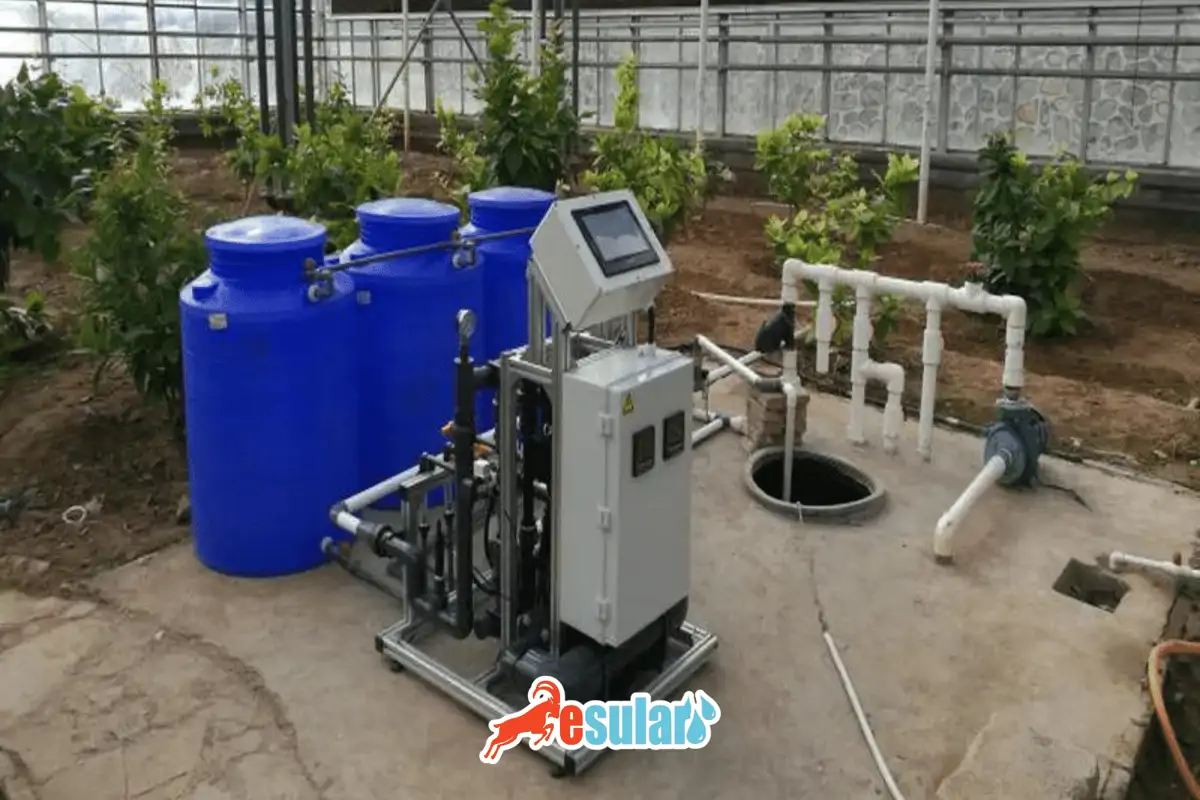
- Wireless Valve Control Units: The irrigation time and amount determined by the climate station are automatically transferred to your irrigation system via Esular wireless valve control units. In this way, you can start, stop, or program irrigation remotely without going to the field.
- Greenhouse Automation Systems: The Maxi Climate Station helps greenhouse climate control systems (ventilation, heating, shading) work more intelligently by monitoring extra-greenhouse climate conditions. A sudden wind increase or temperature drop outside allows the in-greenhouse systems to take precautions in advance.
- Pivot Irrigation Automation: When pivot irrigation systems used in large agricultural lands are integrated with climate station data, the rotation speed and water application rate of each pivot can be adjusted according to real-time weather and plant needs. This maximizes water and energy efficiency even in large-scale areas.
Solutions for the Future of Agriculture:
The Esular Maxi Climate Station plays a central role within smart farming systems. The data it collects is processed with machine learning and artificial intelligence algorithms, allowing for more accurate predictions and optimized agricultural strategies. This integrated approach offers farmers the opportunity to be prepared not only for today's but also for tomorrow's challenges. As Esular, we aim to build a more efficient, sustainable, and profitable agricultural future by bringing our farmers to the forefront of digital transformation.

Comprehensive Recommendations for Maintenance and Long-Lasting Use
Your Esular Maxi Climate Station model is designed and manufactured to withstand harsh field conditions. However, regular maintenance and simple checks are of great importance for your device to continue working with high accuracy and performance for many years. Simple checks and cleanings you will perform once a year extend the device's life and increase data quality.
Annual Maintenance Checklist:
| Component | Maintenance Procedure | Frequency |
|---|---|---|
| Solar Panel | Cleaning dust and dirt on the surface with a soft cloth. | Every 6 Months |
| Precipitation Sensor | Checking the inside for leaves or debris and cleaning. | Before the Rainy Season |
| Wind Sensors | Checking that the anemometer and wind vane turn freely. | Annually |
| Cable Connections | Visual check of cables and ensuring the tightness of connectors. | Annually |
| General Cleaning | Wiping the outer surfaces of sensor shields with a damp cloth. | Annually |
These simple maintenance steps will ensure your Esular Maxi Climate Station works at its highest efficiency and will guarantee that you receive accurate and reliable data from your field for years.
Frequently Asked Questions (FAQ)
1. Which parameters does the Esular Maxi Climate Station measure?
The Esular Maxi Climate Station measures basic climate parameters such as air temperature, relative humidity, atmospheric pressure, solar radiation, wind speed, wind direction, and precipitation amount with high precision.
2. Do I need special technical knowledge for installation?
No, the Esular Maxi Model is designed with a "Plug-and-Play" logic and can be easily installed by following the step-by-step instructions in this guide. However, it is important that the assembly is mechanically flawless for the accuracy of the data.
3. How is the energy need of the station met?
The Esular Maxi Climate Station has a completely self-sufficient energy source thanks to its integrated solar panel and internal battery system. The battery charged with solar energy guarantees uninterrupted data flow in cloudy weather or throughout the night.
4. How can I access and analyze the data?
All data collected by the station is transmitted to Esular's cloud-based platform via LoRaWAN or GSM modules. You can access this data in real-time via the Esular mobile application (Android/iOS) or web interface, and perform detailed analyses through graphs and reports.
5. How does Esular Maxi optimize my irrigation decisions?
The station uses the climate data it collects to calculate the water loss from the plant and soil surface (evapotranspiration - ET0). Based on these calculations, the Esular mobile application offers you smart irrigation suggestions indicating the actual water need of your field. In this way, you save water and energy by giving as much water as the plant needs.
Conclusion
Congratulations! You have successfully completed the installation of your Esular Agricultural Climate Station Maxi model and moved your agricultural activities in your field to the digital age. Now the micro-climate data of your field is in your pocket, no matter where you are in the world. This technology promises you not only comfort and convenience but also higher yield, less cost, and more sustainable production by enabling you to make decisions based on scientific data.
As Esular, we continue to stand by Turkish and world farmers with our local software and hardware power. If you encounter any difficulties during installation or want support on how to analyze your data, our expert team is just a phone call away. Do not hesitate to contact us. With the power of technology, we wish you bountiful harvests and a profitable future!
For more technical details, software updates, and our other smart farming solutions, you can visit our Esular website, and learn more about smart irrigation systems and agricultural meteorology stations.
", "metaTitle": "Esular Agricultural Climate Station Maxi: Installation Guide & Analysis", "metaDescription": "Set up the Esular Agricultural Climate Station Maxi model step by step and increase productivity in your field. Detailed assembly, sensor connections, and smart farming benefits.", "metaKeywords": "esular climate station installation, agricultural sensor assembly, smart farming climate station, greenhouse climate control, irrigation optimization, plant disease prevention, evapotranspiration, IoT agriculture, Esular mobile app", "faqContent": "Frequently Asked Questions (FAQ)
1. Which parameters does the Esular Maxi Climate Station measure?
The Esular Maxi Climate Station measures basic climate parameters such as air temperature, relative humidity, atmospheric pressure, solar radiation, wind speed, wind direction, and precipitation amount with high precision.
2. Do I need special technical knowledge for installation?
No, the Esular Maxi Model is designed with a "Plug-and-Play" logic and can be easily installed by following the step-by-step instructions in this guide. However, it is important that the assembly is mechanically flawless for the accuracy of the data.
3. How is the energy need of the station met?
The Esular Maxi Climate Station has a completely self-sufficient energy source thanks to its integrated solar panel and internal battery system. The battery charged with solar energy guarantees uninterrupted data flow in cloudy weather or throughout the night.
4. How can I access and analyze the data?
All data collected by the station is transmitted to Esular's cloud-based platform via LoRaWAN or GSM modules. You can access this data in real-time via the Esular mobile application (Android/iOS) or web interface, and perform detailed analyses through graphs and reports.
5. How does Esular Maxi optimize my irrigation decisions?
The station uses the climate data it collects to calculate the water loss from the plant and soil surface (evapotranspiration - ET0). Based on these calculations, the Esular mobile application offers you smart irrigation suggestions indicating the actual water need of your field. In this way, you save water and energy by giving as much water as the plant needs.