A New Era in Gaziantep Agriculture: Smart Irrigation and Automation
Gaziantep is a world-class center for agricultural production, especially in Antep pistachio and olive cultivation in Turkey. However, changing climate conditions, decreasing groundwater levels, and increasing energy costs are pushing regional farmers to seek more modern and efficient methods. At this point, smart irrigation systems stand out as a solution that not only provides water savings but also maximizes plant health and product quality. As Esular, we bring the fertile lands of Gaziantep together with the power of digital agriculture through the local and national technologies we offer.
Gaziantep's semi-arid climate structure makes the timing and amount of irrigation a vital parameter. In irrigation performed with traditional methods, a large part of the water is wasted through evaporation or deep percolation, while at the same time, the plant root zone is exposed to more water than necessary, inviting fungal diseases. Automatic irrigation systems, on the other hand, use sensor data and meteorological forecasts to ensure the plant receives exactly as much water as it needs, exactly when it needs it.
The Necessity of Smart Irrigation in Gaziantep
The limited water resources in the region make it mandatory to account for every drop. Smart irrigation systems remove irrigation decisions from human error by monitoring the moisture status of the soil in real-time. The main advantages these systems offer to Gaziantep farmers are:
- Up to 50% more efficient use of water resources
- Significant reduction in electricity bills (optimization of pump operating times)
- Increase in fertilization efficiency (fertigation control)
- Minimization of labor costs
- Prevention of plant stress and therefore increase in yield
For pistachio and olive producers in Gaziantep, irrigation is not just a technical intervention to keep the tree alive, but to increase fruit kernel fullness and oil ratio. The success of this intervention depends on the use of the correct technological infrastructure. For more information, you can examine our what is smart irrigation systems guide.
Smart Irrigation Strategies for Pistachio Orchards
Antep pistachio, the first product that comes to mind when Gaziantep is mentioned, is a drought-resistant plant, but it needs irrigation during critical periods to obtain high yields in economic terms. Especially the water stress experienced during the fruit kernel filling stage (July-August) increases the rate of empty fruit and intensifies the periodicity (alternate bearing) effect. The use of smart irrigation in pistachio orchard management eliminates these risks.
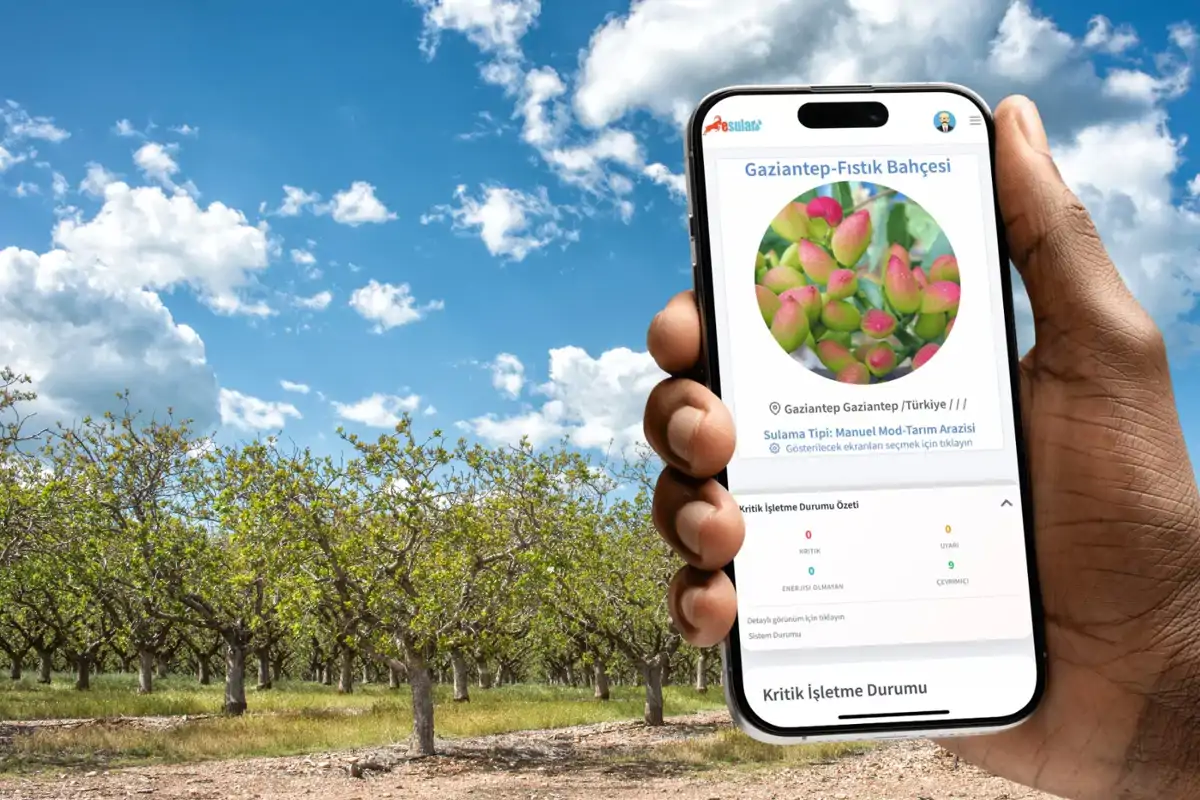
Precision Monitoring with Soil Moisture Sensors
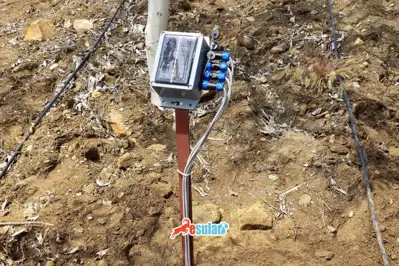
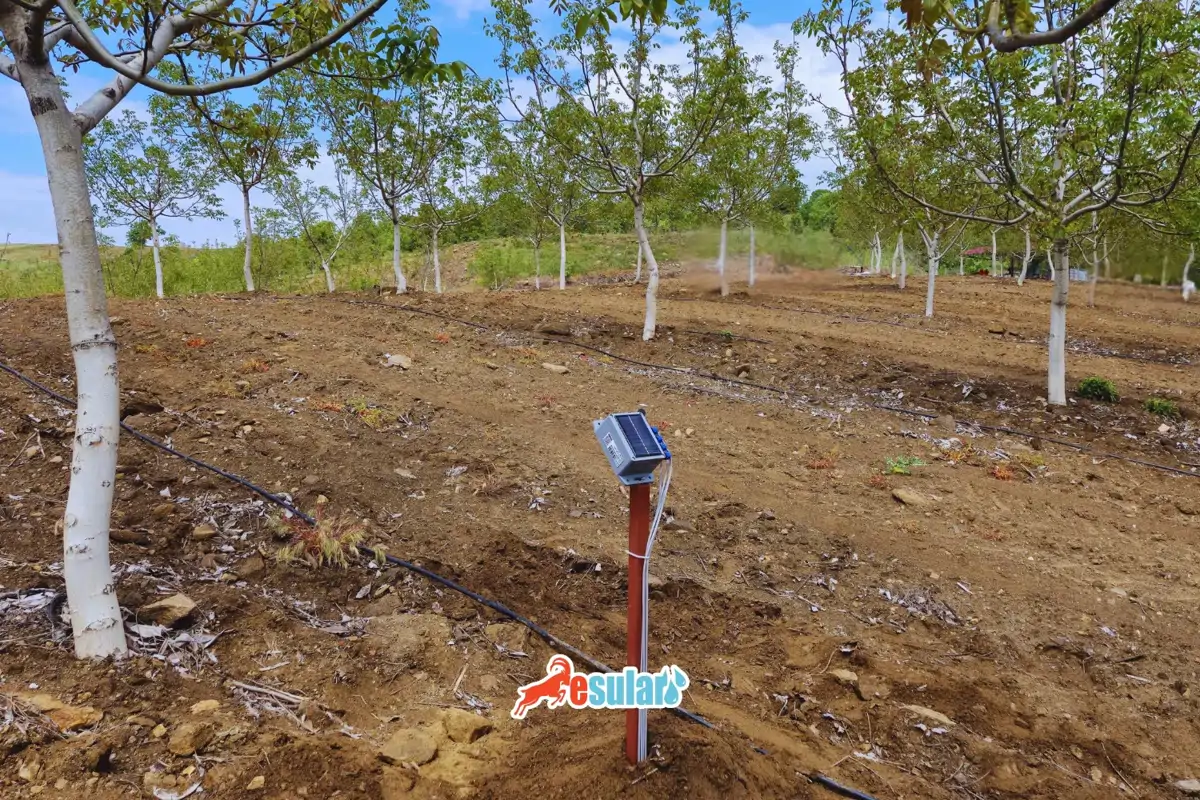
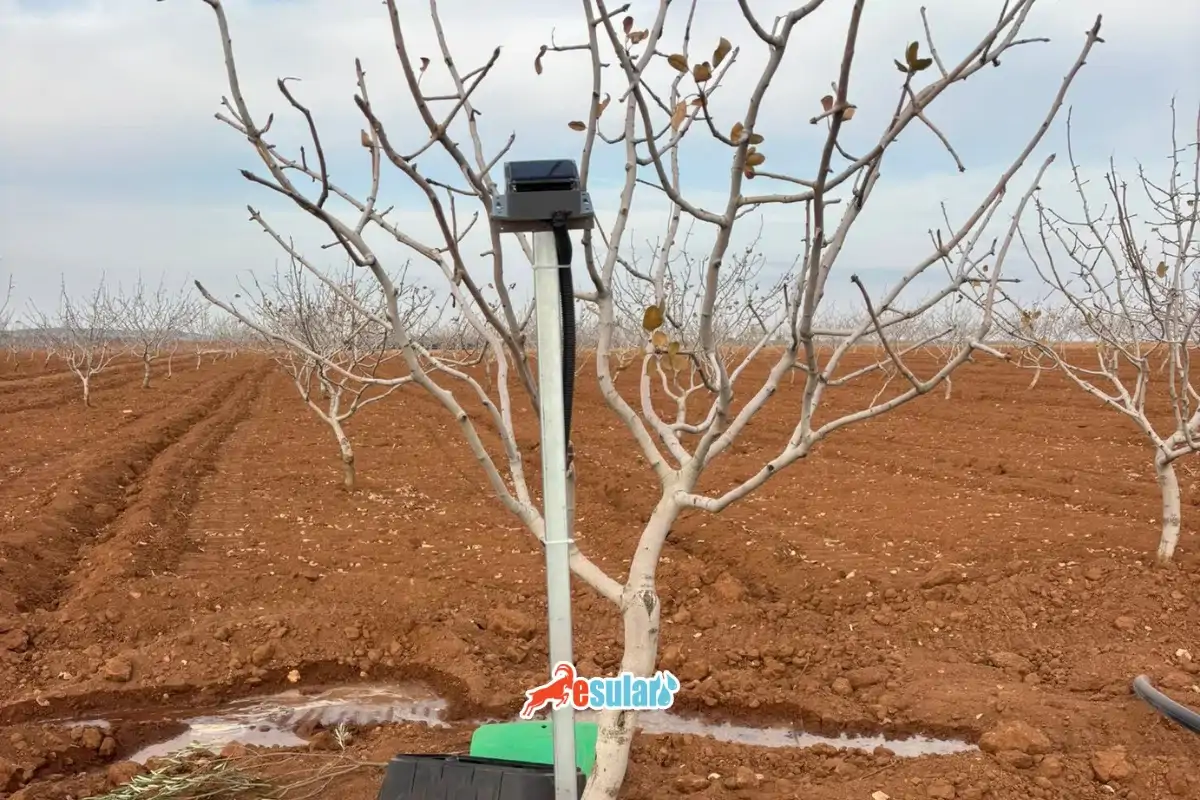
The root structure of a pistachio tree goes deep. Therefore, surface moisture can be misleading. Esular's wireless battery-powered soil moisture sensor solutions report whether water reaches the root zone by measuring moisture levels at different depths (e.g., 30cm, 60cm, and 90cm). In light of this data, it is determined whether the tree really needs water.
Things to consider in pistachio irrigation:
- Salinity control: Some irrigation waters in Gaziantep may contain high salt. Smart systems tell whether leaching irrigation is necessary by monitoring soil salinity (EC).
- Night irrigation: To reduce evaporation, performing irrigation at night is easily planned with automation.
- Critical periods: After flowering and during the kernel filling periods, the moisture level should never be allowed to fall below the critical threshold.
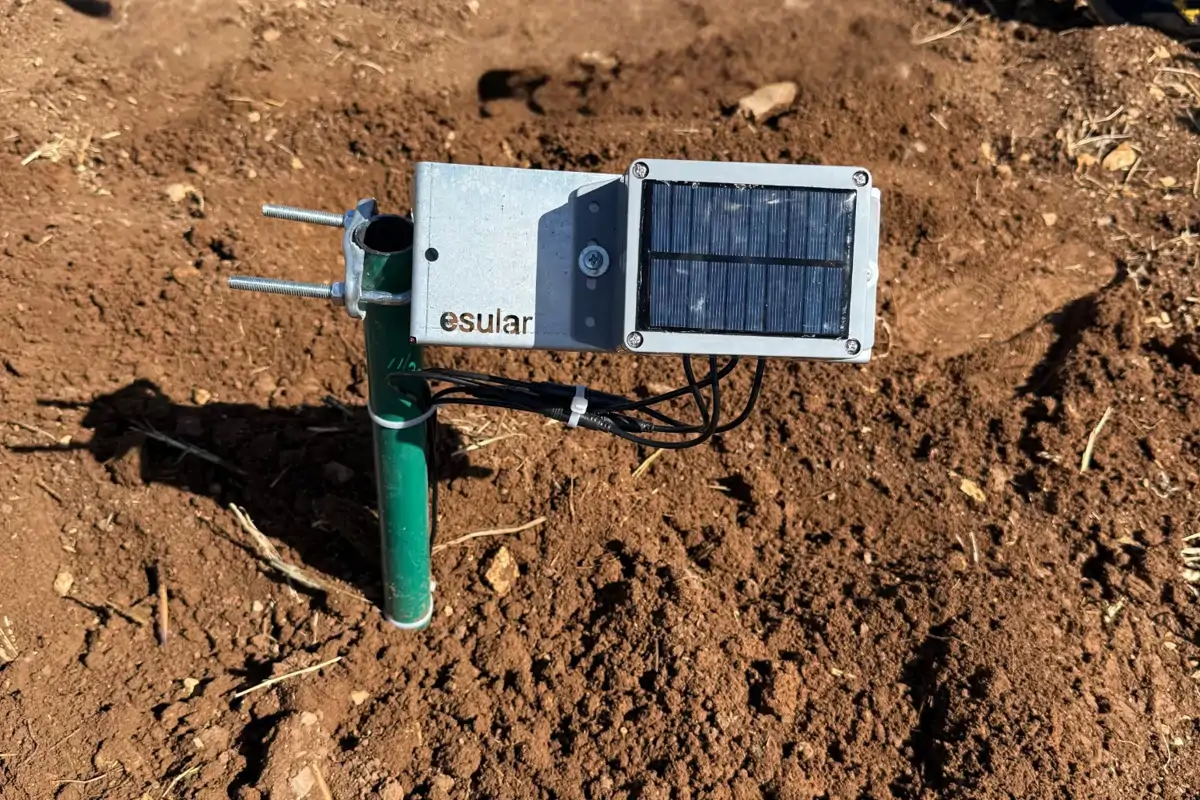
We have detailed the ways to increase productivity in pistachio orchards in our smart irrigation in Antep pistachio article. In addition, a similar technological transformation is essential for olive groves in the region.
Yield and Quality Increase in Gaziantep Olive Groves
Gaziantep is one of Turkey's important olive production areas. Although the olive tree seems modest like the pistachio, controlled irrigation is essential for high oil yield and to be able to get products every year in modern olive cultivation. Automatic irrigation systems used in olive orchards support the vegetative development of trees while protecting fruit quality.
Drip Irrigation and Automation Integration
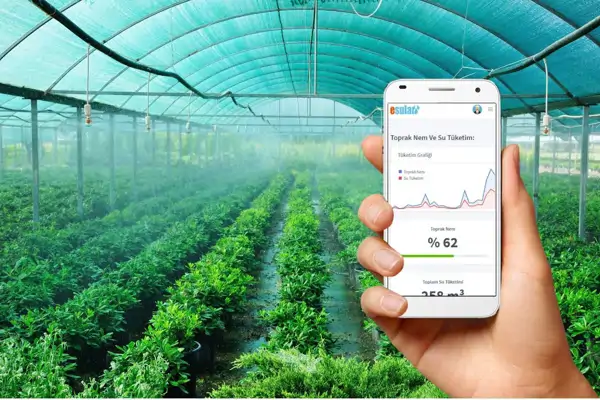
Drip irrigation is the most common and efficient method in olive groves. However, laying drip irrigation pipes alone is not enough. The system needs a brain, namely an automation unit. Thanks to Esular's smart mobile irrigation control system, farmers from Gaziantep can manage their orchards in Nizip or İslahiye from the city center using their mobile phones.
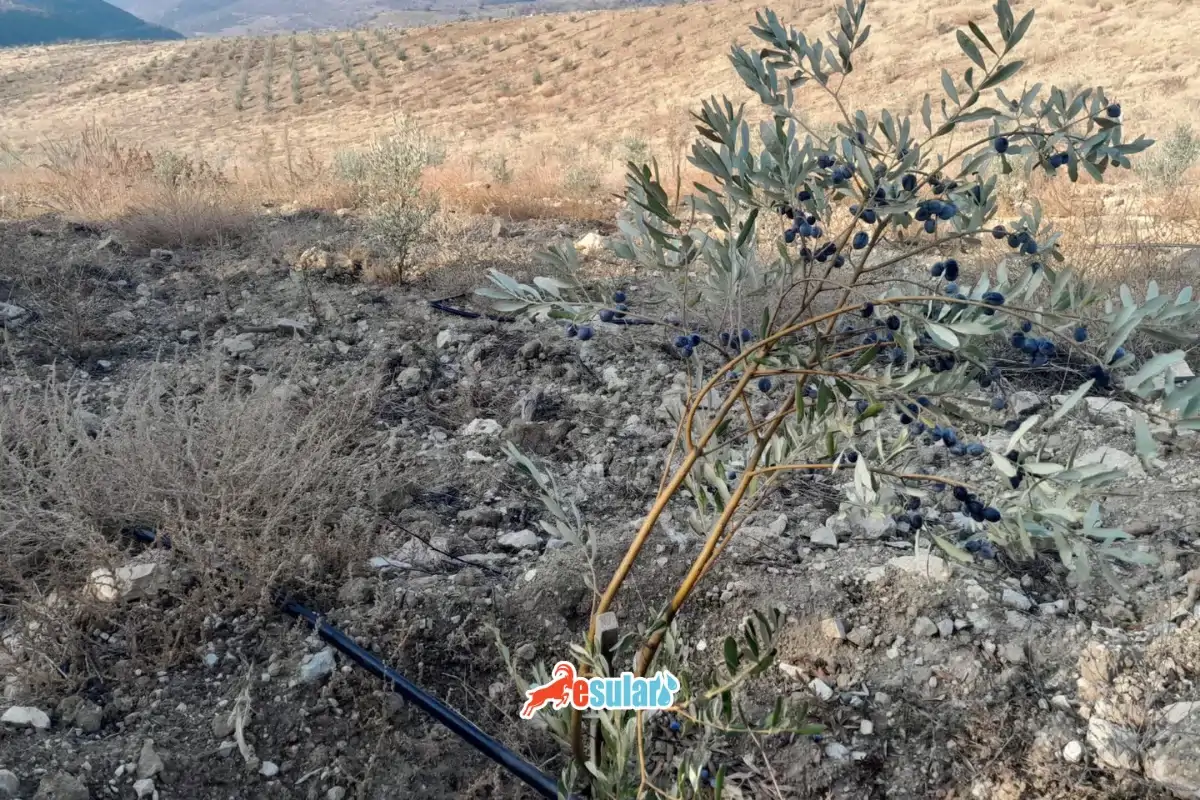
The role of smart systems in olive irrigation:
- Reducing Periodicity: Trees that receive regular water and nutrients form the next year's flower buds more healthily.
- Oil Ratio: Giving controlled water during the fruit growth stage optimizes oil synthesis.
- Disease Management: Risks such as root rot are reduced by preventing excessive soil moisture.
For more information about irrigation techniques in olive cultivation, you can take a look at our how to water olives guide. Academic sources (for example, FAO Land & Water) also confirm the 30-40% effect of precision irrigation on yield in olive groves.
Esular Technologies: Local Solutions for Gaziantep
Gaziantep's wide and fragmented land structure makes the installation of wired systems difficult and costly. Esular solves this problem with LoRa-based wireless communication technology. Our devices, which can transfer data from kilometers away and operate for years with batteries, work smoothly even in the most remote villages of Gaziantep.
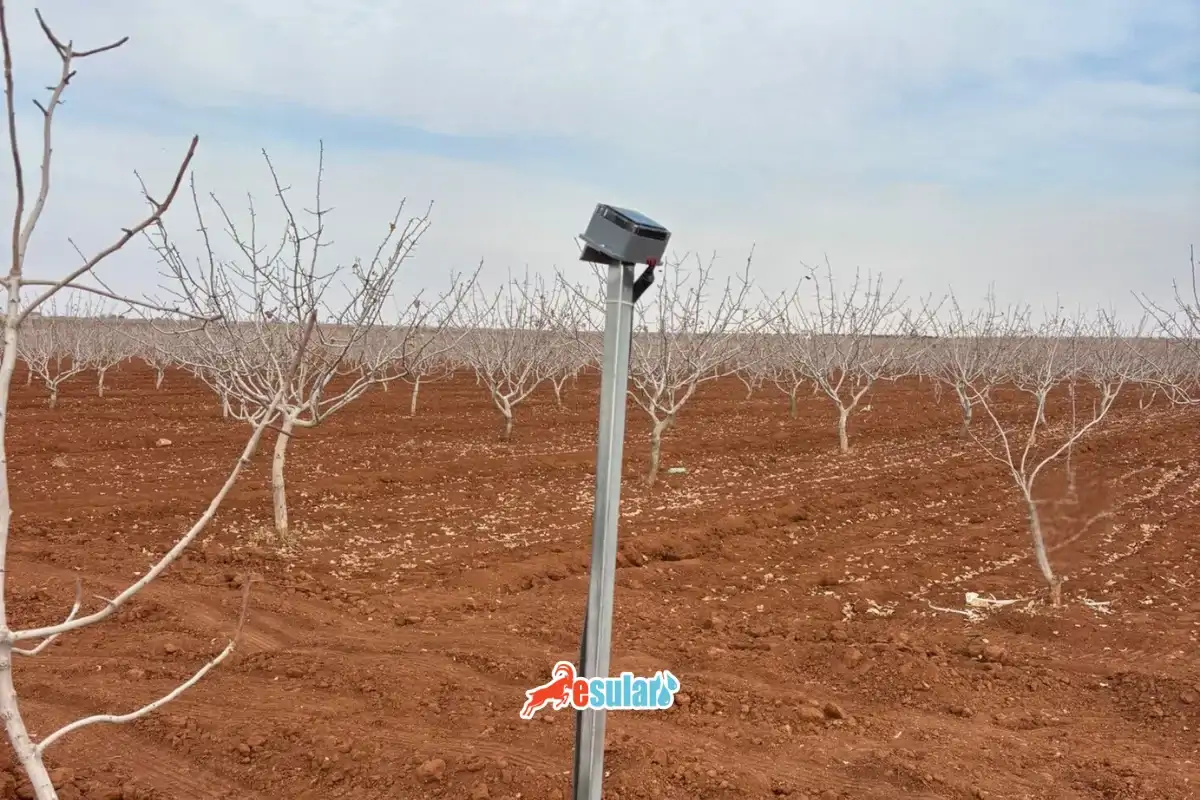
Wireless Valve Control and Monitoring
The heart of the irrigation system is the valves. The Esular wireless smart valve control unit eliminates the necessity of pulling cables to the field. These units, which operate with solar energy or batteries, start and end irrigation with commands coming from the central station. In addition, it sends an instant warning to the farmer in case of a leak or blockage in the system.
Esular system components:
- Central Station: The brain unit that coordinates the entire field.
- Wireless Sensors: Measures soil moisture, temperature, humidity, and wind speed.
- Valve Controllers: Units that manage hydraulic or solenoid valves.
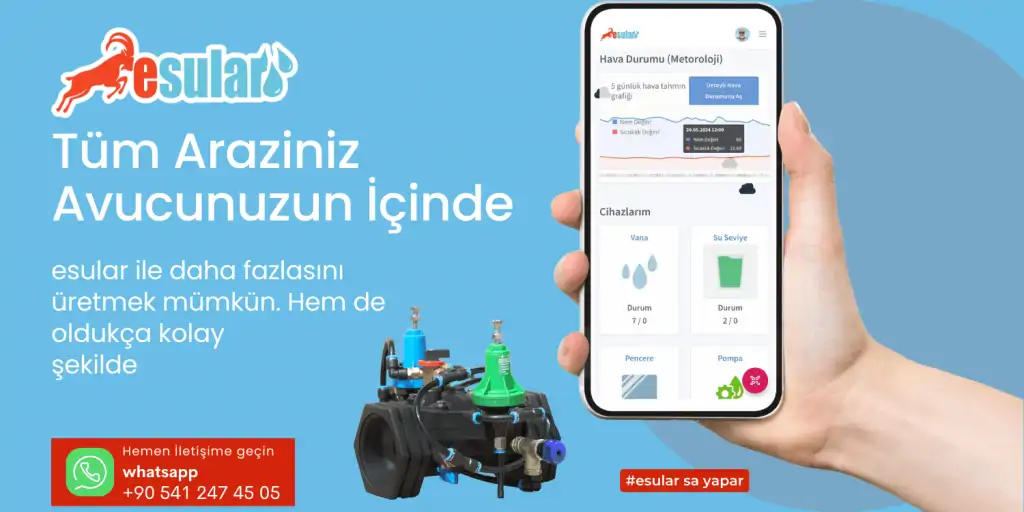
- Mobile Application: The control panel in the farmer's pocket.
Technical Analysis: How to Calculate Irrigation Need?
To create a successful irrigation program in Gaziantep, technology alone is not enough; basic agricultural calculations must also be known. Plant water consumption (ETc) is calculated with the region's reference evapotranspiration (ETo) value and the crop coefficient (Kc).
For Gaziantep, the daily ETo value in July is around 8-10 mm. For pistachio trees, the Kc value is in the range of 0.75-0.85 during this period. This means a daily water loss of approximately 6-8 mm per tree. Smart systems perform this calculation automatically with the data it receives from the meteorology station and adjust the irrigation time accordingly.
Soil Water Holding Capacity Table
Gaziantep soils are generally clay-loam or calcareous in structure. Every soil type has a different water holding capacity. These values play a critical role in the interpretation of data coming from sensors. For example, in a clay soil, when the moisture rate falls below 25%, the plant begins to enter stress. For detailed information, you can read our soil water holding capacity guide.
Automatic Irrigation System Installation in Gaziantep
When installing an automatic irrigation system, Gaziantep's local conditions (water quality, lime ratio, land slope) should be taken into account. The installation process usually consists of these steps:
- Field Survey and Projecting: The slope of the land, the flow rate of the water source, and the plant pattern are analyzed.
- Pipeline and Valve Placement: Main lines and lateral lines are laid. Thanks to Esular's wireless solutions, valve locations are placed at the most efficient points without considering cable costs.
- Sensor Installation: Soil moisture sensors and climate stations are placed in representative areas.
- Automation Integration: The central station is installed and all devices are introduced to the system.
- Testing and Calibration: The tightness of the system and the accuracy of the sensor data are checked.
For installation details, our how to install an automatic irrigation system article will guide you. In addition, for the lime-rich waters in the region, the use of a magnetic lime scale inhibitor is recommended to extend the system life.
Economic Analysis: Return on Investment (ROI)
For the Gaziantep farmer, smart irrigation is not a luxury but an investment that increases profitability. The financial analysis of switching to a smart irrigation system in a 100-decare pistachio orchard is approximately as follows:
- Water and Energy Savings: With an annual saving of 30%-40%, the system pays for itself in 2-3 seasons.
- Yield Increase: The 20% yield increase obtained by preventing water stress can cover the investment cost in the first year.
- Labor: The cost of a personnel who deals with opening and closing valves for 4-5 hours a day is completely eliminated.
The grants and supports offered by the R.T. Ministry of Agriculture and Forestry (see tarimorman.gov.tr) also make this investment more attractive. As Esular, we offer technical support in your grant projects. For relevant opportunities, you can visit our IPARD III supports page.
Frequently Asked Questions
Which irrigation method is better in Gaziantep?
Considering Gaziantep's water constraints and soil structure, drip irrigation is the most efficient method for fruit orchards. However, this system must be supported by soil moisture sensors and automation.
Do pistachio trees want a lot of water?
Pistachio trees are resistant to drought, but for economic yield, they should be watered regularly, especially in July and August. Smart systems protect both the water and the tree from root diseases by not giving more than the tree needs.
Do Esular systems work in fields without electricity?
Yes, Esular's wireless valve and sensor units are designed to operate with batteries or solar energy. It does not require an electricity line. For details, you can examine our automatic irrigation without electricity article.
Conclusion: Gaziantep's Future is in Digital Agriculture
Gaziantep is on the verge of a technological transformation to protect its agricultural heritage and leave more productive lands for future generations. Smart irrigation and automatic irrigation systems are the most critical part of this transformation. As Esular, we are proud to offer world-class, local software and hardware solutions to the region's pistachio and olive producers. Putting an end to water waste, reducing costs, and increasing product quality are no longer a dream, they are as close as a mobile application.
If you also want to learn the most suitable smart irrigation solution for your land in Gaziantep and get free exploration support, you can contact us immediately. Our expert engineer staff is ready to develop projects specific to the needs of your soil and product.
Take Action:
- Examine our products: Esular Product Catalog
- Get information about our projects: About Us
- Meet with our experts: Contact Form