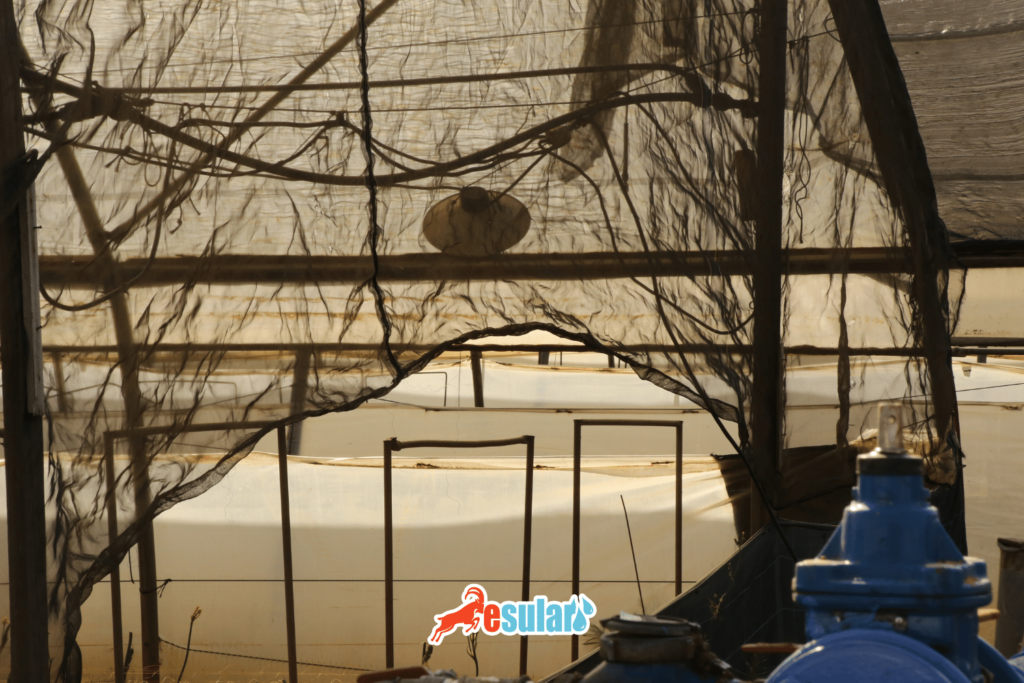
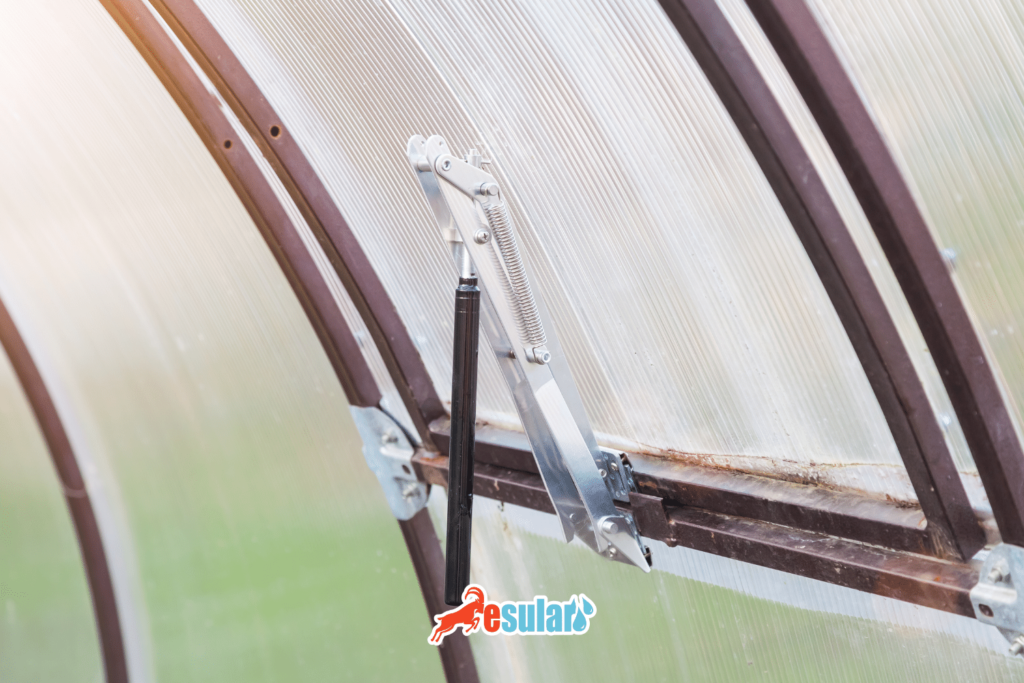
A greenhouse thermal screen is a special cover used to control the temperature inside the greenhouse and provide energy savings. It is generally designed as a curtain hung from the ceiling of the greenhouse or moved within the greenhouse. Greenhouse thermal screens are usually made of special materials and have various features. In greenhouses, heat losses from the internal environment to the external environment occur through radiation, heat convection, heat transfer through greenhouse walls, and leakage of outside air through ventilation. Various methods have been developed to provide energy savings by reducing these heat losses, but some are still in the development stage. Heating expenses in greenhouses generally constitute a large portion of total production expenses. Therefore, various measures should be taken to increase heat gain in greenhouses. These measures include:
Thermal screens placed inside the greenhouse
Covering the inner or outer part of the greenhouse walls with double-layer plastic
Covering glass surfaces with single or double-layer plastic covers
What Does a Greenhouse Thermal Screen Do?
A thermal screen installed in a sealed manner prevents the leakage of outside air into the greenhouse, keeping the wind's effect at a minimum. Heat energy requirements are lower in greenhouses where such measures have been taken. Depending on the desired purpose, thermal screens can be organized in three different ways:
Shading screen systems: These systems are used in cases where the energy conservation effect of the screen is less important.
Energy screen systems: These systems are preferred in cases where the energy conservation effect in the greenhouse is of great importance.
Multi-purpose screen systems: These systems are used in cases where both the shading and energy conservation effects of the screen are important.
History of Greenhouse Thermal Screen
Thermal screens aim to minimize interference with light intake during the day when open, and to minimize energy consumption by reducing heat loss inside the greenhouse when closed at night. With this method, heat can be preserved inside the greenhouse, lowering energy costs. Since the beginning of the 1970s, Polyethylene (PE), woven fabric, or thin plastic materials have been used as screens for shading and blackout. However, in the last 10-15 years, screens for heat protection purposes have been developed by taking the thermal conductivity of materials into account. Today, there are many different types of thermal screens suitable for various greenhouse conditions and opening-closing systems to control these screens. In recent years, aluminum screens with high reflectivity have been widely preferred. Such screens can provide over 50% energy savings when used as single-layer systems.
Points to Consider in Greenhouse Thermal Screens
The lifespan of a thermal screen depends on its duration of direct contact with the sun. A high-quality UV-stabilized PE film can be used effectively for three years. However, over time, light transmittance may significantly decrease due to contamination. Plastics that are cheap and do not use necessary additives are generally suitable for only one year. According to research, it has been determined that plant diseases increased in greenhouses where 0.1 mm thick PE thermal screens were used in North Africa. This situation stems from such plastics transmitting long-wavelength radiation at a high rate. This problem was solved by using 0.2 mm thick UV-stabilized PE film.
Today's thermal screen materials are quite diverse. Aluminum laminated screens are among the most commonly used. These screens generally have a texture that allows moisture movement. Square meter prices for such screens are generally between 3-4 $. In choosing the appropriate screen material for the greenhouse, features such as economic requirements, elasticity of the screen material, water-tightness properties, the ability to prevent droplets formed due to condensation under the screen, and the durability of the screen should be considered for the organization and efficient operation of the system.
Greenhouse Thermal Screen Automation System
Thermal screens used in greenhouses affect plant temperature, air exchange rate, greenhouse roof and cover temperature, heating pipe temperature (if any), and the total heat transfer coefficient. Thermal screens generally include the following components:
Screen material
Screen transport systems
The system that enables the opening and closing of the screen
The adjustment system that manages opening and closing
The mechanism managing the opening and closing of the screen can be in the following ways, depending on the greenhouse thermal screen construction methods:
Sliding screens: In these systems, the screen can be positioned as single or double layers and moves inside the greenhouse by sliding on support ropes.
Rolling systems: These systems are designed to be rolled in short or long rolls.
Foldable screens: They can be arranged as single or double-layer screens.
Rail-mounted screens: These types of screens have beams designed to move on thin pipes or wires.
Esular Greenhouse Automation Systems
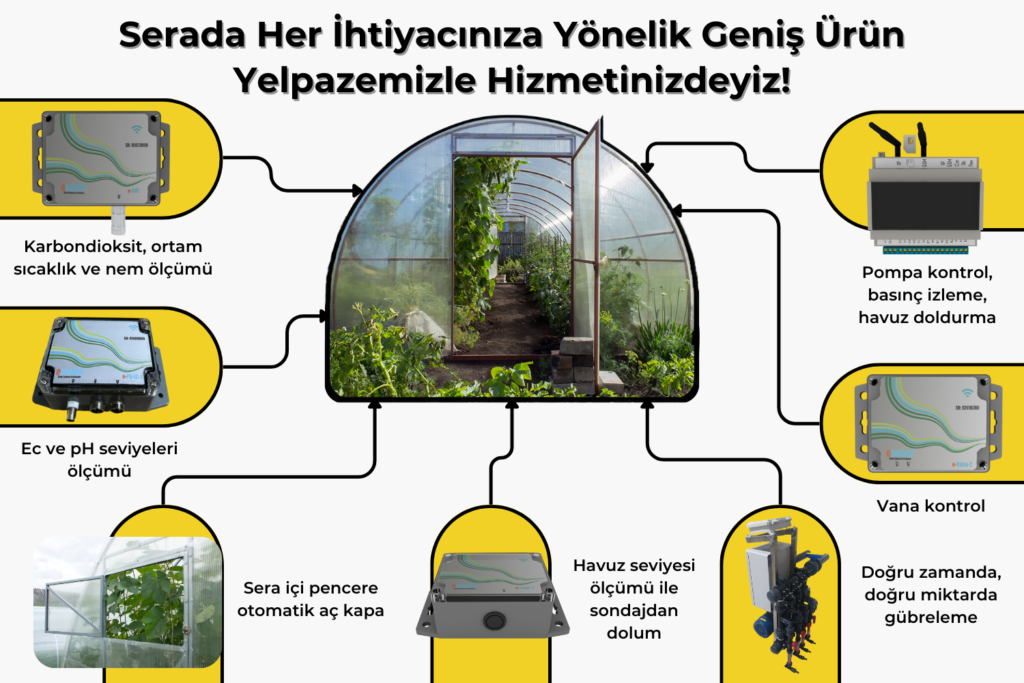
We provide active control of windows, screens, doors, ventilation systems, and heating systems to adjust the climate and heat conditions of the greenhouse environment. Thanks to our wireless-enabled control systems, we allow you to control temperature easily.
Thermal screens placed over the vegetation inside the greenhouse can generally be positioned in three different ways. These positioning types are thermal screens moving from gutter to gutter, thermal screens moving between roof trusses, and screens moving towards the ridge and roof side surfaces. Thermal screens should minimize obstruction of the greenhouse lighting conditions when open, and should be as closed as possible when closed, so as not to allow uncontrolled air passage between the bottom and top of the screen. Columns on the side walls of the greenhouse can cause problems that may make it difficult to pull the screens taut and move the screen system. This problem can be solved by creating slots in the parts of the screen that meet the columns during screen construction.