Tüm Yazılar

How is Flax Cultivation Done?

Flax cultivation has been produced for its fibers and seeds throughout history. The flax plant, belonging to the Linaceae family, is valuable both for fiber production and for the oil obtained from its seeds. The fibers of the flax plant are used in the production of products such as fabric, rope, and carpets in the textile industry with their durable and flexible structures. These fibers are also preferred in towels and various home textile products because they have a high moisture absorption capacity. Additionally, flaxseed oil obtained from flax seeds by the cold pressing method is rich in omega-3 fatty acids and is used in different sectors such as food supplements, cosmetic products, and the paint industry.  

Flax is an economical agricultural product thanks to its high productivity and low maintenance requirements. The various usage areas of the product offer farmers different market options. Historically, flax has a history stretching from ancient Egypt to the Roman Empire, from the Middle Ages to the modern period. Ancient civilizations used flax for both textile products and medical purposes. Furthermore, in some cultures, flax fibers and seeds have played an important role in traditional rituals, religious ceremonies, and folk tales. Flax cultivation is not only an agricultural activity with high economic value but is also important from environmental and cultural perspectives. Modern agricultural techniques and research, the potential of flax is expanding further and its usage areas in different sectors are increasing.

Where Does Flax Grow?

Globally, flax grows widely, primarily in Northern and Central European countries, Russia, Belarus, Ukraine, France, China and India in Asia, North Dakota and Minnesota in America, the Middle East, and North Africa. In Turkey, flax cultivation is concentrated especially in provinces such as Afyon, Samsun, and Sinop. The Afyon region is a prominent region for fiber-oriented flax production. Samsun and Sinop are important centers for both fiber and seed-oriented flax production. Turkey's wide and diverse climate structure allows for the cultivation of different varieties and types of flax. This diversity increases the value of flax for both industrial and personal use.

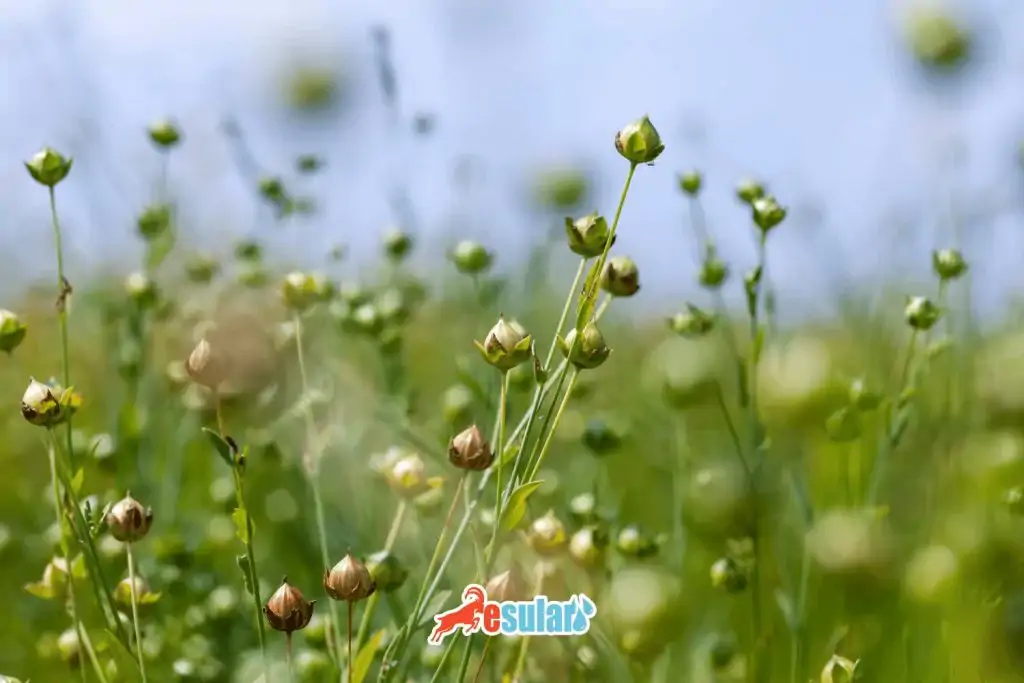
flax-farming

Climate And Soil Structure For Flax Cultivation

Fiber flax is generally grown in the Black Sea coastal regions where relative humidity is high. These regions have the amount of precipitation that can meet the high water needs of flax. Oil flax grows better in hot and dry conditions. The sensitivity of flax to winter determines the timing of sowing. Since the water requirement of flax is high, it should be sown before winter or early in the spring. In early sowing, the flax plant withstands up to -2 and -3 °C. Since fiber flax is more sensitive to frost, it should be sown after the last frosts of spring, except for the Black Sea coastal regions. In terms of soil requirements, flax is not a very selective plant. However, it shows better development in warm, humid, and medium-weight sandy-clay or clay-sandy soils. Heavy clay, stony, loamy, and high lime-containing soils are not suitable for flax. For good flax production, attention should be paid to soil preparation, and correct sowing, maintenance, and other cultural operations should be applied. In this way, both product quantity and quality can be increased.

Seed Sowing In Flax Cultivation

In the Black Sea Coastal regions, sowing for fiber flax can be done from mid-August to mid-October, and in the spring from March to mid-April. Spring sowing is generally preferred for oil flax. While the broadcasting method is widely used in our country, row sowing by machine should be done for fiber flax. Row spacing for fiber flax should be adjusted to 15 cm, and for oil flax to 20 cm. Dense sowing of fiber flax prevents branching and ensures obtaining long fibers. In oil flax, sparse sowing is preferred for more branching and seed production. The use of mechanization from sowing to harvest is important for homogeneous fiber quality. A wheat seeder can also be used for flax sowing. The amount of seed to be used in flax sowing varies according to seed size. In our country, 8-10 kg/da of flaxseed is generally used for fiber flax production. A sowing depth of 2 cm ensures a better emergence of the seed. In this way, flax cultivation is successfully carried out with careful and conscious steps in the process from soil preparation to sowing.

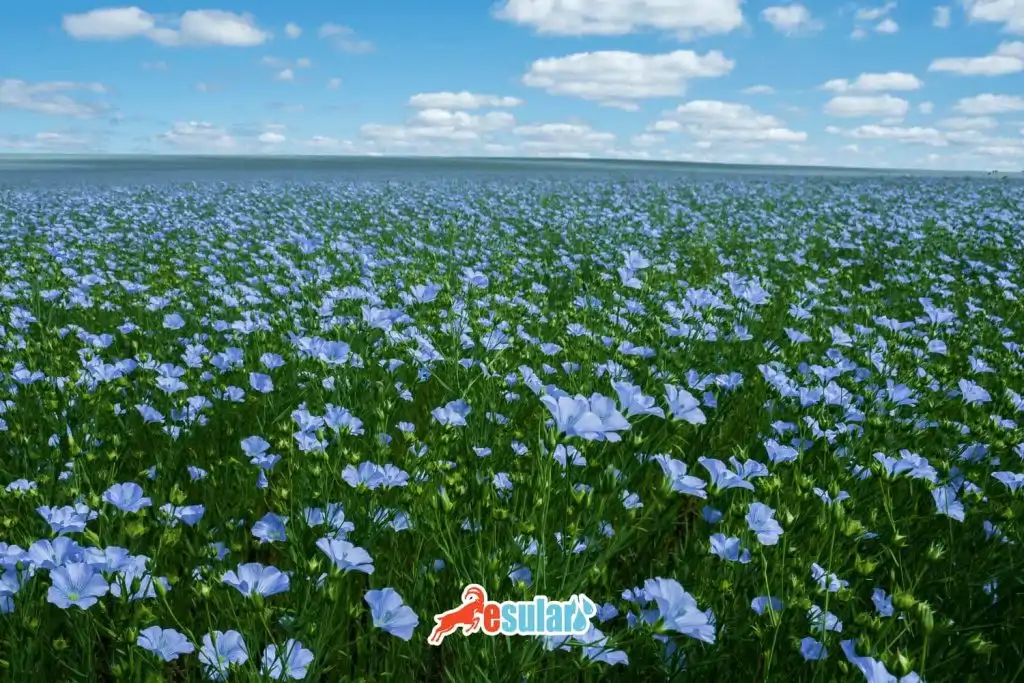
flax-farming

Does Flax Need Water?

Generally, there is no need for irrigation in the cultivation of the flax plant in our country. However, if fiber flax production is carried out in arid regions, there may be a need for irrigation. To meet the water requirement of flax, the early sowing method can be preferred and the water requirement can be met by natural precipitation.

Fertilization In Flax Cultivation

Since the flax plant draws a limited amount of nutrients from the soil, fertilization is generally not performed in our country. However, with fertilization, quality fiber and seeds are obtained. Phosphorus fertilizers increase seed yield and oil ratio. The amounts of fertilizer to be applied for flax should be determined by soil analyses. Generally, fertilization can be done as follows: 8-10 kg of potassium, 3-4 kg of phosphorus, and 2-3 kg of lime fertilizer should be given per decare. Although flax does not like nitrogen, 5 kg of pure N per decare can be applied for the initial emergence and strong development in low-yield soils. Nitrogen found in organic fertilizers is not preferred in flax farming because it dissolves slowly and accelerates plant development. However, organic fertilizer can be applied to the preceding crop.

flax-fertilization

Harvest In Flax Cultivation

Harvest is usually carried out in four different periods.

  • Green Ripening Stage: In this period, the flax plant is completely green and flowering has just begun. At this stage, harvesting is done while the stalks are still green. Fibers obtained in this period are soft and thin. Therefore, harvesting is generally not preferred in this period.

  • Green – Yellow Ripening Stage: Harvest is done in this period when the lower leaves turn yellow and begin to fall, and the capsules are fully formed. In this period, fiber yield is high and seed yield is low. Harvesting at this stage is frequently preferred for fiber flaxes.

  • Full (Yellow) Ripening Stage: The stalks have turned completely yellow, some leaves have fallen, and the capsules have matured. Since the seeds are fully mature, both seed yield and oil yield are high. This period is an ideal harvest time for both fiber and seed.

  • Dead Ripening Stage: In this period when the leaves have completely fallen, the capsules have cracked, and the color of the stalks has turned brown, the oil yield is at its highest level. However, since the fibers harden, fiber quality decreases and resistance to breakage decreases.

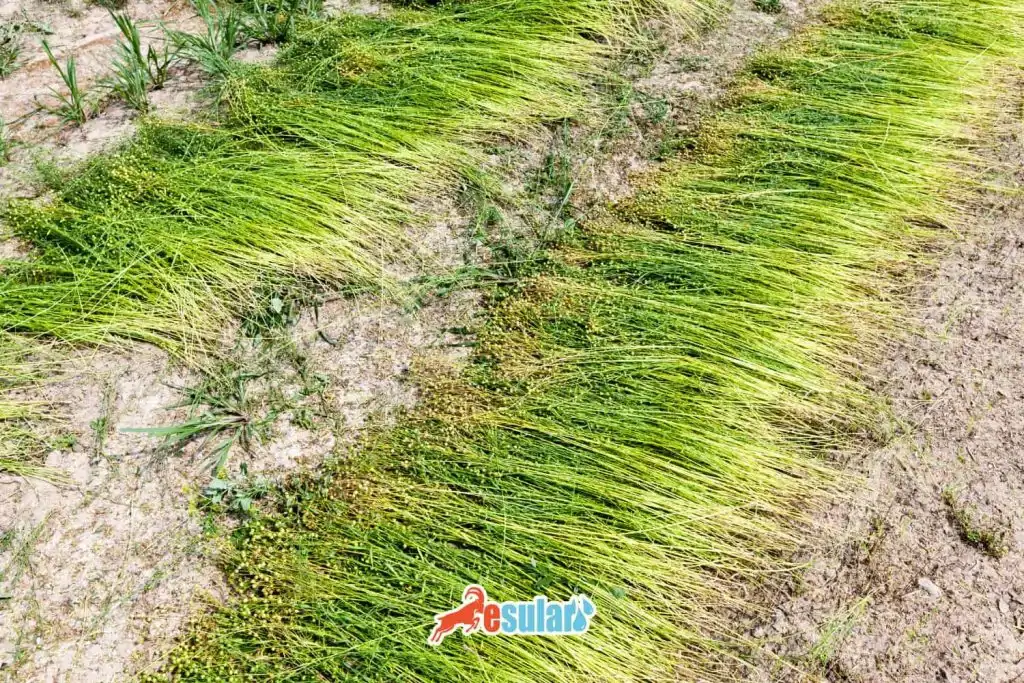
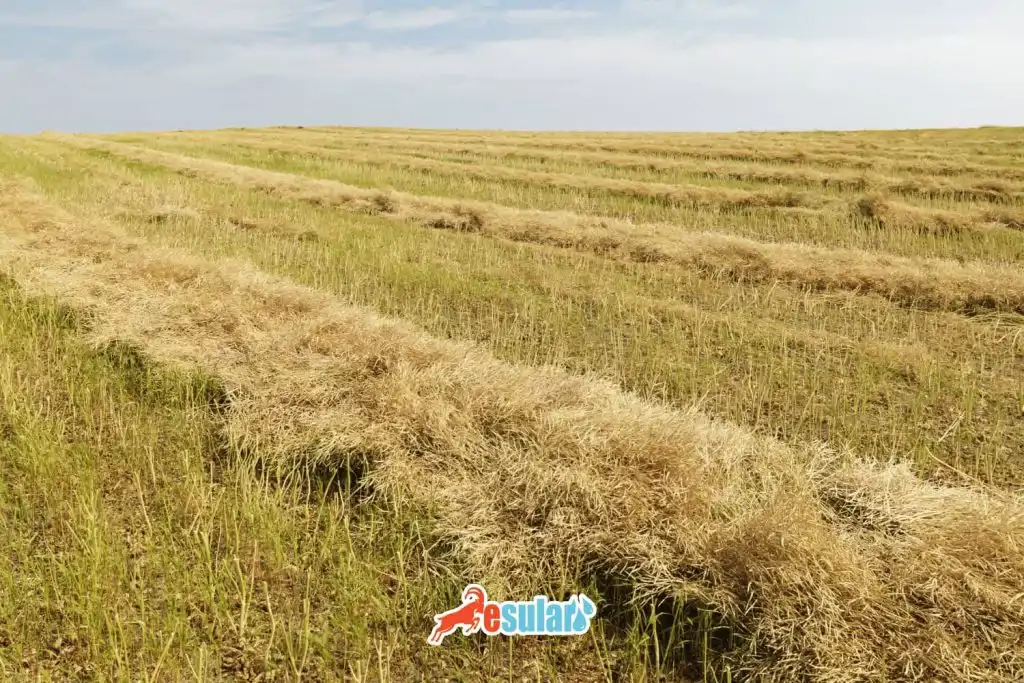
Harvest methods are also different for oil and fiber flax. Fiber flaxes are usually harvested by pulling them up with their roots. The stalks of the harvested plants are held by hand in bundles and pulled out of the soil with their roots. The stalks are left to dry in heaps in the field. In oil flaxes, harvesting is done with machines such as sickles or combine harvesters. The stalks of the harvested oil flaxes are bundled and left to dry thoroughly. 

How Much Fiber And Seed Is Produced From 1 Decare?

The stalk yield of fiber flaxes is between 200-600 kg/da, fiber yield is 20-100 kg/da, and seed yield is 20-60 kg/da. The seed yield of oil flaxes varies between 60-230 kg/da, while the average yield is generally around 150 kg/da.

flax-harvest

What Are The Diseases And Pests Seen In Flax Cultivation?

One of the most important problems in terms of flax cultivation is the dodder plant, which negatively affects the yield and quality of the plant. Dodder is a weed that is commonly seen in flax fields and can cause serious damage. To be successful in the fight against dodder, the first step is to use clean seeds. Clean seeds prevent dodder seeds from contaminating the field and prevent the problem from arising at the beginning. Additionally, field cleaning is of great importance in the fight against dodder. During the preparation of the field for sowing, dodder eggs and roots should be cleaned, thus preventing them from occupying the growth area of the plant.

Yorumlar

Daha Fazla İçerik İster misiniz?

Akıllı tarım hakkında en güncel içerikleri takip edin.