Tüm Yazılar
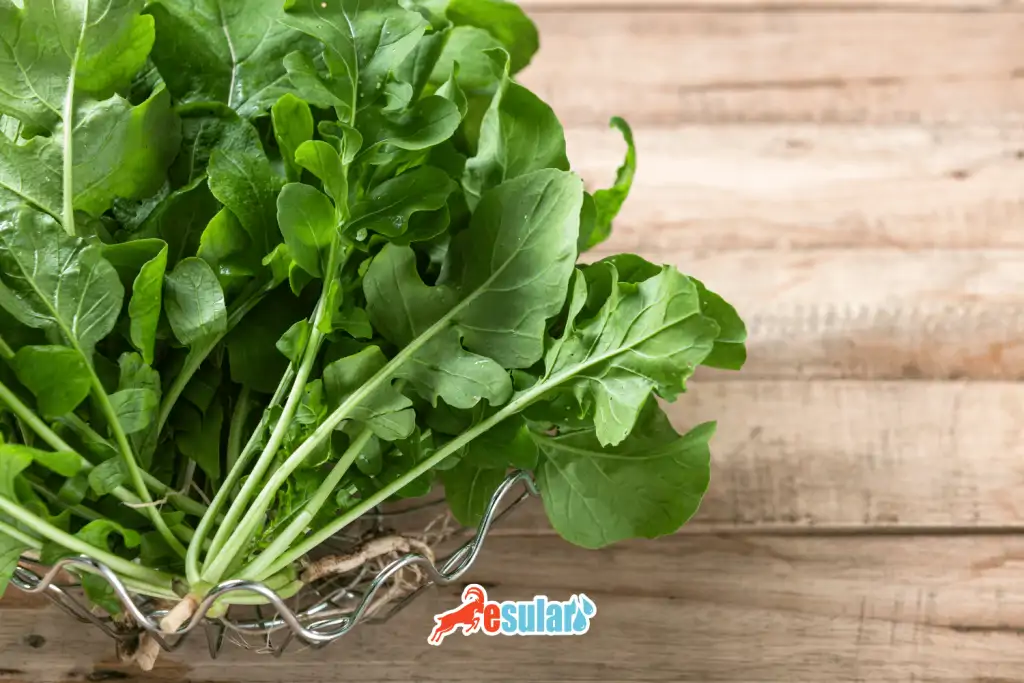
How to Grow Arugula?
Arugula cultivation is preferred by many farmers due to its low maintenance requirements and fast growth characteristics. Arugula cultivation is an important sector that contributes to the diversification of agricultural production and the economy in our country. Arugula production, especially in the Aegean, Mediterranean, and Marmara regions, provides positive contributions to the increase of agricultural income and regional development. Arugula cultivation revitalizes the rural economy by providing employment to local farmers and offers a balanced contribution to the national economy by increasing agricultural production diversity. In addition, while the products obtained through arugula production are consumed as fresh vegetables in the domestic market, they also contribute to foreign trade through exports. In this way, arugula cultivation plays an important role in terms of increasing agricultural income, ensuring the foreign trade balance, and the sustainability of agricultural production.
What Are the Benefits of Arugula?
Arugula leaves are an important plant used to provide resistance to the human body. Additionally, it is known to be effective in preventing cough when consumed as a tea brewed in boiling water. By crushing or crumbling its leaves and placing them on wounds, it has disinfecting effects and accelerates the healing of wounds. Arugula also has appetite-stimulating, digestion-facilitating, diuretic, and aphrodisiac properties. Furthermore, due to being rich in Vitamin A, it is recommended by doctors to patients for the treatment of various diseases such as lung, skin, and oral cavity issues.
Climate and Soil Structure in Arugula Cultivation
Arugula is a vegetable that is quite sensitive to ecological conditions. Temperature is an important factor in arugula cultivation. Temperatures below 10°C can slow down seed germination and plant development. Additionally, under low temperature conditions, the ratio of aromatic substances in the leaves increases, and the eating quality may decrease. High temperatures can also negatively affect the development of the plant. In the spring and autumn months, with average temperature and humidity conditions, plants develop better and high-quality products are obtained. Since arugula prefers humid environments, an increase in the amount of humidity improves leaf quality. However, when there is insufficient humidity, the leaves shrink, the amount of aromatic substances increases, and the leaves may become bitter. Arugula is selective in terms of soil requirements. Growing it in heavy and clayey soils can negatively affect leaf quality. Soils rich in organic matter, sandy-loam, and with a neutral pH are the most suitable for arugula cultivation.
When and How to Sow Arugula?
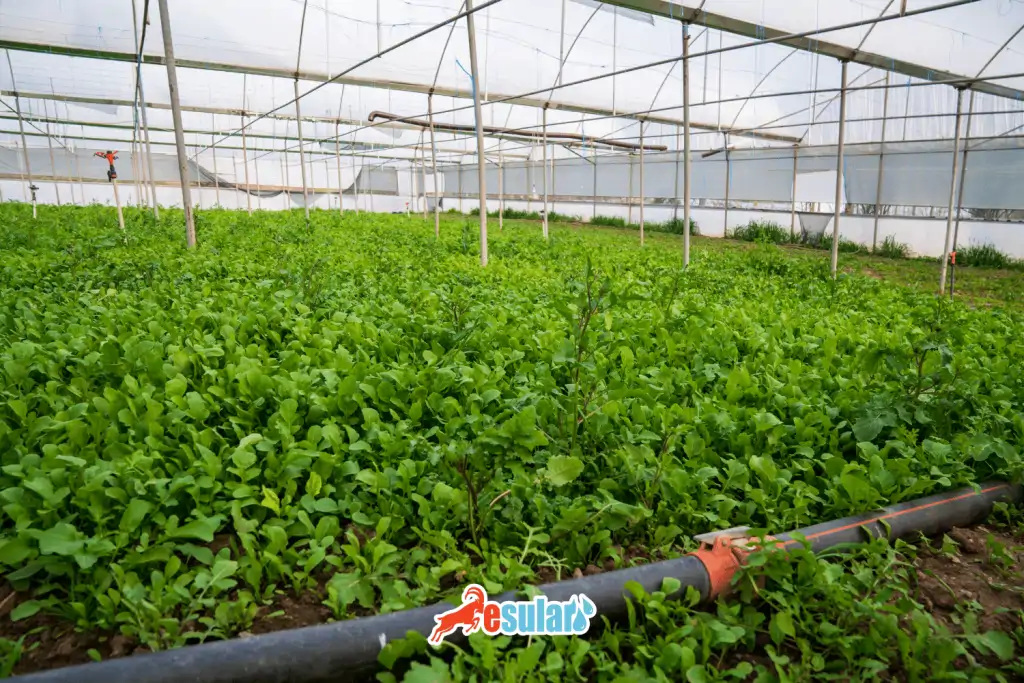
Arugula is generally grown using the direct seed sowing method. In the western and southern regions of our country, arugula cultivation can be carried out in open field conditions throughout the year. In cold regions, it should be grown under cover during the winter months, and in hot regions, it should be grown in the shade under trees during the summer months. Before seed sowing, 2 tons of well-rotted farmyard manure per decare is applied to the production area. If cultivation is to be done in the winter months or if a sprinkler irrigation system is to be used, seeds are sown on raised beds or flat fields. In the summer months, seed sowing should be done in basins. It is important that the areas prepared for seed sowing are cleared of weeds, diseases, and pests. Arugula seeds are sown at a rate of 1-1.5 kg per decare, with 15-20 cm between rows, 4-5 cm on the row, and at a depth of 0.5 cm. In the case of greenhouse cultivation, sowing can be done according to the measurements. In greenhouses where vegetable cultivation is practiced, seed sowing can be done according to distances suitable for the production of other vegetables. Germination usually occurs within 3-8 days, but it may vary depending on climatic conditions.
Fertilization in Arugula Cultivation
Fertilization should be carried out considering that more than one crop can be obtained from the same area due to the short vegetation period of arugula. For arugula, which is a plant that likes organic matter, 2 tons of well-rotted farmyard manure per decare is appropriate. Chemical fertilizers should be given during soil preparation before seed sowing in each growing period as 25 kg of nitrogen, 12-15 kg of base fertilizer, and 15 kg of potassium sulfate per decare. If a drip irrigation system is used in the greenhouse or open field, fertilizers can also be applied through the irrigation system. To get more detailed information about this method, you can review our article at: https://esular.com/gubreleme-ve-sulama-otomasyonu.
Irrigation in Arugula Cultivation
Arugula is a plant that prefers moist soils, and soil moisture increases quality and yield. Irrigation should be performed based on climatic conditions, and irrigation should be planned when necessary. Additionally, when the soil dries out, arugula leaves become coarse and take on a bitter taste; therefore, regular irrigation is important. Irrigation is generally carried out in the morning or evening hours using a sprinkler system or drip irrigation method. Furthermore, during this process, it is also important to combat weeds.
Does Arugula Require a Lot of Water?
Arugula is generally a plant that prefers moist soils and needs irrigation. However, exposure to excessive water can also be harmful. When growing arugula, it is important to ensure that the soil is constantly moist. However, care should be taken not to submerge it in excessive water. The soil should be moist enough to hold its water, but not so much as to create puddles. The irrigation process should be carried out depending on the moisture level of the soil, and the water needs of the arugula plant should be met.
What Are the Diseases and Pests Seen in Arugula Cultivation?
Diseases seen in arugula include problems such as white rust, root rot, white mold, gray mold, septoriosis (septoria leaf spot disease), and leaf blight. Additionally, harmful insects such as aphids and mites can also damage the arugula plant. Physiological disorders include conditions such as rusting that occurs under 10-20°C temperature and high humidity conditions. These diseases and pests can cause significant damage in arugula cultivation, and therefore, they should be regularly checked and necessary precautions should be taken.
Harvest in Arugula Cultivation
In arugula production, when appropriate humidity and temperature values are reached, harvest maturity is generally reached within 30-40 days. However, low temperatures and unfavorable environmental conditions can extend the harvest period up to 70-80 days. Plants that have reached harvest maturity are cut 1-2 cm above the soil. If the entire plant is to be harvested, it is cut from the root collar. Harvested arugula leaves are generally offered for sale by being tied in bunches between 50-100 grams. However, it is not possible to store arugulas consumed fresh for a long time; they can only last up to 1 week in the refrigerator, and their quality may deteriorate when stored longer. For this reason, harvested arugula leaves are placed in crates, covered with wet sacks, and kept in a shaded and cool environment until offered for sale.
How Much Arugula is Produced from 1 Donum?
Under conditions that vary according to growing periods, the amount of marketable arugula obtained from a one-decare area generally ranges between 2 to 4 tons in the first harvest. Similarly, an average of 22 to 35 bunches of arugula can be harvested from a one-square-meter area in each harvest. These amounts may vary depending on cultivation methods, climatic conditions, and various other factors. Meanwhile, it is important to implement appropriate agricultural practices to increase productivity and obtain quality products.
Kategoriler
Etiketler