We frequently encounter Olive Diseases in our country. For the best and most effective control, it is important for us to know the diseases. Below we present the most important Olive Diseases to you
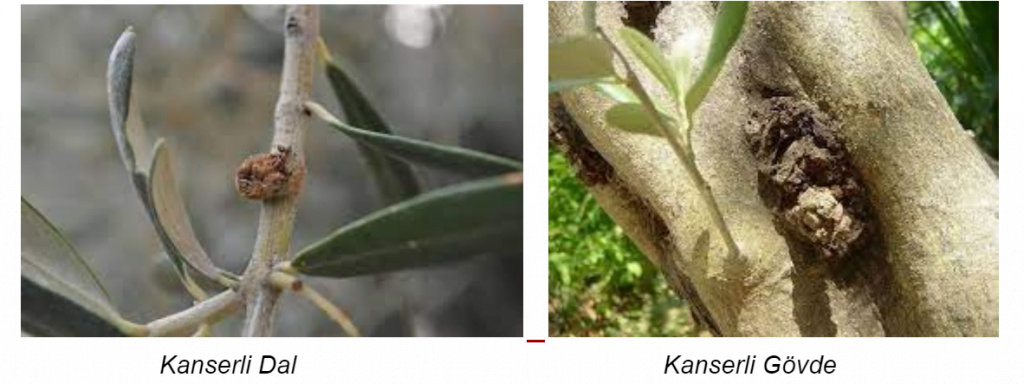
Olive Knot
Symptoms
Warts formed in the wound sites opened as a result of leaf, flower, and fruit drop on shoots are small, round, and spongy.
Tumors and warts also take on a dark brown, cracked, and sunken-top appearance under the influence of excessive light and heat.
Agent
Bacteria
Development Conditions of the Disease
The bacteria spend the winter inside fresh tumors on infected trees. The disease agent multiplies within the tumors throughout the year.
Control Method
Olives should not be planted in places where frost events occur frequently. Planting olives in clay-based soils that hold excessive water should be avoided; if planted, the excess water in the soil should be drained by providing drainage. Nitrogenous fertilizers should not be given to trees more than necessary. Pruning residues should be removed from the orchard.
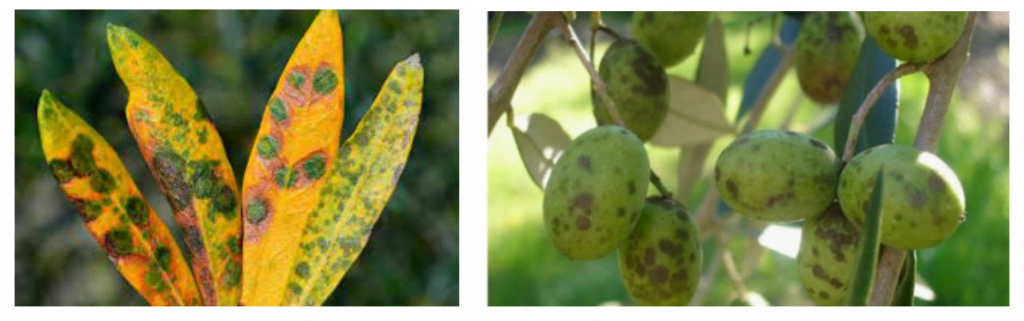
Olive Peacock Spot Disease
Symptoms
Round spots in blackish-gray color occur on the upper surface of the leaves. The color lightens where these spots are located, then a ring in the normal leaf color forms around it. A second light-colored ring surrounds this from the outside.
Agent
Fungal
Development Conditions of the Disease
Regions where spring and autumn are generally rainy are suitable for the development of the disease. The fungus spends the winter in dried leaves fallen on the ground and in diseased leaves remaining on the tree.
Control Method
Fertilization and irrigation should be carried out according to the technique, soils weak in lime should be limed, tree crowns should be pruned to receive light, and dry branches and spotted leaves fallen on the ground should be collected and burned.
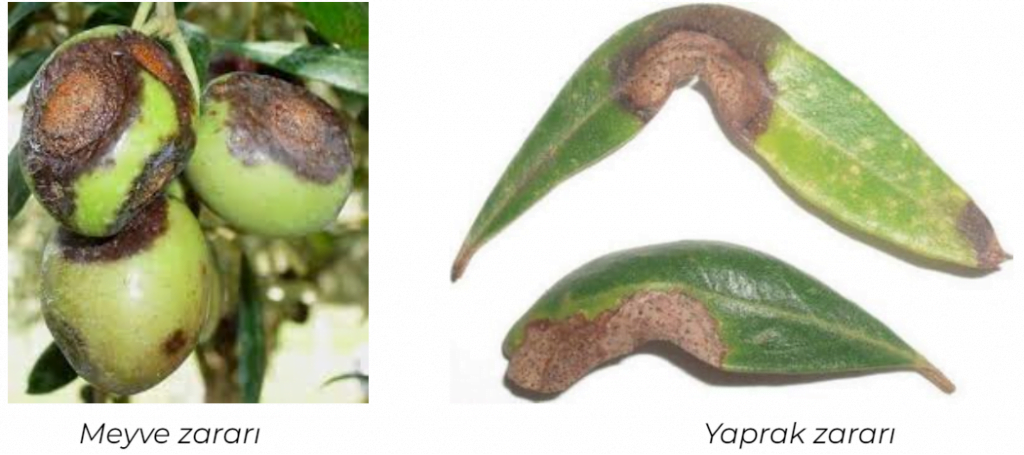
Anthracnose in Olives
Symptoms
The first symptoms are seen as regular or irregular browning when the fruits ripen. As the fruit grows, lesions may merge and rot the entire fruit. The disease symptom is usually in the form of a flat, sunken lesion at the tip of the fruit. Lesions on the fruit cause the fruit to lose its juice by rotting the fruit either completely or partially.
Agent
Fungal
Development Conditions of the Disease
It spends the winter in mummified fruits, leaves, and thin shoots. Rains occurring in autumn are effective in the formation of the disease.
Control Method
Diseased leaves and fruits fallen on the ground should be collected and destroyed. Dense planting should be avoided. Pruning should be done in a way that provides air circulation and receives light in the trees. Weed control should be performed.