Tüm Yazılar

Turkey’s 2053 Long-Term Climate Strategy Announced at COP 29!
Turkey’s 2053 Long-Term Climate Strategy: Future Vision Announced at COP 29
Between November 11 – November 22, 2024, at the COP 29 Climate Conference hosted by Azerbaijan, Turkey took an important step and announced its 2053 Long-Term Climate Strategy. This strategy determines the long-term steps Turkey will take to combat climate change and achieve sustainable development goals. The strategy presents new roadmaps on many important topics such as how Turkey will reduce carbon emissions, the effects of modern irrigation systems on water efficiency, what will be done to reach climate targets, and the role of the agricultural sector in this process.
Net Zero Emission Target: Zeroing Carbon Emissions in 2053
One of the most important goals of Turkey's long-term climate strategy is to reach the net zero emission target by 2053. Turkey aims to bring all carbon emissions to a level that will be balanced in 2053, by starting to reduce greenhouse gas emissions as of 2038. In line with this goal, the implementation of new tools such as carbon pricing mechanisms and the Emission Trading System (ETS) is planned.
Turkey aims to allocate 1.7% of its annual national income to green investments. These investments will play a critical role in reaching the country's climate targets. These investments to be made in both the energy sector and agriculture will be an important tool in taking carbon emissions under control.
Agricultural Sector and Greenhouse Gas Emissions
Agriculture holds an important place among the sectors causing greenhouse gas emissions in Turkey. 60% of methane gas originates from the agricultural sector. Methane gas emitted through enteric fermentation in agriculture draws attention as an important greenhouse gas source. The transformation to be made in the agricultural sector is very important for Turkey to reach its 2053 targets.
Greenhouse gas emissions in the agricultural sector originate especially from the following processes:
- Enteric fermentation (methane emission in the digestive systems of animals): 53.5%
- Cultivation of agricultural lands: 31.2%
- Manure management: 13.1%
Basic steps to be taken to reduce these emissions:
- Nutrition techniques will be improved and studies on animal health will be carried out to reduce methane emissions originating from livestock.
- Reducing chemical fertilizer use and encouraging organic fertilizer use.
- Minimizing the use of pesticides and antimicrobials.
- Loss, waste, and residue management in agricultural production will be improved and recycling systems will be expanded.
A New Era Begins in Water Management
One of the important goals of Turkey’s 2053 Long-Term Climate Strategy is the efficient use of water resources. The average annual precipitation in Turkey between 2013-2023 is 591.5 mm. Total annual water consumption is 57 billion cubic meters, and 44 billion cubic meters (77%) is used for irrigation. However, while water resources are gradually decreasing, using these resources more efficiently is of vital importance for both the sustainability of agricultural production and the fight against climate change. Turkey aims to increase irrigation efficiency by 65%, and serious investments are being made to reach this goal.
Modern Irrigation Systems to Transition
Turkey has created a comprehensive plan for the sustainable management of soil and water resources. One of the most important elements of this plan is the modernization and making more efficient of existing irrigation systems. Open canal irrigation systems will be converted into closed systems in a way that will ensure more efficient use of water. With this transformation, water losses will be minimized and irrigation processes will be managed much more precisely.
Automation and Digitalization: Smart Irrigation Systems
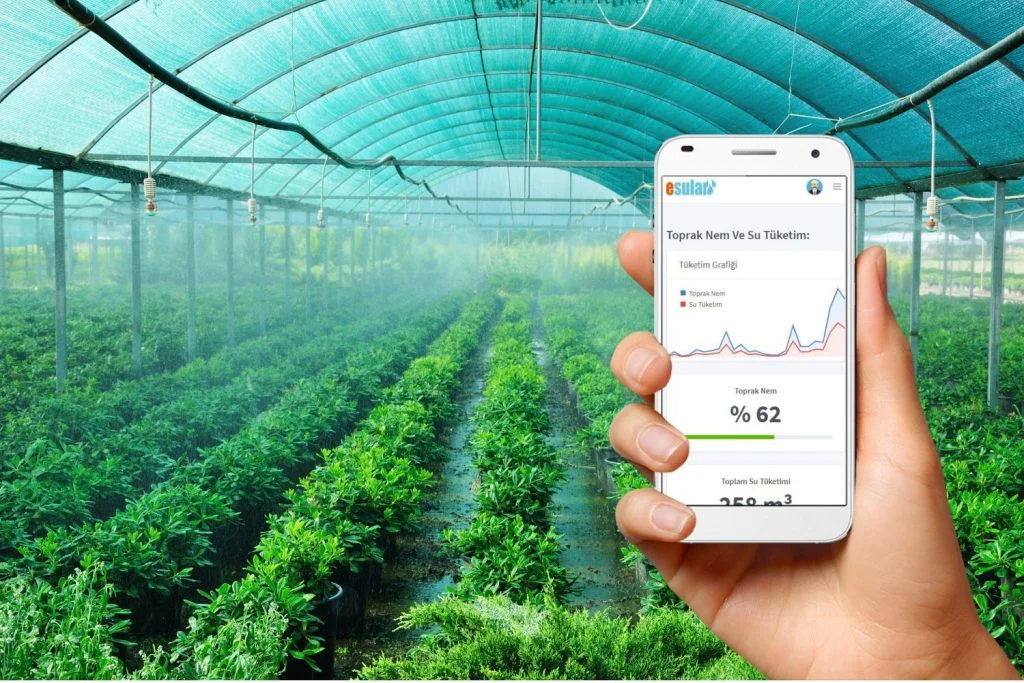
Another way to increase irrigation efficiency is the use of automation and digitalization technologies. Irrigation systems will be equipped with sensors that measure parameters such as soil moisture, temperature, precipitation, and irrigation need. Thanks to these sensors, a system will be established that will ensure water is used only as much as needed. Additionally, irrigation processes can be monitored instantly with remote sensing and digital monitoring technologies. Thus, the amount of water needed by each plant will be accurately determined and water waste will be prevented.
Irrigation with Renewable Energy Sources
Especially in regions where pumped irrigation is performed, a large part of the energy used for irrigation processes is provided by fossil fuels. However, this process will be made more environmentally friendly by using renewable energy sources. Solar energy, wind energy, and other renewable energy systems will be used to meet the energy needs of irrigation facilities. Additionally, renewable energy production facilities will be established and these facilities will be provided directly to farmers, thus their energy costs will be significantly reduced.
Rainwater Harvesting
Rainwater is the most natural and environmentally friendly source of agricultural irrigation. Turkey plans to encourage rainwater harvesting. By establishing rainwater harvesting systems in agricultural lands, the storage of water obtained from precipitation will be ensured.
Irrigation Strategies and Sectoral Transformation
Irrigation systems will not only increase efficiency, but also ensure sustainability in agricultural production. Thanks to planned production models, irrigation networks and systems will be optimized based on soil, water resources, and climate projections. Since the water need of each region will vary according to climate conditions and agricultural product types, irrigation strategies will also be shaped according to local needs.
Steps are Being Taken for Sustainability in Agriculture
Turkey aims to accelerate education and awareness efforts to increase sustainable production in the agricultural sector and expand low-carbon production techniques. It is expected that a more sustainable production process in agriculture will be created through training programs for farmers, special supports for women farmers, and strategies focused on gender equality. In this direction, farmers will be given training on organic farming and climate-sensitive agricultural techniques, thus environmentally friendly methods will be adopted in agriculture.
Reduction of Agricultural Waste and Losses
In Turkey’s long-term climate strategy, the management of agricultural waste also holds an important place. Recycling systems and circular economy approaches will be encouraged for the purpose of reducing losses and waste in agricultural production. In this process, steps such as reducing chemical fertilizer and pesticide use, and encouraging organic fertilizer use will also be taken.
Sustainable Agriculture and Climate-Sensitive Practices
Turkey will expand climate-sensitive agricultural techniques to ensure sustainability in agriculture. This aims to increase both environmental sustainability and efficiency in agriculture.
- Great steps will be taken for soil and water management, protection of agricultural areas, and improvement of soil health. Increasing the amount of soil organic matter and strengthening the water and carbon sequestration capacity of the soil will be ensured.
- Chemical fertilizer use will be reduced based on soil and water analysis. Farmers will be trained on fertilizer use, and organic fertilizer use will be encouraged. By 2053, at least 10% of cultivated agricultural lands will be used for organic farming and climate-sensitive agricultural techniques.
- Reduction of pesticide use and the use of alternative pesticides will be encouraged. Along with this, wide training programs will be organized for the expansion of climate-sensitive agricultural techniques.
Education, Awareness, and Capacity Building
The fight against climate change will be strengthened not only with technical solutions but also with social awareness and education. Turkey aims to increase education and capacity building activities on sustainable production in agriculture. These trainings will be expanded with a gender equality perspective, focusing especially on women farmers.
Trainings for farmers:
- Low-carbon production methods
- Use of new technologies
- Climate-sensitive agricultural techniques
These trainings will enable farmers to perform sustainable and efficient production and will be an important step towards reducing carbon emissions along with efficiency increase.
Importance of Green Investments and Sustainable Agriculture
Turkey’s 2053 Long-Term Climate Strategy aims for a major transformation not only in environmental terms but also economically and socially. It is envisaged to allocate 1.7% of the annual national income to green investments each year to reach climate targets. Green investments, sustainable agriculture, and water management like reform in these areas, Turkey is taking an important step in the fight against climate change.
This strategy will offer sustainable solutions for low-carbon production by strengthening the synergy between the agricultural sector and the energy sector. Turkey will realize its net zero emission target by 2053 and at the same time set a great example for sustainable development.
Kategoriler