Use of Artificial Intelligence in Agriculture: The Future of Smart Farming
Artificial intelligence is leading a radical transformation in the agricultural sector, as it is in many sectors across the world. Traditional farming methods are being replaced by data-driven, predictable, and optimized smart farming systems. As of 2025, the global smart farming market is expected to reach 15.3 billion dollars. This transformation is also happening rapidly in Turkey, and local technology companies like Esular stand by farmers with their AI-supported solutions.
In this article, we will examine in detail the opportunities offered by the use of artificial intelligence in agriculture, real-world applications, and Esular's innovative technologies in this field.
What is Artificial Intelligence in Agriculture and How Does It Work?
Artificial intelligence in agriculture consists of systems that make smart decisions by analyzing data collected from sensors, weather information, historical data, and plant characteristics. This technology continuously improves and makes more accurate predictions using machine learning algorithms.
Basic Components of an AI-Supported Agricultural System:
1. Data Collection (Monitoring): Critical data such as soil moisture, temperature, humidity, EC value, and rainfall amount are continuously collected through wireless sensors, climate stations, and agricultural devices. Each sensor feeds data into the system by making precise measurements in its own task area.
2. Data Processing and Analysis (Learning): All collected data is processed on a cloud-based artificial intelligence platform. Machine learning algorithms compare this data with historical data, evaluate weather forecasts, and combine them with plant-specific parameters.
3. Decision Making and Implementation (Management): Artificial intelligence combines all these analyses to determine the optimal irrigation time, fertilizer amount, disease risks, and harvest timing. These decisions can be implemented automatically or presented to the farmer as a suggestion.
Esular's "Monitors, Learns, Manages" philosophy expresses exactly this cycle. The system does not work as a passive data collector but as an active agricultural assistant.
Application Areas of Artificial Intelligence in Agriculture
1. Smart Irrigation Systems and Water Management
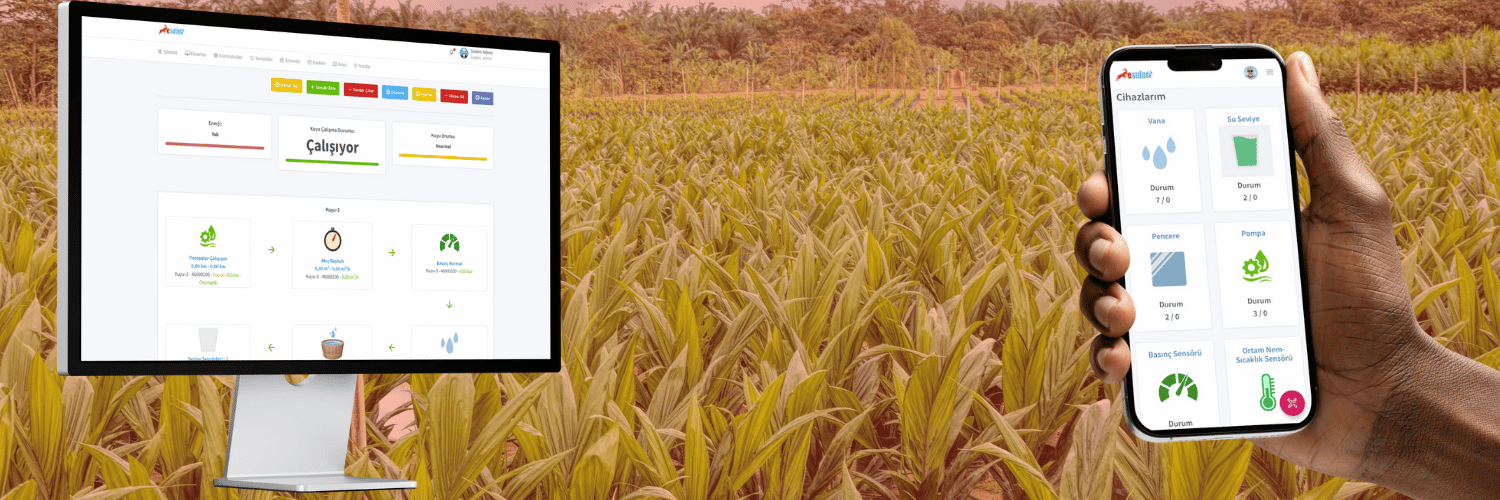
AI-supported irrigation systems ensure that water resources are used in the most efficient way. While in traditional irrigation methods the farmer makes decisions based on experience and observations, in smart systems, this decision is supported by scientific data.
Working Logic of the AI Irrigation System:
Soil moisture sensors measure real-time moisture levels. Precipitation forecasts received from weather APIs are integrated into the system. Water needs are calculated according to the phenological period (growth stage) of the plant. Evapotranspiration (ET) values are taken into account. All these parameters are evaluated by the artificial intelligence algorithm to determine the optimal irrigation time and amount.
The system continuously monitors the soil moisture level and stops automatically after the required amount of water is given. In this way, there is no risk of either under-irrigation or over-irrigation.
Real-World Benefits: Water savings of 30-45 percent are achieved. Plant stress is minimized. Energy costs decrease. Labor needs are reduced.
2. Plant Disease and Pest Detection
Artificial intelligence can detect plant diseases and pests at an early stage using image processing algorithms. This largely prevents economic losses.
How the Early Warning System Works: Cameras and drones collect images of plants in the field. Image processing algorithms analyze leaf color changes, spot formations, and abnormal growth patterns. The system compares disease symptoms with a massive database. When a match is found, the disease type is identified and intervention suggestions are presented.
Thanks to this technology, the disease is detected and intervened before it reaches the level of economic damage. Thus, both product loss is prevented and unnecessary pesticide costs are avoided.
3. Yield Prediction and Harvest Forecasting
Artificial intelligence can make very precise yield predictions before harvest. These predictions guide critical decisions on many issues, from marketing strategies to storage capacity, labor planning to equipment rental.
Prediction Methodology: Satellite images and drone data analyze the field pixel by pixel. Plant growth parameters (NDVI – Normalized Difference Vegetation Index) are calculated. Historical data and current season conditions are compared. Weather forecasts and possible stress factors are included in the model.
In modern systems, prediction accuracy reaches levels of 85-95 percent. For example, in a corn field, the image of each plant is analyzed to estimate the number of cobs, and this data is generalized to the field to calculate the total yield.
4. Soil Health Analysis and Fertilization Optimization
Artificial intelligence determines the most appropriate fertilization strategy by continuously monitoring soil health. Excessive fertilization both increases costs and harms the environment. Insufficient fertilization, on the other hand, reduces yield.
Smart Fertilization System: EC (electrical conductivity) sensors measure the nutrient level in the soil. pH sensors monitor soil acidity. Artificial intelligence evaluates this data according to the plant type and growth stage and makes a fertilizer recommendation. With fertigation (mixing fertilizer into irrigation water) systems, the right amount of fertilizer is applied at the right time.
This approach provides 20-30 percent savings in fertilizer costs while simultaneously preventing yield loss.
5. Climate Change and Weather Forecasts
Artificial intelligence analyzes weather data and climate models to provide early warnings before critical events (frost, hail, extreme heat). This gives farmers a chance to take precautions.
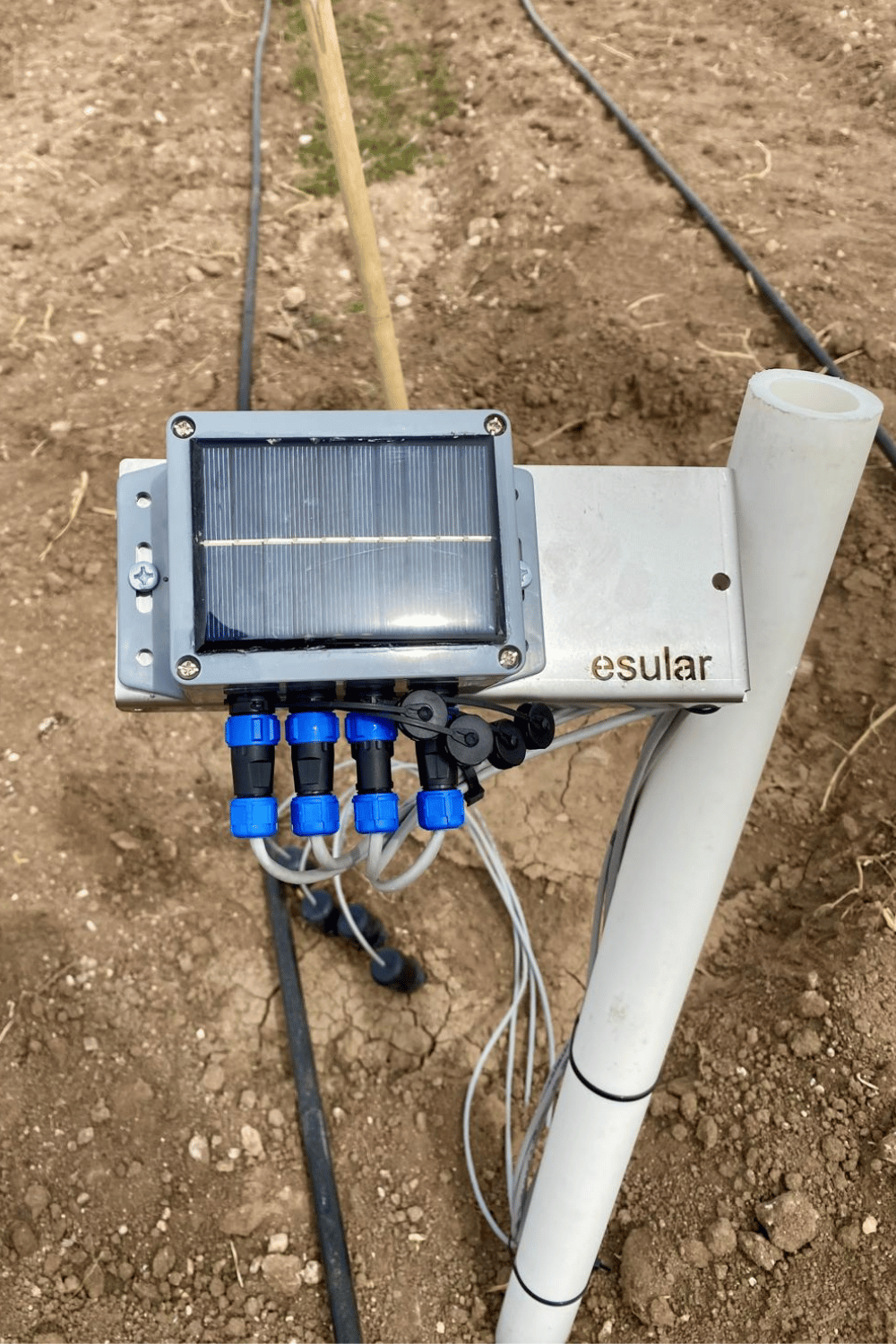
Agricultural Frost Prediction System: Esular climate stations collect temperature, humidity, and wind data in real-time. Artificial intelligence algorithms combine this data with meteorological forecasts to calculate frost risk. When a risk is detected, a warning is sent to the farmer via SMS and mobile application. Automatic frost protection systems (sprinkling, heating) can be activated.
Esular's AI-Supported Technologies
Esular, as one of Turkey's leading smart agriculture technology companies, offers a comprehensive AI-supported ecosystem. The company's "Monitors, Learns, Manages" philosophy includes all the components needed for modern agriculture.
Esular AI Platform – Cloud-Based Agricultural Intelligence
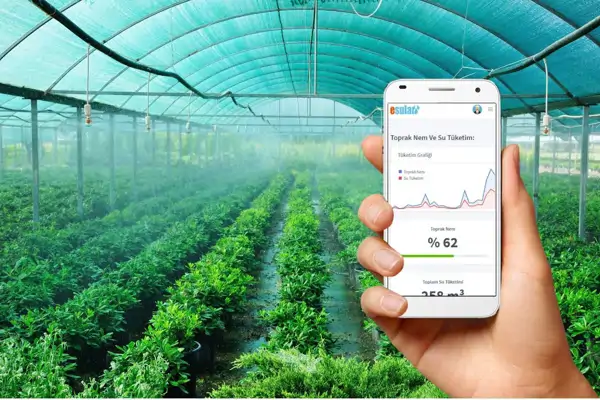
Esular's cloud-based artificial intelligence platform analyzes all sensor data, weather forecasts, and historical data to offer smart suggestions to farmers.
Platform Features:
Predictive Analytics: Predicts future irrigation needs, disease risks, and harvest times. It allows you to make proactive decisions by working integrated with weather forecasts.
Automatic Scenario Creation: You can create smart scenarios such as "If soil moisture drops below 30 percent and no rain is expected, start irrigation." These scenarios are optimized by artificial intelligence to work in the most efficient way.
Data Visualization and Reporting: All your data is presented with understandable graphics and tables. You can see which strategies were more successful by making seasonal comparisons.
Multi-Point Management: You can manage your fields in different locations from a single platform. The specific needs of each field are determined by artificial intelligence.
Wireless Smart Irrigation System
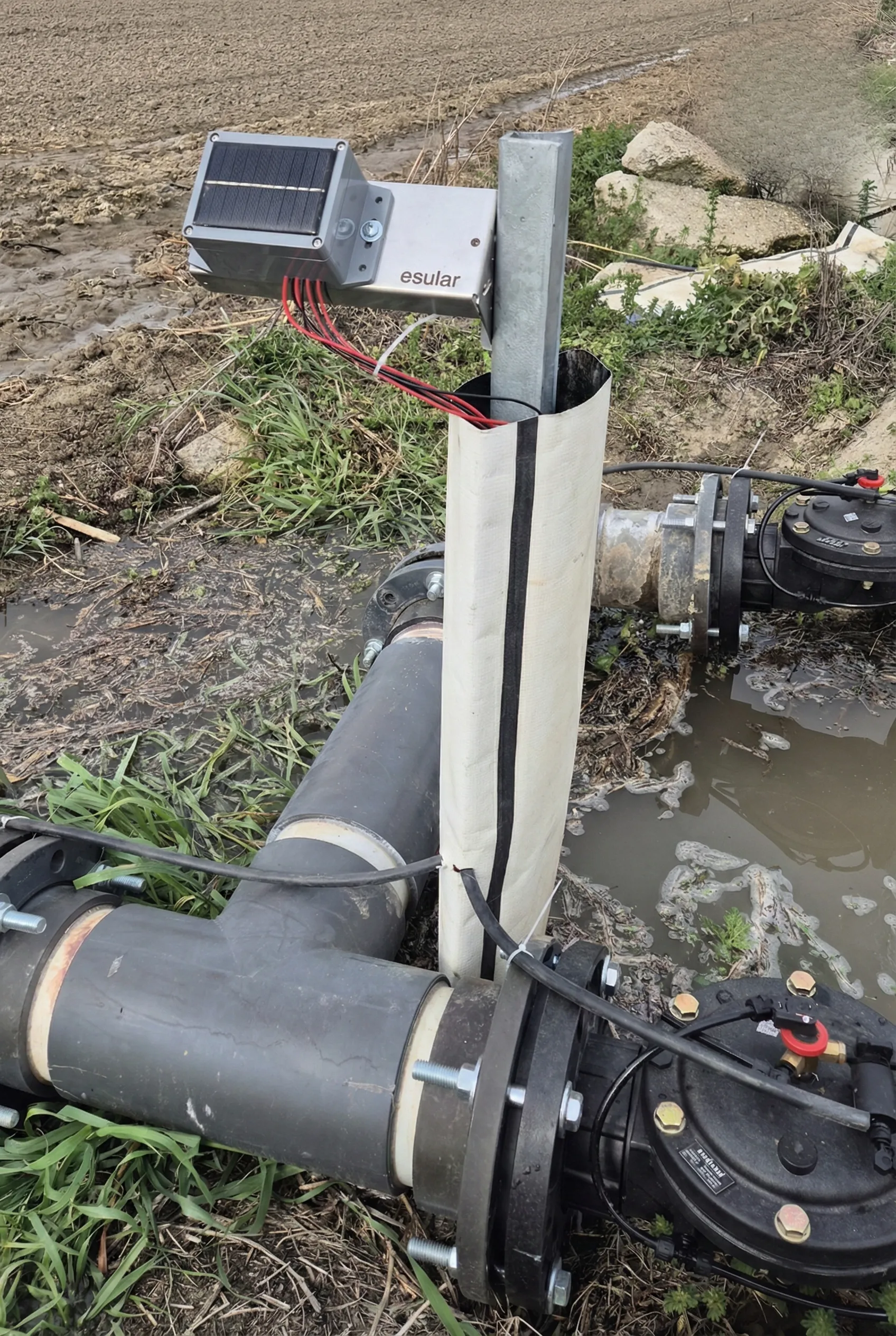
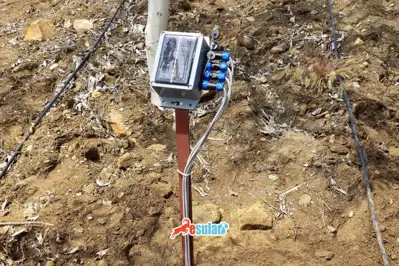
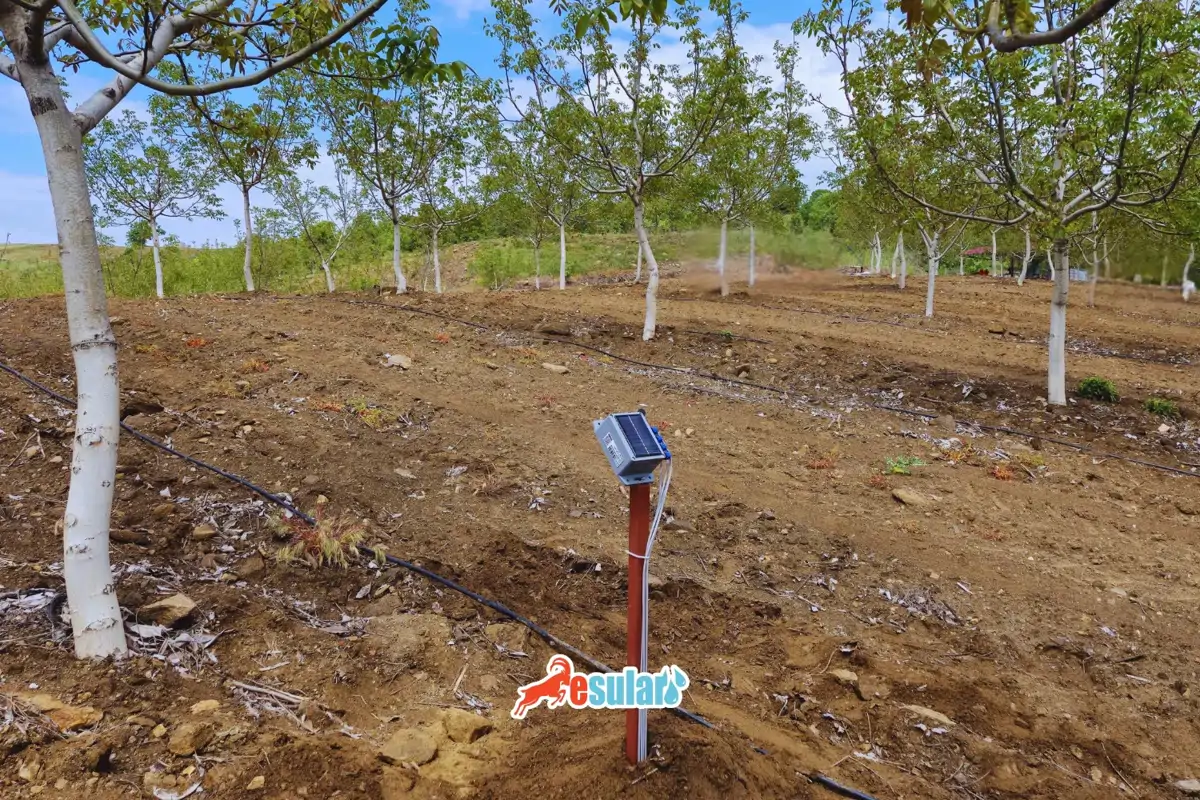
Esular's wireless valve control units automatically implement AI decisions. These solar-powered systems, which do not require electrical infrastructure, can operate within a range of 5-10 km.
Soil Moisture and EC Sensors
Esular's wireless soil moisture sensors are one of the primary data sources for the AI system. These sensors monitor the entire root zone by measuring moisture at 4 different depths.
Sensor Features: ±2% measurement precision. Nutrient tracking with EC (electrical conductivity) measurement. 3-5 years of battery life. Completely wireless operation.
All collected data is transmitted to the AI platform and forms the basis of irrigation decisions.
Climate and Meteorology Stations
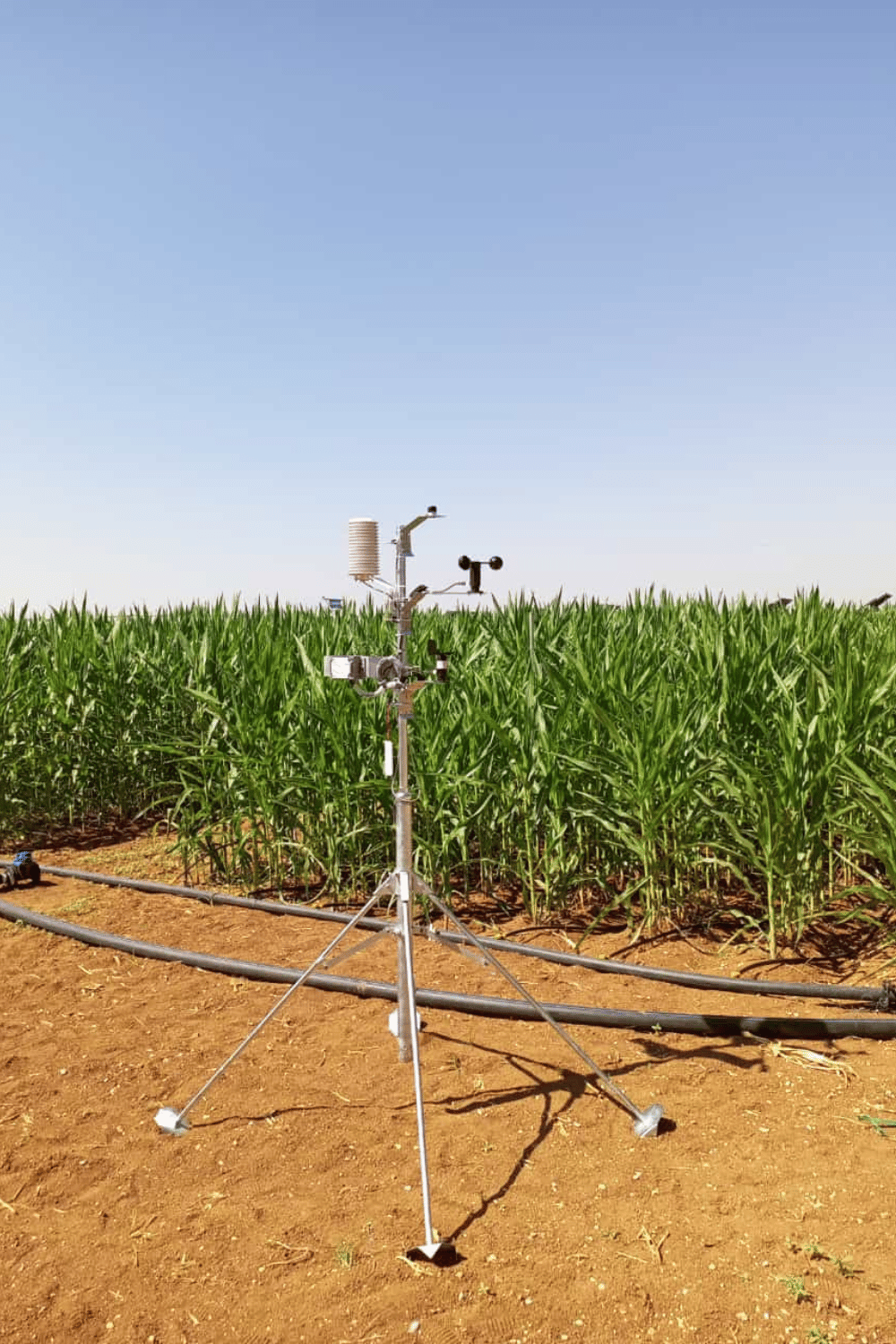
Esular climate stations measure all climate parameters such as temperature, humidity, wind speed, rainfall amount, and solar radiation. This data is analyzed by artificial intelligence to make agricultural frost, disease risk, and evaporation predictions.
For more information: Esular Climate Stations
Benefits of Using Artificial Intelligence in Agriculture
1. Yield Increase
AI-supported systems provide the resources plants need at exactly the right time and in the right amount. This increases yield by minimizing plant stress. Research shows that there is a 15-30 percent yield increase in enterprises using smart farming technologies.
2. Resource Savings
Water Savings: Water savings of 30-45 percent are achieved. Energy Savings: Electricity consumption decreases because pumps only run when necessary. Fertilizer and Pesticide Savings: Unnecessary input use is prevented thanks to targeted applications.
3. Environmental Sustainability
Excessive irrigation and fertilization cause soil pollution and groundwater contamination. AI-supported systems minimize environmental impact by optimizing resources. This means leaving healthier soils for future generations.
4. Cost Reduction
Although there is an initial investment cost, the savings achieved in the medium and long term are quite significant. The decrease in water, energy, fertilizer, and labor costs pays for the system in a short time.
5. Data-Based Decision Making
In traditional agriculture, decisions are mostly based on experience and estimation. Artificial intelligence, on the other hand, offers you concrete data and scientific analysis. This facilitates risk management and increases the success rate.
Challenges and Solutions for AI Use in Agriculture
1. Initial Investment Cost
Challenge: The installation cost of smart farming systems can be challenging, especially for small-scale enterprises.
Solution: Esular offers a modular structure, allowing farmers to start small and expand the system over time. In addition, investment costs can be reduced with KOSGEB and other government supports. The return on investment period is an average of 2-3 years thanks to the savings provided.
2. Technical Knowledge Requirement
Challenge: Using AI systems may require technical knowledge.
Solution: Esular has made the system usable by everyone with user-friendly mobile applications and web interfaces. Detailed training and 24/7 Turkish technical support are offered. Advanced technical knowledge is not needed to set up and use the system.
3. Data Security Concerns
Challenge: Farmers may have concerns about the collection and storage of field data.
Solution: Esular stores all data encrypted and makes it accessible only to the farmer themselves. Data is not shared with third parties in any way. It is compliant with KVKK (Personal Data Protection Law).
Future of Artificial Intelligence in Agriculture
AI technologies are constantly developing and their applications in agriculture are becoming increasingly widespread. Some developments we will see in the future:
Autonomous Agricultural Machinery: AI-supported tractors and harvesting machines will work fully automatically without the need for human intervention. These machines will maximize efficiency by navigating with centimeter precision.
Robotic Harvesting Systems: Especially in fruit and vegetable production, AI-supported robots will perform the harvest. These robots will detect the maturity level of the product and harvest only the ripe products.
Blockchain Integration: By combining AI and blockchain technologies, the entire journey of the product from the field to the table can be monitored transparently.
Precise Genetic Analysis: Artificial intelligence will recommend the most suitable seed variety for each field by analyzing plant genetics and environmental conditions.
Deep Learning Models: More advanced machine learning models will be able to solve complex agricultural problems that cannot currently be predicted.
Conclusion: Digital Transformation of Agriculture with Artificial Intelligence
The use of artificial intelligence in agriculture is no longer a luxury but has become a necessity. In the face of climate change, increasing population, decreasing water resources, and increasing production costs, smart farming technologies are the most effective solution.
Esular stands by the Turkish farmer with its domestic and national technologies. With wireless, easy-to-install, and user-friendly systems, agricultural enterprises of all sizes can switch to AI-supported farming.
With AI-supported farming systems:
- Increase your yield by 15-30 percent
- Reduce your water consumption by 30-45 percent
- Lower your energy and fertilizer costs
- Detect diseases and pests early
- Monitor your fields from anywhere in the world
- Practice sustainable and profitable agriculture
The future of agriculture is a data-driven, smart, and sustainable future. You can build this future together with Esular.
Related Esular Solutions
All the products you need for AI-supported transformation in agriculture:
Wireless Smart Valve Control Units – Solar-powered irrigation control systems that automatically implement AI decisions
Wireless Soil Moisture and EC Sensors – Smart sensors that perform multi-level moisture and nutrient measurement
Climate and Meteorology Stations – AI-supported weather and agricultural frost prediction systems
– Integrated smart irrigation solutions
– Comprehensive solutions for large agricultural lands
Price Alert: Current prices and campaigns for the products mentioned in this article are available on the product pages. Prices are subject to change.
For AI-Supported Transformation in Your Agriculture
Esular's expert team will help you determine the most suitable AI-supported solutions for your agricultural operations. Get a free exploration and analysis service.
📞 Phone: 0312 222 44 55
📧 Email: [email protected]Review All Products
Last Update: October 2025
Related Blog Content:
- 📖
- 📖
- 📖
- 📖