Water footprint is a concept that measures the total amount of fresh water consumed during the production process of a product or service and the water pollution generated during this process. This concept is an indicator aimed at determining the impact of a product or service on water resources by evaluating direct and indirect water use. It generally refers to the amount of fresh water used throughout the life cycle of a product or service. In this process, direct water consumption, indirect consumption such as water used by rainwater and soil, and those related to water pollution are included. This indirect term includes the amount of water used in the production of products and usually extends throughout the production chain. Water footprint is an important concept for the sustainable management of water and the protection of its resources. It helps consumers and producers become aware of water consumption and pollution and encourages the development of more sustainable consumption and production methods in light of this information.
What are the Components of the Water Footprint?
The components of the water footprint are examined in three main categories: blue water footprint, green water footprint, and grey water footprint. Here are the details of these components;
Blue Water Footprint
Refers to the amount of fresh water used directly to produce a good or service. This water includes drinking-utility water, irrigation water, and water used in industrial production processes. For example, in agricultural production, elements such as evaporation, water consumption of plants, and drainage water are included in the blue water footprint. In the industry and drinking-utility water sectors, it covers the water allocated to these sectors from the available surface and groundwater resources in a basin.
Irrigated Agriculture Blue Water Footprint (volume/time) = Evaporated Blue Water + Blue Water Incorporated into the Product + Drainage Amount
Green Water Footprint:
Represents the amount of rainwater required for the production of a good or service. It is especially important for agriculture, garden, and forest products. This footprint includes rainwater stored in the soil and consumed by plants through evaporation and transpiration. It refers to the amount of water incorporated into the plant through rainwater evapotranspiration occurring in fields and forests.
Green Water Footprint (volume/time) = Evaporated Green Water + Green Water Incorporated into the Product
Grey Water Footprint:
Refers to the amount of fresh water required to maintain water quality caused by pollutants generated during the product or service production process. This footprint includes pollution originating from point or diffuse pollution sources. When calculating the grey water footprint, the pollutant load must be divided by the difference between the natural water quality and the existing water quality in the environment.
Grey Water Footprint (volume/time) = Pollutant Load / (Measured Maximum Concentration in the Receiving Water Body – Natural Concentration in the Receiving Water Body)
These components are important elements that evaluate different types of water use and their impacts on the water footprint. Each plays a critical role in terms of water management and sustainability and helps in planning and policy-making for the effective use of water resources.
Agricultural Water Footprint: Turkey's Situation and the Role of Smart Irrigation Systems
Turkey is a country that stands out globally as an important player in agricultural production. However, the effective use and sustainability of water resources in this agricultural production process are of great importance. Turkey's total water footprint is measured at 140 billion m³ annually. 89% of this water is used in the agricultural sector, which shows how large a part of the country's agricultural water use it constitutes. 7% is allocated for domestic use and 4% for industrial production.
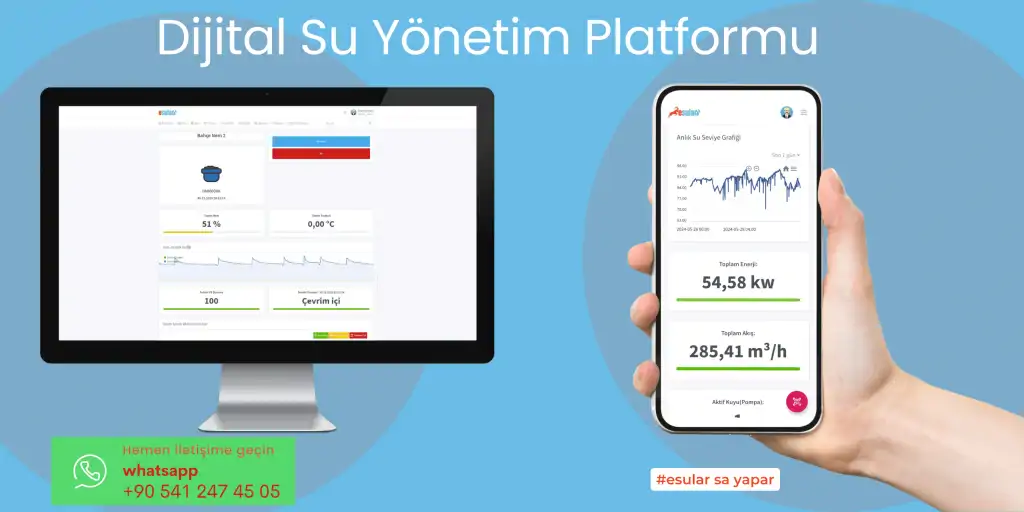
A large part of the agricultural water footprint consists of green water resources. More than 66% of the water used for crop production in Turkey is considered green water. This situation shows the decisive role of precipitation regimes on agricultural productivity and how natural disasters such as drought affect the agricultural sector. Blue water use can be optimized by increasing the efficiency of irrigation methods. Transitioning from traditional irrigation methods to smart irrigation systems can ensure more efficient use of water, which can increase the sustainability of water resources. Smart irrigation systems prevent water waste by ensuring water is provided according to the needs of the plants and increase water efficiency in agricultural production.
Expanding the use of smart irrigation systems in Turkey and providing training to farmers on this subject will both provide water savings and increase productivity in agricultural production. In this way, Turkey can manage its agricultural water resources in a more sustainable manner and leave healthy water resources for future generations. You can contact us to get more detailed information about smart irrigation systems. https://esular.com/akilli-sulama-sistemleri
What are the Ways to Reduce Water Footprint?
There are many practical ways to reduce the water footprint, and these methods can be easily applied in daily life. Here are practical ways to reduce the water footprint:
Regularly check faucets and pipes at home. Prevent unnecessary water loss by detecting and repairing leaks.
Turn off the faucet while brushing teeth and shaving
Instead of leaving the faucet running while washing fruits and vegetables, you can save water by washing them in a container filled with water.
Reduce water consumption by preferring short showers.
Minimize water consumption by washing with a full washing machine.
Use only as much water as you need when cleaning and prevent water waste by washing dishes in the machine.
Keep your water use under control by washing your car with pre-filled buckets instead of using a hose.
Local products use less water with short supply chains. Organic foods save water by reducing chemical fertilizers and irrigation.
Large amounts of water are used for sugar production. You can reduce water consumption by reducing sugary foods and beverages.
Clothing production requires water resources. Develop sustainable consumption habits instead of buying clothes you don't need.
With these methods, you can contribute to the efficient use of water. It is important for every individual and institution to take responsibility in this regard to leave a healthier world for future generations.