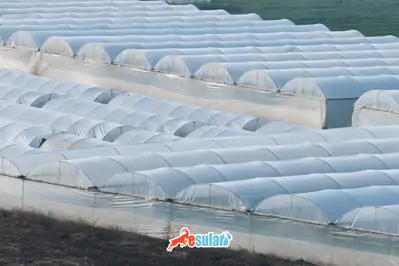
Marginal agricultural land describes lands that are not ideal for agricultural production or provide low yields. These lands are generally unsuitable for agriculture due to factors such as low soil fertility, limited irrigation possibilities, steep slopes, or extreme weather conditions. In Turkey, marginal agricultural lands are classified according to various factors such as soil fertility, irrigation possibilities, land slope, and climate, and are generally common in the Eastern Anatolia, Southeastern Anatolia, and Central Anatolia regions. The use of these lands is possible not only for agriculture but also for alternative purposes; for example, they can be used for solar power plants, livestock, forestry, and pasture areas.
Characteristics of Marginal Agricultural Lands
These lands possess characteristics that are not ideal for agricultural production and generally provide low yields. The characteristics of these lands are as follows:
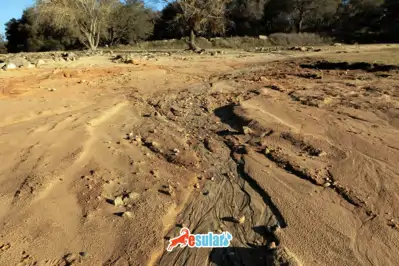
Low Soil Fertility: Soil fertility is generally low in marginal agricultural lands. Issues such as low organic matter content, insufficient nutrient elements, or soil salinity can be seen.
Insufficiency of Irrigation Possibilities: The amount of precipitation on the land may be insufficient or the groundwater level may be low. This situation creates difficulties for agricultural irrigation.
Land Slope and Shape: Marginal agricultural lands generally have steep slopes, rugged terrain, or shapes unsuitable for agricultural production. This causes agricultural activities to be limited or difficult.
Extreme Weather Conditions: Extreme weather conditions such as drought, frost, flood, extreme heat or cold can be frequently seen in marginal agricultural lands. This situation also negatively affects agricultural production.
Soil Structure: They may have soil structures unsuitable for agricultural production, such as stony, rocky, or salty soils.
Geographical Distribution: In Turkey, marginal agricultural lands are generally found in the Eastern Anatolia, Southeastern Anatolia, and Central Anatolia regions. More challenging conditions for agriculture usually exist in these regions.
Classification of Marginal Agricultural Lands
These lands are generally classified according to factors such as soil fertility, irrigation possibilities, land slope, and climate conditions. The classification of marginal agricultural lands in Turkey is generally as follows:
1st Class Lands: Lands most suitable for agricultural production. Soil fertility is high, irrigation possibilities are generally good, and land slope is favorable for agricultural production. These lands generally consist of low-slope and fertile soils.
2nd Class Lands: Lands slightly less suitable than 1st class lands. Soil fertility may be slightly lower or irrigation possibilities may be limited. Additionally, land slope is also generally favorable for agricultural production in 2nd class lands, but not as ideal as 1st class.
3rd Class Lands: Lands with limited suitability for agricultural production. Soil fertility is low, irrigation possibilities are restricted or insufficient. Additionally, land slope in 3rd class lands may be steep or rugged in a way that is unsuitable for agricultural production.
4th Class Lands: Lands unsuitable for agricultural production. Soil fertility is very low, irrigation possibilities are almost non-existent or completely insufficient. Additionally, land slope in 4th class lands is very steep or very rugged for agricultural production.
This classification is used to determine how suitable the land is for agricultural production and plays an important role in directing agricultural policies and resources. The characteristics and use potential of each class of land are different; therefore, the class of the land is an important criterion in determining which agricultural activities can be carried out on it.
How are Marginal Agricultural Lands Used?
Marginal agricultural lands show low productivity because they have conditions that are not ideal for agricultural production. However, it is possible to use these lands for different purposes. Here are alternative usage methods for these lands:
Energy Production: Marginal agricultural lands suitable for solar power plants (SPP) can contribute to energy production. In this way, lands unsuitable for agricultural production can be evaluated as an energy source.
Forestry and Afforestation: They can be used for afforestation and forest creation projects. Erosion control can be provided, biological diversity can be increased, and the restoration of ecosystems can be supported.
Mera and Hayvancılık: In regions where pasture areas for livestock are insufficient, such lands can be evaluated for livestock.
Environmental Protection and Ecosystem Services: They can be used to support various ecosystem services such as protecting water resources, carbon storage, and providing habitats. They can function especially as irrigation areas and protected natural areas.
Correct management of these lands and determination of alternative usage areas is important in terms of sustainability and ecological balance. The efficient use of such lands for various purposes can also contribute to the creation of non-agricultural income sources.
How to Obtain a Marginal Agricultural Land Report?
Application to Provincial/District Directorate of Agriculture and Forestry: You need to apply to the Directorate of Agriculture and Forestry located in your province or district. When making your application, you must apply to the directorate of the place where the land is located.
Preparing Required Documents: During the application, you may need to prepare the following documents:
Photocopy of identity card or passport
Land title deed or block-parcel information
Documents regarding the ownership status and land use at the location of the land
Application and Inspection: The Directorate will evaluate your application and inspect whether the land is suitable as marginal agricultural land. In this process, factors such as the characteristics of the land, soil fertility, slope, and climate conditions will be taken into account.
Preparation of the Report: As a result of the inspection, if the land is evaluated as marginal agricultural land, a report will be prepared by the Directorate of Agriculture and Forestry. This report shows that the land is officially defined as marginal agricultural land.
Obtaining the Report: After the report is prepared, you can receive the report within the period notified to you. With the receipt of the report, it is documented that the land is officially marginal agricultural land.
The process and required documents for obtaining a marginal agricultural land report may vary according to the country and regulations. Before applying, it is important to learn the current information and requirements by consulting the relevant Directorate of Agriculture and Forestry or relevant authorities.