Tüm Yazılar
What is Potato Wart Disease?
Potato Wart Disease was first identified in the mid-19th century in Europe and has since spread to many countries. In Turkey, this disease was first detected in 2004 in the provinces of Ordu and Nevşehir.
Potato is one of the most widely consumed and economically valuable agricultural products worldwide. However, potato production faces serious threats due to various diseases and pests. One of these diseases, Potato Wart Disease, can cause significant damage to potato fields and lead to yield losses. In this article, you will learn detailed information about the agent, symptoms, spread, transmission routes, and control methods of Potato Wart Disease. Additionally, we will share information on preventive measures and resistant potato varieties. With this information, which we believe will be useful for producers and agricultural experts operating in the agricultural sector, you can reduce the risk of disease in your potato production and protect your yield.
What Causes Potato Wart Disease?
Potato Wart Disease is a serious disease that causes wart-like galls to form on the potato plant. The agent of this disease is Synchytrium endobioticum, a soil-borne obligate parasitic fungus. The fungus can cause infection in the potato plant as well as in some wild potato species and weeds belonging to the Solanaceae family. Here are the causes of the emergence of Potato Wart Disease:
Synchytrium endobioticum produces resting spores that can survive in the soil for a long time. These spores can remain active in the soil for 25-30 years and can start the disease by infecting the potato plant under suitable conditions.
Diseased potato tubers release zoosporangia that remain in the soil during harvest. These spores can reach healthy tubers by mixing with soil water and start the infection.
The disease likes cool and moist conditions. It is commonly seen especially in regions where the maximum average temperature is 18°C and the amount of precipitation is 700-800 mm. The optimum temperature for primary infections is 15°C, maximum 25°C, and minimum 11°C.
Diseased plant residues and contaminated soil play an important role in the spread of the disease. The disease can be transported to healthy fields through agricultural machinery, vehicles, and other equipment.
It is very important that seed potatoes are disease-free. Failure to notice diseased tubers can lead to the spread of the disease during planting.
Farm manure and other organic materials can also cause the disease to be carried.
Potato Wart Disease can lead to serious economic losses in potato production, and therefore, it is of great importance to understand the causes of the disease and take preventive measures.
What are the Symptoms of Potato Wart Disease?
Potato Wart Disease manifests itself with various symptoms in the potato plant. The symptoms of the disease can be seen in different parts of the plant and usually appear as wart-like galls. Here are the main symptoms of Potato Wart Disease:
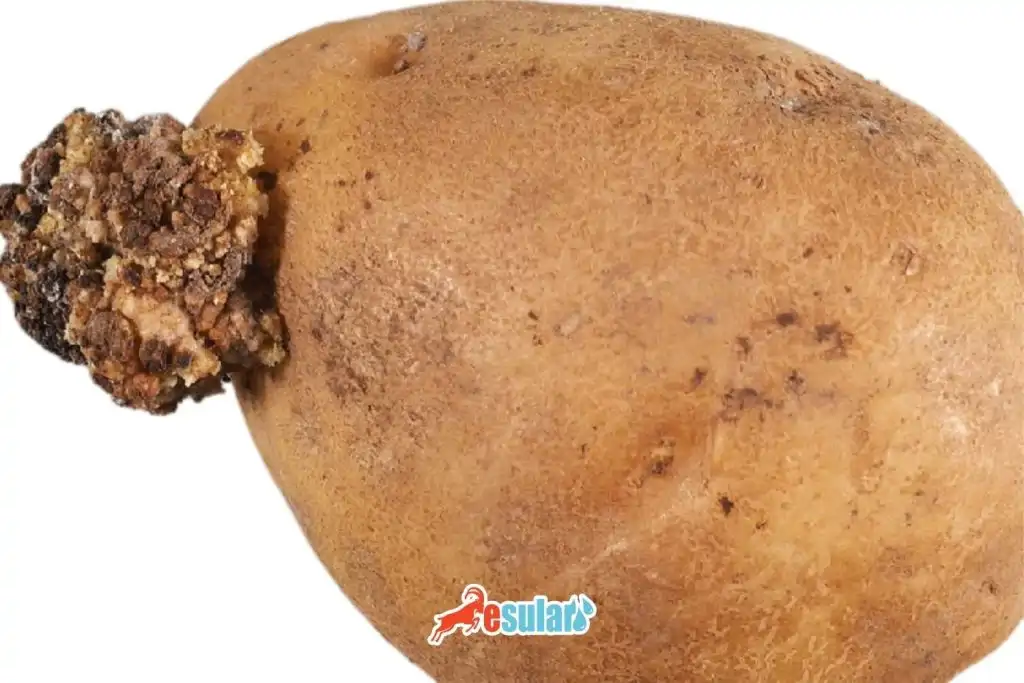
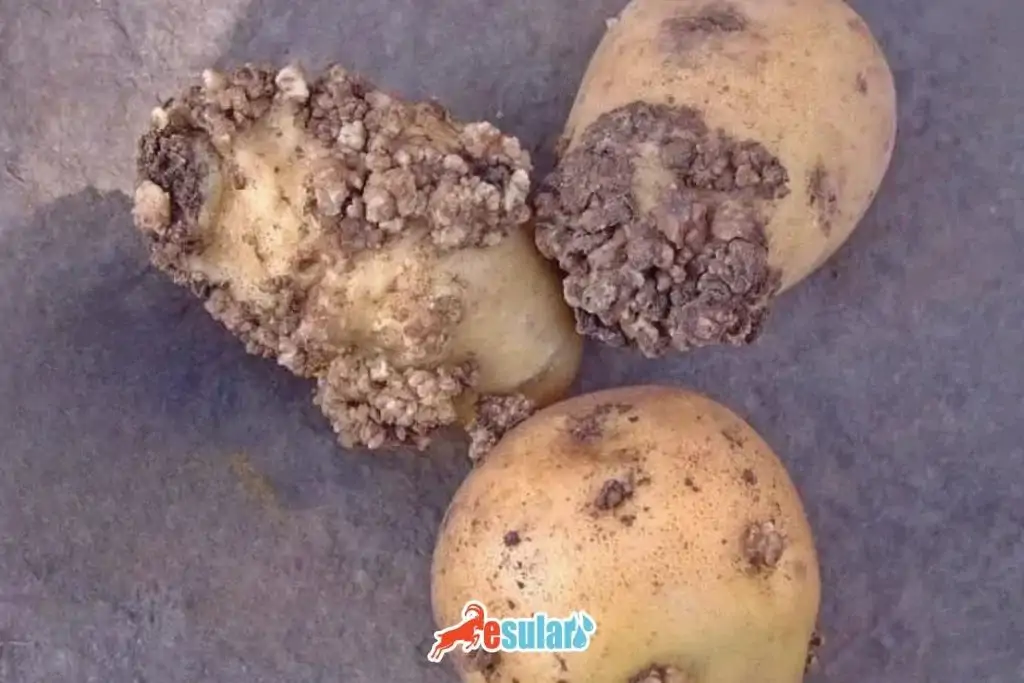
- The most prominent symptom of the disease is the formation of wart-like galls on potato tubers. These galls are usually raised, irregularly shaped, and cancer-like in appearance on the surface of the tuber.
- The disease can also cause infection in flowers, especially in humid regions. Infected flowers deteriorate and fall off as the disease progresses.
- Galls can also form on the leaves and stems of the plant. However, since these galls are not durable, they quickly rot and disappear.
- When diseased tubers are stored after harvest, the galls on them dry out. For this reason, it can be difficult to notice diseased tubers and they may be overlooked during seed selection.
- The fungus enters potato cells and promotes abnormal growth and deformation of the cells. This situation causes cancer-like formations in the form of warts on the tuber.
- The disease does not directly affect the root system of the plant. However, other plant tissues above the root system can be infected.
These symptoms negatively affect the overall health of the potato plant and can lead to serious drops in yield. To prevent the spread of the disease, early detection of infected plants and taking appropriate quarantine measures are important.
Potato Wart Disease Control Methods
A combination of various strategies should be used in the fight against Potato Wart Disease. First, it is important to quarantine infected areas and isolate diseased regions. Using certified and disease-free seed is a critical step to prevent the spread of the disease. In addition, planting resistant potato varieties and developing new resistant varieties can reduce the impact of the disease. Disinfecting agricultural tools and equipment used in infected areas is also effective in preventing the spread of the disease. In heavily contaminated areas, a long-term potato planting ban should be applied, and disinfected farm manure obtained from reliable sources should be used. Chemical control methods, especially Dinoseb application, can be effective in reducing infection. Finally, providing education to producers about the disease and organizing information campaigns play an important role in controlling the disease. Using these strategies together is necessary for healthy and high-yield potato production.
Resistant Varieties Against Potato Wart Disease
The use of varieties resistant to Potato Wart Disease is an important strategy in disease management. Various potato species that show resistance to the disease have been developed in Europe and other regions. Especially varieties of German origin such as "Desiree," "Maja," "Nicola," and "Gelda" are examples that show a high degree of resistance to the disease. These varieties minimize the effects of the disease while contributing to healthy and high-yield potato production. Planting resistant varieties helps farmers minimize yield losses and prevent the spread of the disease.
Kategoriler