Tüm Yazılar
What is the Corn Borer?
The corn borer is an insect species that causes serious damage in agricultural production and specifically harms the corn plant. The corn borer, whose scientific name is Ostrinia nubilalis, causes great damage to corn plants with its butterfly-form adults, the eggs they leave under the leaves, and the larvae that hatch from these eggs. Feeding on the leaves, stems, and ear parts of the corn plant, the corn borer prevents the plant's development and causes yield loss. Larvae damage the internal tissue of the plant by entering the stem nodes of the corn plant, which weakens the durability of the corn plant. This pest is more active especially in hot and humid climates and can produce several generations in a season under suitable conditions. The corn borer poses a major threat to corn producers, and therefore, effective control methods must be implemented.
Life Cycle and Damages of the Corn Borer
The life cycle of the corn borer consists of four main stages: egg, larva, pupa, and adult.
Egg: Female butterflies usually lay their eggs on the underside of the leaves of the corn plant. Eggs hatch within 3 to 6 days; this period varies depending on the temperature. Egg masses are found in a cluster, arranged on top of each other like tiles, and each mass contains an average of 30-40 eggs.
Larva: Larvae hatching from the eggs feed on the leaves for the first few days and then enter the plant's stem. Larvae feed by opening tunnels in the internal tissue of the corn plant. This process takes about 30-35 days, and as the larvae grow, the damage they cause to the plant increases. Fully grown larvae transition to the pupa stage within the stem or soil.
Pupa: Larvae pupate in the stem of the plant or in the soil. The pupa stage lasts 8-10 days depending on the temperature. Adult butterflies emerging from the pupa start the egg-laying process again, and the cycle continues in this way.
Adult: Adults are butterflies with a wingspan between 22-32 mm, ranging in color from yellowish to olive brown. These butterflies lay their eggs, and the life cycle begins again. A female butterfly can lay eggs several times during its life and has the capacity to lay over 200 eggs in total.
The corn borer causes major damage, especially on the corn plant.
Stem Destruction: Larvae's entry into the stem usually occurs through the nodes. The tunnels they open here destroy the vascular tissue of the plant, which prevents the transport of nutrients and water. Due to stem tunnels, the plant weakens and can break easily in windy weather.
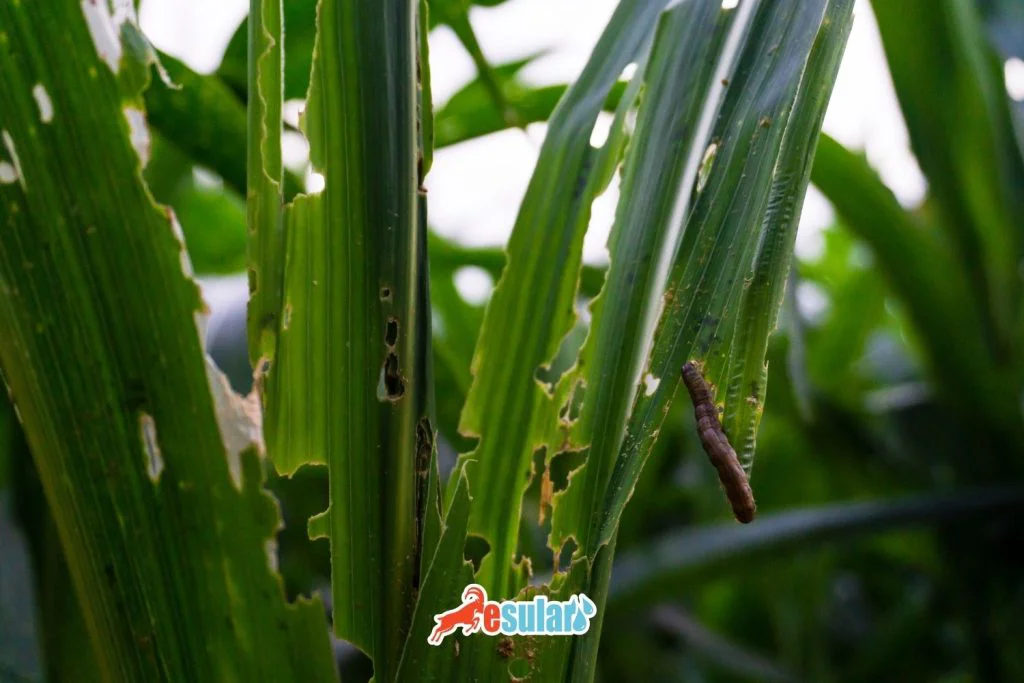
Leaf Damage: Larvae reduce the photosynthesis capacity of the plant by opening holes in the leaves. In the early period, the rows of holes formed in the leaves as a result of larval feeding are the first signs of the presence of the corn borer.
Yield Loss: The corn borer causes damage during both the development and production stages of the plant. As a result of heavy infestations, plants become smaller, ears produce fewer grains, and this situation leads to yield loss.
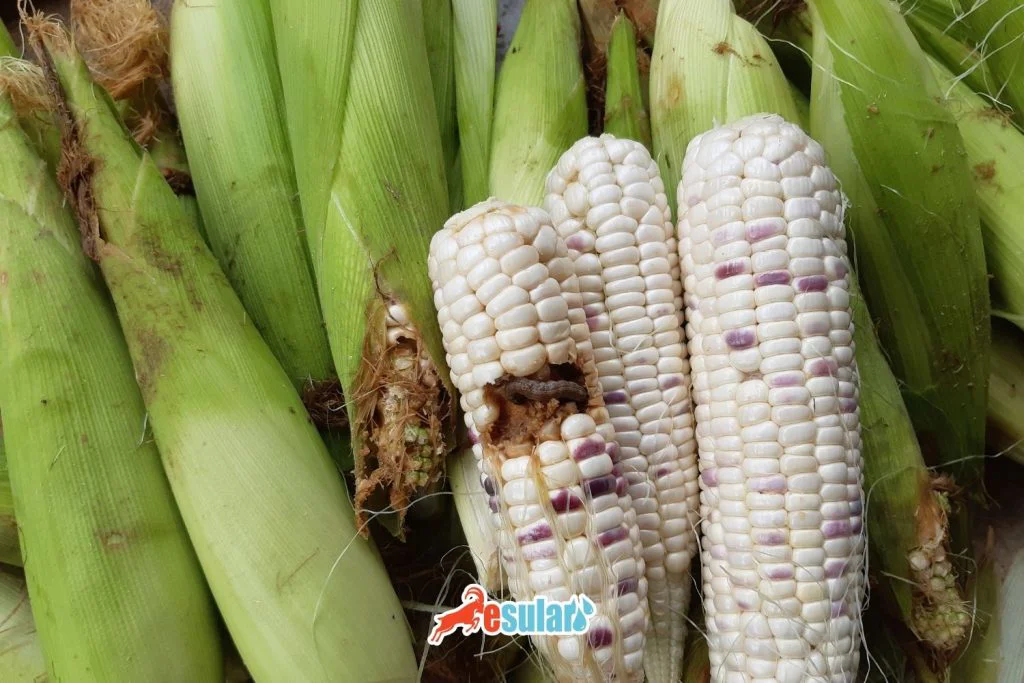
Ear Damage: Larvae also damage the internal parts of the corn ears, wearing down the grains. This reduces product quality and decreases the commercial value of the harvested product. Additionally, the opened wounds pave the way for fungal infections, which can further increase product losses.
If the corn borer is not controlled, this pest can cause product loss of 30% to 80%. Therefore, corn borer control is of great importance in corn farming.
Control Methods Against the Corn Borer
Effective control against the corn borer (Ostrinia nubilalis) should be carried out within the framework of integrated pest management (IPM) strategies. These strategies aim to keep the pest population under control by combining cultural, mechanical, biological, and chemical control methods.
Cultural Control
- After harvest, corn stalks, stem parts, and other plant residues remaining in the field must be destroyed. This prevents corn borer larvae from overwintering.
- In order to destroy overwintering larvae, the field should be plowed deeply. This process prevents the larvae from remaining under the soil and becoming adults in the spring months.
- Early planting is recommended to bypass the period when the corn borer population peaks. In this way, the plants will be in a less sensitive stage during the period when pests are most active.
- Instead of sequential planting of corn, the corn borer population can be reduced by applying rotation. When different plants are planted, the corn borer's life cycle is broken.
Mechanical Control
- By using traps that mimic the pheromones secreted by female butterflies, the mating of male butterflies can be prevented. The population can be reduced with this method.
- Corn borer adults are attracted to light, and in this way, the population can be kept under control.
Biological Control
- Beneficial insects and parasites that attack corn borer larvae and eggs (for example, parasitoids such as Trichogramma spp.) can be released into the field to control the pest population.
- Bacillus thuringiensis (Bt) based biopesticides provide effective biological control by targeting corn borer larvae. Bt causes death by producing toxins in the digestive system of the larvae and is not harmful to humans, animals, or the environment.
Chemical Control
- In cases where the population is dense, intervention can be made with chemical insecticides. Spraying should be done during the egg-laying period of the butterflies or before the larvae enter the stem of the plant. However, it is recommended to use chemical control only if biological and cultural methods are insufficient.
- Chemical spraying will be most effective during periods when the corn borer has emerged from the egg and the larvae have not yet entered the plant tissue. Spraying is generally done in the evening hours when butterflies are most active.
Genetic Control
- Genetically modified (GM) corn varieties show resistance to the corn borer by producing Bt toxin. These corn varieties reduce the population of corn borer larvae by killing them during the feeding process. Bt corn offers environmental and economic advantages by reducing chemical use.
For the control of the corn borer to be successful, it is important that the above methods are applied together and with the correct timing. Integrated pest management strategies not only keep the pest population under control but also offer long-term solutions without harming the environment and human health.
Kategoriler
Etiketler