
Agricultural Smart Irrigation System
Maximize water efficiency in agriculture with IoT sensors, wireless control units, and automation.
What is Agricultural Smart Irrigation?
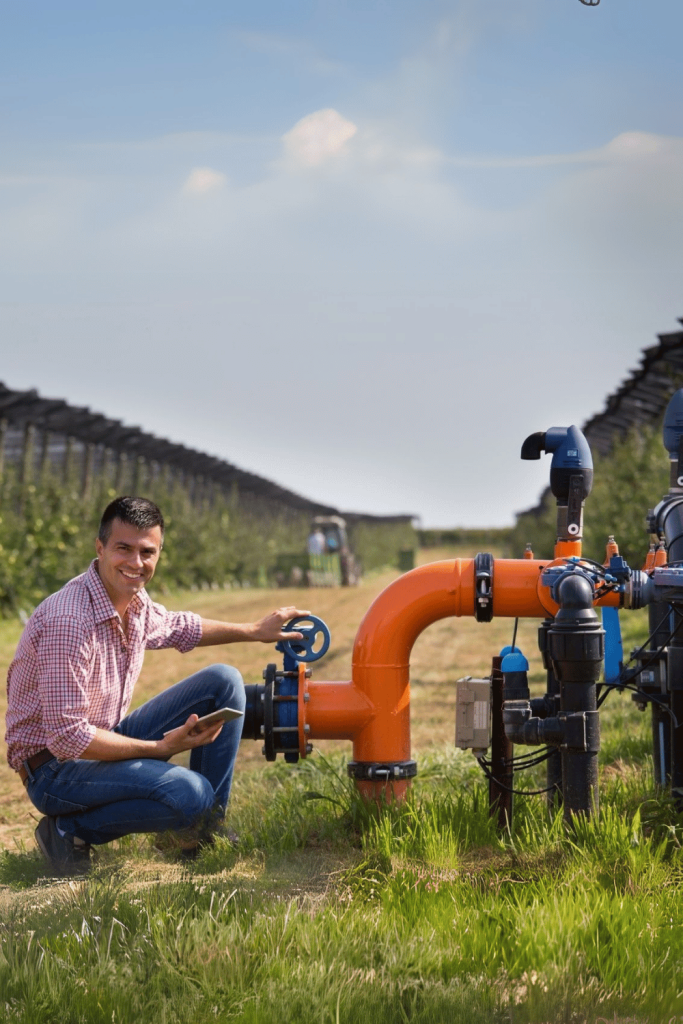
Agricultural smart irrigation system is a technology that analyzes the actual water needs of plants using soil moisture sensors, meteorological data, and IoT control units, and automatically manages irrigation.
Unlike traditional timer-based irrigation, smart irrigation makes data-driven decisions. If soil moisture is sufficient, it won't irrigate, and it automatically updates the program if rain is expected.
Smart Irrigation System Architecture
4 core layers: Sensing, Communication, Control, and Software. Each layer can operate independently, but they are more powerful together.
Sensing
Soil moisture, temperature, EC sensors; climate stations; pressure and flow sensors.
Contact
Wireless data transmission with LoRa (5-10 km range) or 4G/LTE. AES-128 encryption.
Control
Wireless valve control units, pump controllers, and fertilization dosage control.
Software
Cloud platform, mobile app, real-time dashboard, and alarm system.
Application Areas
Open Field
Pivot and drip irrigation automation for industrial crops such as wheat, corn, and cotton.
Vineyard and Garden
Precision drip irrigation management in vineyards, olive groves, citrus, and fruit orchards.
Greenhouse
Climate control, fertigation, and irrigation integration for greenhouse crops.
Greenhouse automation →Landscape
Timer and sensor-supported automatic irrigation in parks, gardens, and hotel areas.
Smart garden →How does the Smart Irrigation System work?
Esular smart irrigation system optimizes agricultural irrigation by creating a continuous cycle in 5 basic steps.
Data collection
Wireless soil moisture sensors, temperature and EC sensors, weather stations, and pressure sensors collect data 24/7.
AES-128 encrypted transmission over 5-10 km range with LoRa protocol.
Cloud Communication
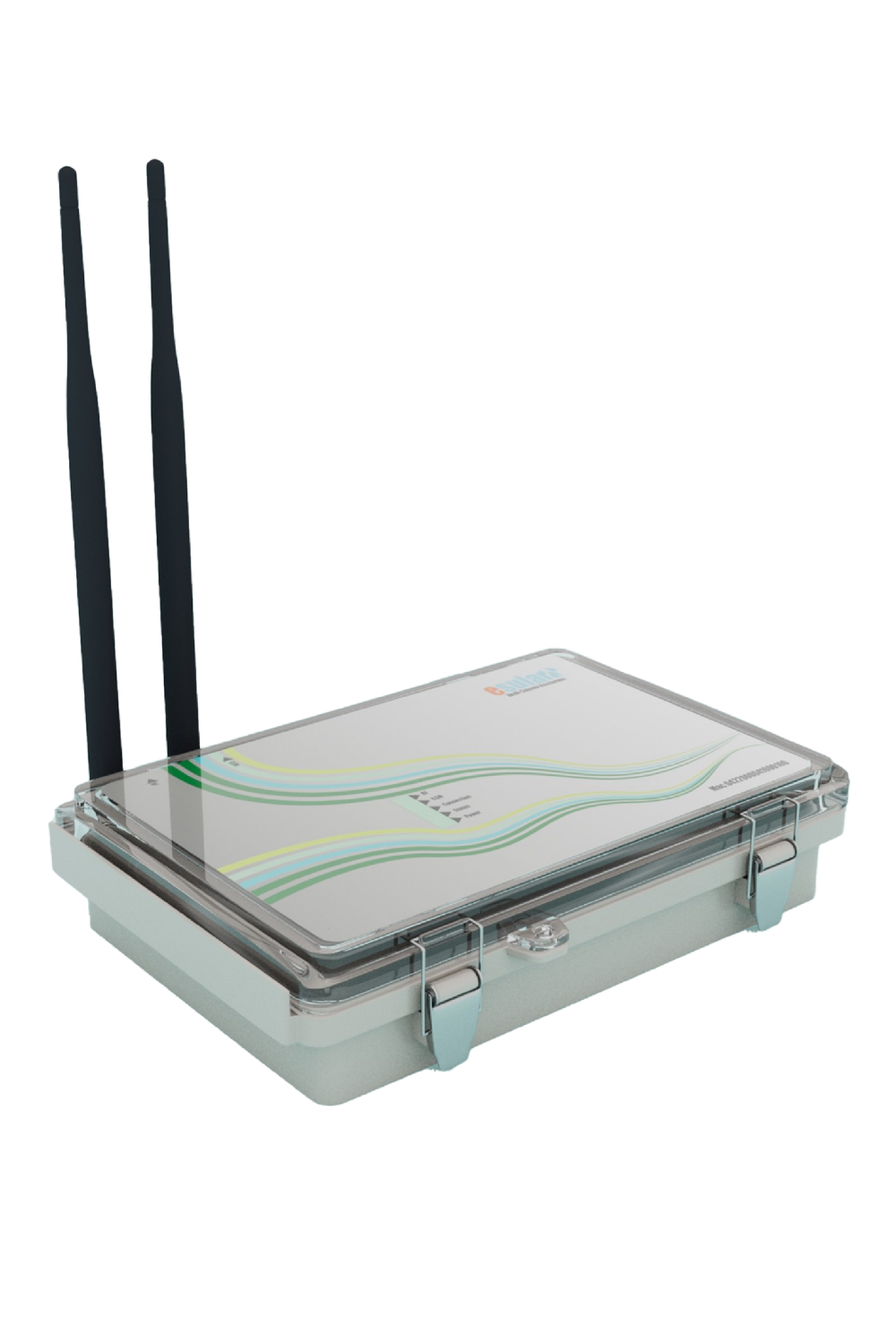
The central station (gateway) transmits data from sensors to the cloud platform via 4G/LTE.
Offline operation: Local rules continue even if the internet connection is lost.
Analysis and Decision
The cloud platform analyzes soil moisture, weather forecast, plant type, and evapotranspiration data.
Irrigation is automatically postponed or canceled before rain.
Automatic Control
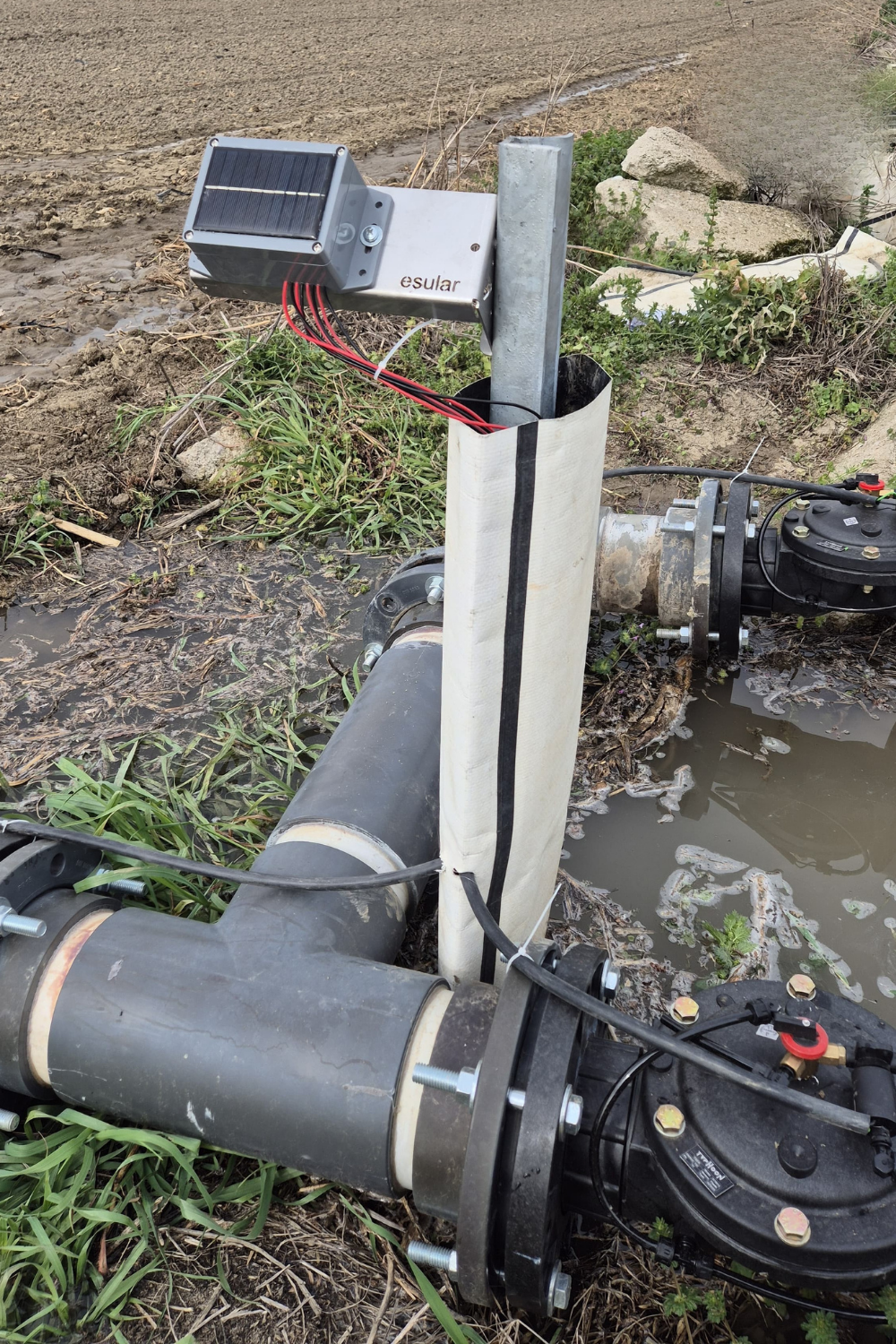
Commands are sent to valve control units based on decision results. Valves close when the target moisture level is reached.
Pump control, pressure monitoring, and flow measurement operate in parallel.
Monitoring and Reporting
All irrigation history, sensor data, and system status are monitored via the mobile application.
Receive instant alarms and alerts with push notifications.
Continuous Cycle
These 5 steps are repeated continuously. Strategies adapt according to seasonal changes and plant growth periods.
Smart Irrigation Sensor Technologies
Accurate and reliable sensor data forms the foundation of smart irrigation.
Soil Moisture, Temperature, and EC Sensor
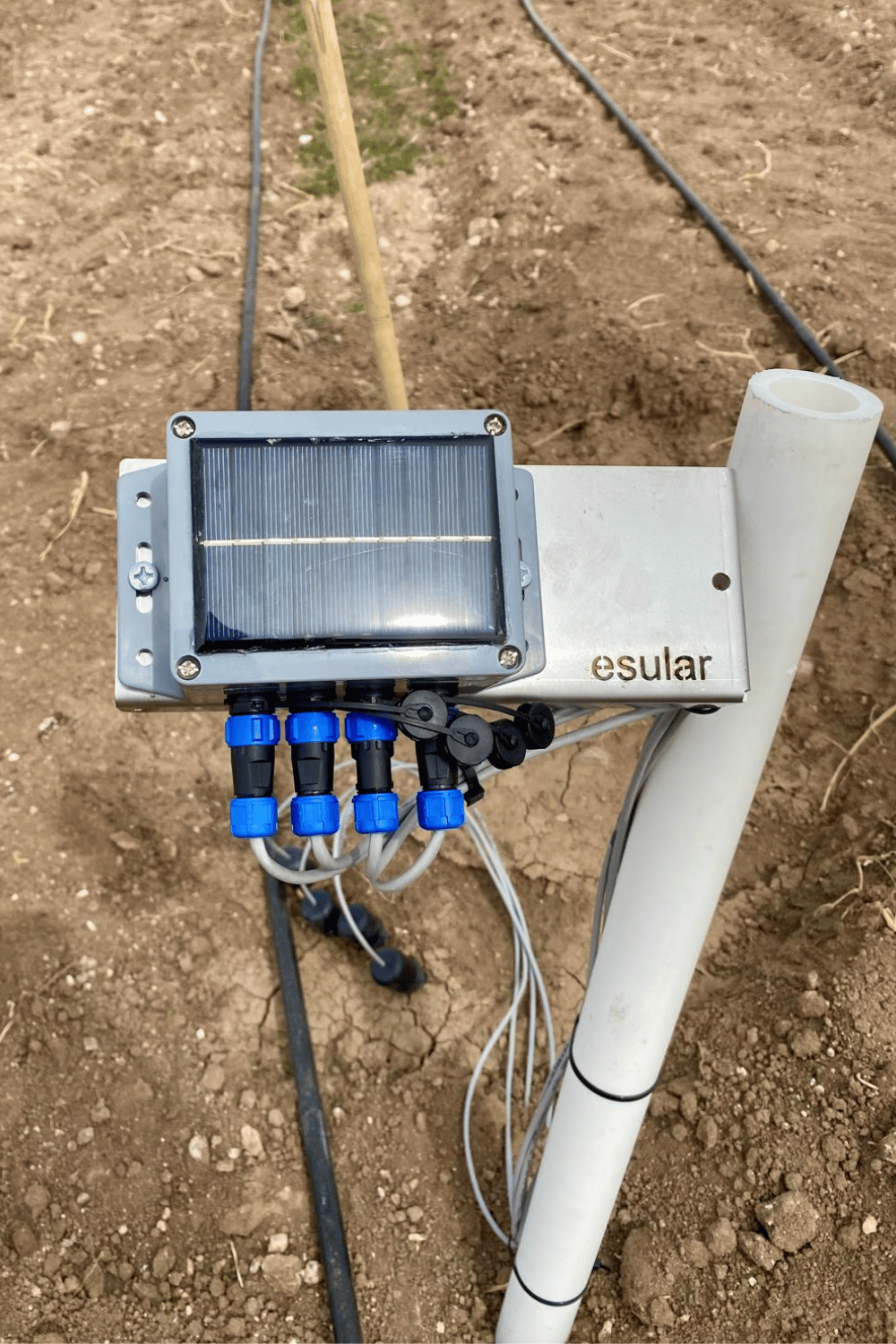
Measures volumetric water content (VWC), temperature, and electrical conductivity of the soil simultaneously.
- Moisture: 0-100% VWC, ±2% accuracy
- Temperature: -40°C — +80°C
- EC: 0-23 dS/m
- Wireless LoRa, 10+ year battery life
Climate and Meteorology Station
Collects data on temperature, humidity, wind, precipitation, solar radiation, and barometric pressure.
- All weather parameters in one station
- Instant detection with rain sensor
- ET calculation
- Optional solar panel
Pressure and Flow Sensors
Monitors line pressure and water flow rate in real-time. Detects pipe bursts or filter blockages.
- Pressure: 0-10 bar, 4-20mA
- Clog and burst detection
- Water consumption reporting
- Pump performance tracking
Water Level Sensor
Measures well, tank, and pond water levels using ultrasonic or pressure principles.
- Ultrasonic or hydrostatic pressure
- 0-10 meter range
- Low/high level alarms
- Pump dry-run protection
Smart Irrigation Strategies by Plant Type
Each plant type has different water requirements. The smart irrigation system applies different irrigation strategies based on plant type.
| Plant Type | Irrigation Method | Target Moisture (%) | Recommended Sensor |
|---|---|---|---|
| Tomato / Pepper | Drip irrigation | 65-80% | Moisture + EC sensor |
| Wheat / Barley | Sprinkler / Pivot | 50-70% | Moisture sensor + Weather station |
| Corn / Cotton | Drip / Pivot | 60-75% | Moisture + temperature sensor |
| Vineyard (Grape) | Drip irrigation | 45-60% | Moisture + EC sensor |
| Olive | Drip irrigation | 35-55% | Moisture sensor |
| Citrus | Micro-sprinkler / Drip | 60-75% | Moisture + EC + Weather station |
| Greenhouse (Vegetable) | Drip + Fertigation | 70-85% | Moisture + EC + CO₂ + Temperature |
| Landscape / Lawn | Yağmurlama | 55-70% | Moisture + Rain sensor |
The smart irrigation system also adapts its strategy based on soil type. Sandy soils should be irrigated more frequently and for shorter durations, while clay soils should be irrigated less frequently and for longer durations.
Traditional vs Smart Irrigation
| Criterion | Traditional | Smart (IoT) |
|---|---|---|
| Decision Mechanism | Human estimation / timer | Sensor data + algorithm |
| Water Efficiency | Low-medium | Yüksek |
| Labor | High (daily control) | Minimum (remote monitoring) |
| Fault Detection | Delayed | Instant notification |
| Data and Reporting | Yok | Detailed history and analysis |
| Scalability | Sınırlı | Modular, easy expansion |
| Energy Cost | High (over-irrigation) | Low (as needed) |
| Fertilization | Manual or simple dosage | Automatic fertigation and EC control |
| Remote Access | Yok | Mobile app + Web |
Esular Technology Advantages
Long Battery Life
Ultra-low power consumption. Indefinite operation with optional 1-5W solar panel.
Long Range
Wide coverage in rural areas with LoRa technology. No cabling required.
Plug-and-Play
No expert required for installation. Attach to valve, pair from app, activate.
Weather Integration
Automatic irrigation shutdown before rain and ET-based planning.
Advanced Dashboard
Monitor all your areas from a single screen with the mobile and web dashboard.
Modular Architecture
Add new sensors and control units as your needs grow.
Recommended Products
All the components you need to build your smart irrigation system.
Frequently Asked Questions
It is a technology that automatically manages irrigation by real-time monitoring soil moisture, weather conditions, and plant needs with IoT sensors and wireless control units.
Significant water savings are achieved with soil moisture sensors and automation. This rate further increases with the addition of a climate station.
Water saving experiences →Esular wireless systems require no cabling. With battery power and a plug-and-play design, a standard field installation is completed quickly.
Installation guide → How to install? →Applicable to all field crops, vegetables, orchards, vineyards, greenhouses, and landscape areas.
Yes. The central station establishes its own connection with 4G/LTE. Local rules still operate even if the internet connection is lost.
Yes. The Esular system is compatible with your existing solenoid valves, pumps, and irrigation lines.
Thanks to its modular structure, you can expand your system according to your needs.
Modular system details →Make Your Farming Smart
Switch to data-driven irrigation management with Esular IoT solutions. Free feasibility study tailored to your project.