For the irrigation of large lawn or park-garden areas, the most comfortable, aesthetic, and effective irrigation method is the Sprinkler irrigation system. To design a Sprinkler irrigation system, some principles must be known.
These principles are:
(1) Character of the soil (Especially the porosity and water-holding capacity of the soil)
(2) Climate
– Direction and speed of the prevailing wind
– Humidity and precipitation characteristics
(3) Water supply (source)
– Source (well, tank, lake, pond, pool, or city water)
– Flow rate and pressure
(4) Wants and desires of the property owner
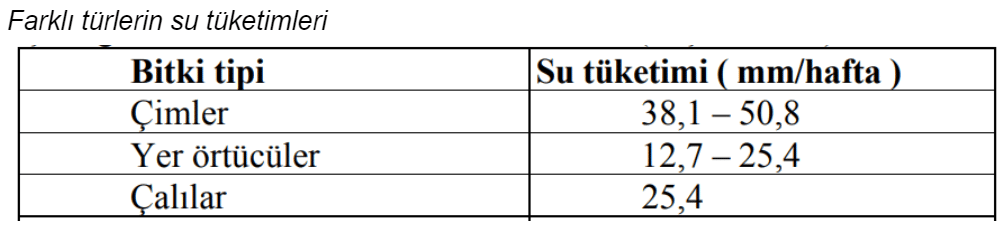
After choosing the system type, the task to be done is to select the sprinkler heads at intervals determined according to the irrigation requirements of the plant, the absorption characteristics of the soil, and the flow rate and pressure of the available water source.
Sprinkler heads are of two main types: spray heads and rotary heads.
Spray heads work with a pressure between 1.0-2.5 atm, irrigate small areas with a diameter of 6-12 m, and consume more water per unit of time. These constitute the most suitable sprinkler heads for small lawn areas and irregularly shaped areas.
Rotary heads, on the other hand, work with higher pressures such as 2-6 atm, irrigate larger areas with a diameter of 24-60 m, but consume less water per unit of time. Rotary sprinklers are used most effectively and efficiently in large lawn areas. With these types of sprinkler heads, irrigation can be performed on full-circle and partial-circle (circle segment) areas.