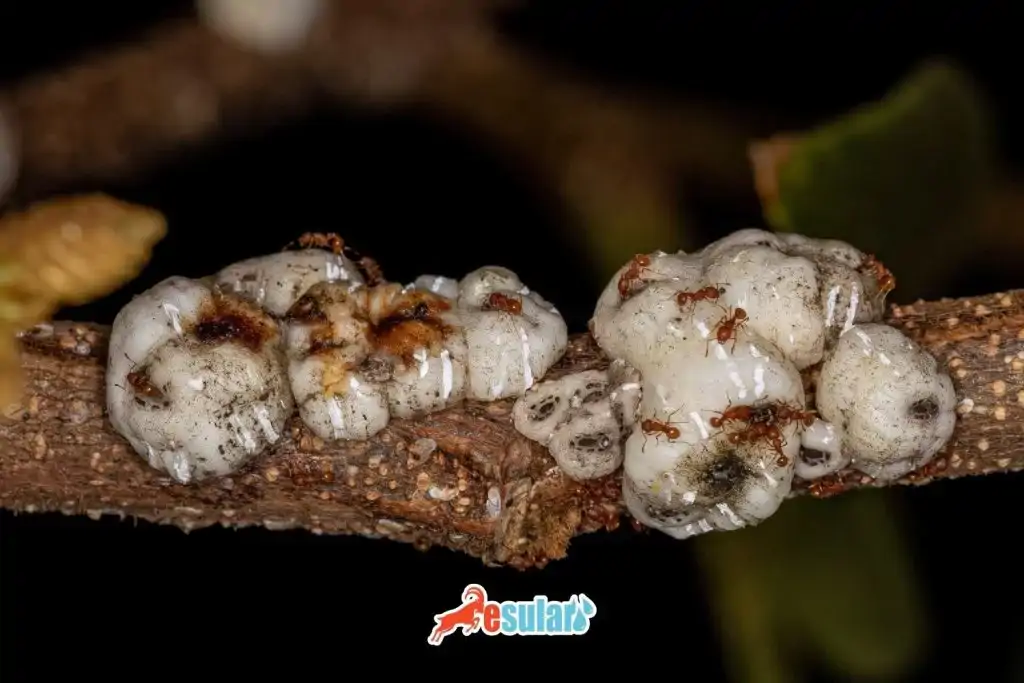
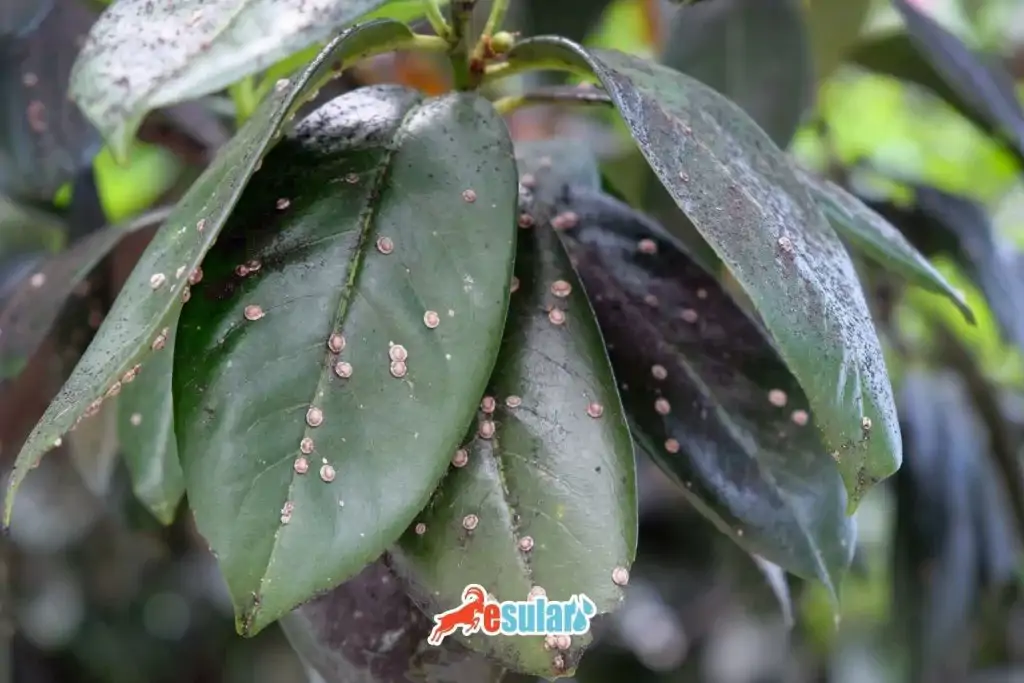
Fig wax scale (Ceroplastes rusci) is a type of scale insect, and adult female individuals are hemispherical in shape. They are approximately 4-5 mm long and 3-4 mm wide. When viewed from above, a total of nine thick, pinkish, dirty white waxy plates are seen, one in the middle and eight on the sides. There is a white spot in the middle of each plate. If the insect is crushed, a red, sticky liquid comes out; this liquid is the source of the name “kanlı balsıra” (bloody honeydew).
Life Cycle and Reproductive Characteristics of Fig Wax Scale
These insects are generally in the larval stage during winter, and a female can lay approximately 1500 eggs. The eggs are placed on the upper part of the leaf, and the larvae feed along the lateral veins. It produces two generations per year, and a large portion of the adult individuals can die in harsh winter weather conditions. This species causes trees to weaken and yield to decrease by sucking the plant sap, and it can also cause the sooty mold disease called fumagine.,
Which Plants Does Fig Wax Scale Damage?
This pest shows harmful effects on a wide range of plants. This harmful insect targets many plant species from fruit trees to ornamental plants. Here are some important plant species that the fig wax scale insect damages:
Fig
Citrus
Poplar
Oleander
Myrtle
Laurel
Tamarisk
The fig wax scale insect causes plants to weaken and lose yield by sucking sap in these plants. Additionally, it can cause the fumagine disease called sooty mold by encouraging the development of saprophytic fungi due to its sugary secretions. This situation negatively affects plant cultivation both economically and aesthetically.
What are the Measures to be Taken Against Fig Wax Scale Insect?
The population of the harmful insect can be controlled by using parasitoids and predators, which are the natural enemies of this insect. For example, parasitoids such as Coccophagus lycimnia, Metaphicus dispar, and Scutellista cyanea can be effective.
The use of potash fertilizers can help prevent the reproduction of the fig wax scale insect. Additionally, using legumes such as vetch, broad beans, and peas as intercropping encourages the sheltering of beneficial insects and reduces the impact of pests.
In small gardens or nurseries, cleaning infested shoots by rubbing them from the bottom to the tip with a piece of sackcloth during the winter period prevents the spread of pests.
Keeping trees strong and healthy reduces the effects of harmful insects. Regular maintenance of trees, ensuring leaves receive sunlight, and avoiding frequent planting are important elements of this care.
Between March and May, new shoots on the trees must be checked, and in case of any fig wax scale presence, spraying should be done immediately. It is important that sprayings continue periodically and that plant protection products approved by the Ministry are used.
After spraying, the first control should generally be done in autumn. The infested shoot rate should be checked, and it should be evaluated whether success has been achieved at a rate not exceeding 5%.
Summer oils and other insecticides used in the fight against fig wax scale can offer an effective solution. For detailed information and selection of appropriate products, information should be obtained from the relevant Ministry and experts.
These measures will help in protecting plant health and increasing productivity by fighting effectively.