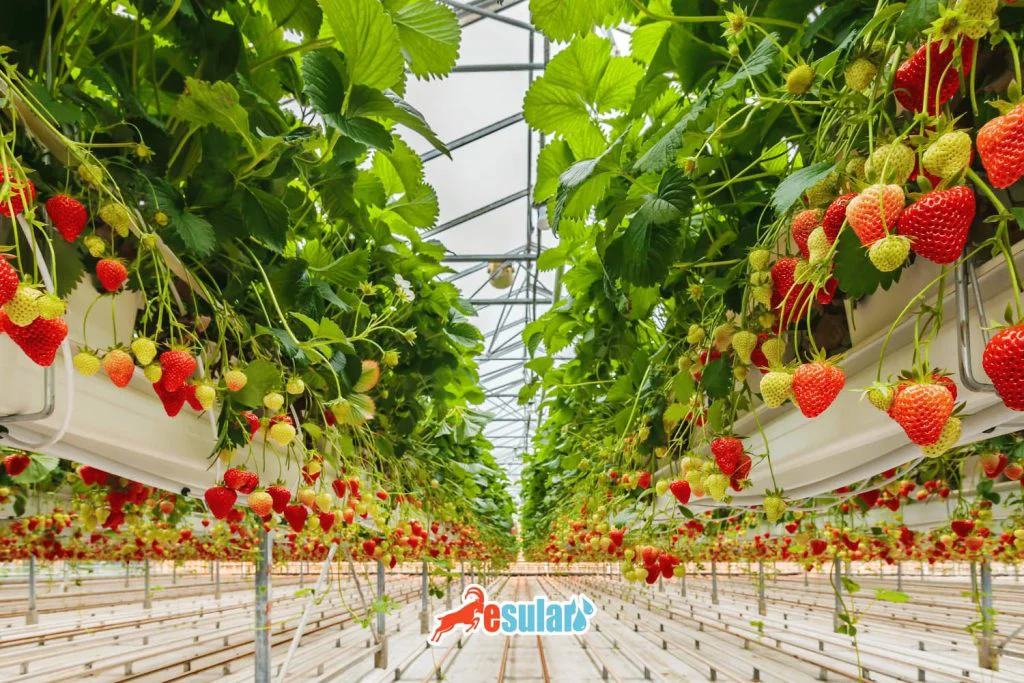
Greenhouse farming, which was limited to commercial purposes from the Ottoman Empire until the first years of the Republic, gained significant momentum especially with the use of plastic covering materials in the 1970s. During this period, greenhouse activities rapidly expanded and grew, particularly in the Mediterranean and Marmara regions. In recent years, the greenhouse sector in Turkey has shown great development. In 2020, a total of 31,200,000 tons of vegetables were produced in our country, 7.8 million tons of which were carried out under protection. Turkey's protected cultivation presence has reached an area of 805,159 decares, ranking among the top four countries worldwide. In the last ten years, the average size of protected cultivation enterprises has increased from approximately 2 decares to 4 decares.
Especially in recent years, with the supports provided by the Ministry of Agriculture and Forestry and related institutions, the number of protected cultivation enterprises producing with modern techniques is rapidly increasing. The value of protected herbal production in our country is approximately 10 billion TL. In protected vegetable production, Antalya ranks first with a share of 48%. This province is followed by Mersin, Adana, and Muğla, respectively. The protected production in these four provinces constitutes 86% of the production across the country.
Turkey ranks first in Europe and seventh in the world in terms of geothermal energy resources. The presence of greenhouses heated with geothermal energy is approximately 4,345 decares. In addition to vegetable, fruit, and ornamental plant production in protected cultivation, the modern greenhouse presence is around 13 thousand decares, and export-oriented production is carried out in these greenhouses using the soilless agriculture method.