
Smart Irrigation System Frequently Asked Questions
Detailed, clear answers to the 11 questions most frequently asked by our customers about Esular smart irrigation and sensor systems. Remote control distance, soil moisture sensor selection, automatic irrigation, notifications, and valve guide — every question has arisen from real customer needs.
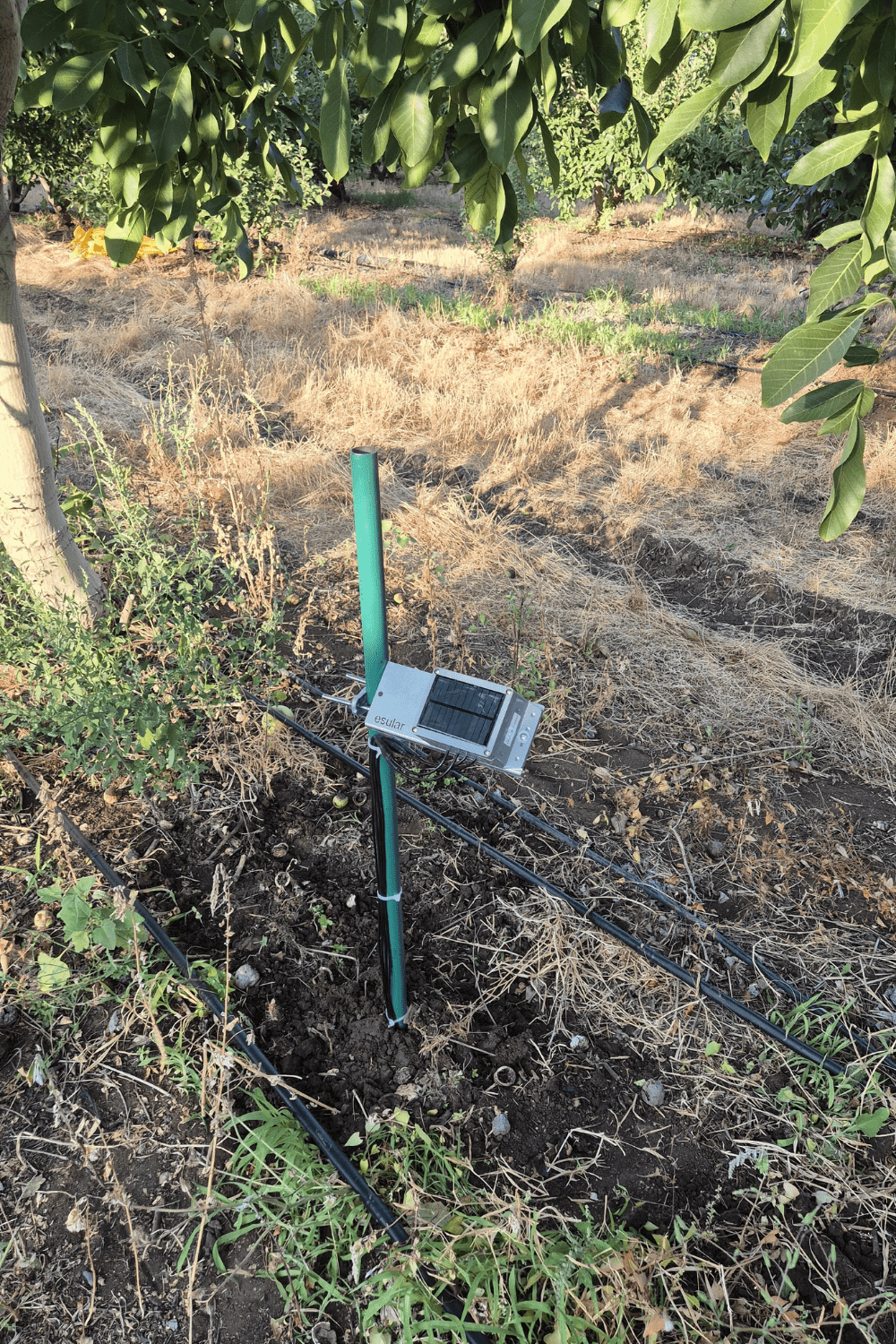
What is a Smart Irrigation System and Why is it Asked So Much?
Smart irrigation system is a technology that automates and optimizes agricultural irrigation by bringing together soil moisture sensors, wireless control units, and mobile application technologies. We receive many questions about this system, which is becoming increasingly common in Turkey, from farmers, garden owners, and agricultural business managers.
On this page, we have provided detailed and clear answers to the 11 questions most frequently asked by our customers about the Esular smart irrigation system via WhatsApp, phone, and field visits. Instead of just giving a short answer under each question, we shared the background of the subject, technical details, and practical suggestions.
If you are in the decision-making stage on topics such as agricultural irrigation automation, soil moisture sensor selection, or solenoid valve selection, this guide is for you.
Remote Irrigation Control and Wireless Connection
The most curious topic about the smart irrigation system: From how far away can I manage the system?
This is the most frequent question from our customers and stems from a very understandable confusion. Let's explain the answer clearly:
You can control your Esular smart irrigation system from anywhere with an internet connection — from your home, office, out of town, or even from abroad. You have full access to your entire system from wherever you are in the world via the Esular mobile app or web platform.
So, where does the 10 km distance mentioned in the technical specifications come from? This distance is the wireless LoRa communication range between devices in the field. That is, the wireless communication distance between your base station and valve control units or soil moisture sensors can reach up to 10 km in open areas.
Summary:
• Your control distance: Unlimited (via internet, from anywhere in the world)
• LoRa range between devices: 5-10 km in open area (varies depending on terrain)
• The two are completely different concepts.
The base station with GSM/4G connection transmits all data in the field to the cloud server. You access this data through the application and manage your entire system. Even if the internet is cut off, pre-loaded irrigation programs continue to work automatically.
Yes. The Esular smart irrigation system sends notifications and alerts through three different channels:
- Mobile App (Push Notification): You receive instant notifications on your phone. Irrigation start/end, low battery level, sensor threshold alarm, disconnection, and failure warnings are sent as push notifications. Our Android and iOS apps can be downloaded for free from the Google Play Store and App Store.
- SMS Notification: Even when you don't have an internet connection, you can receive critical alerts as SMS. Emergencies such as pump failure or pressure drop reach your phone instantly.
- Telegram Integration: With Telegram bot integration, you can forward all system notifications to your Telegram group or personal account. This way, multiple people — land owner, engineer, and worker — can receive the same notifications simultaneously.
You can customize in detail which channel you want to receive notifications for which events via the Esular platform. For example, you can choose SMS only for alarm conditions and push for routine notifications.
Yes. With the Esular smart irrigation system, you can change the inverter (frequency drive) frequency value instantly and remotely via the mobile app or web platform. This way, you can control the pump speed without going to the field.
In addition to frequency control, you can also do the following from the same interface:
- You can monitor instant energy consumption (kW) — prevent unnecessary energy expenditure
- You can see pressure and flow (flow rate) data live — monitor system health remotely
- You can track pump operating hours — plan maintenance scheduling
- You can see failure and alarm statuses remotely — respond to the problem quickly
This feature is especially valuable in large fields and farms with multiple pumps. Instead of controlling each pump individually, you manage them all from your phone. For detailed information, you can review our large field sensor solutions page.
Yes. The Esular platform offers comprehensive data reporting features:
- Daily report: Irrigation durations for that day, soil moisture sensor data, pump operating hours, and energy consumption
- Weekly report: Weekly water consumption trend, average moisture values, and comparison of irrigation zones
- Monthly report: Monthly cost analysis, energy consumption trend, and season comparisons
All reports can be viewed in graph and table formats. Sensor data, irrigation records, pressure-flow measurements, and energy statistics can be compared with historical data. Data can be exported in Excel/CSV format.
These reports are especially valuable for year-end cost analysis, subsidy applications, and irrigation planning for the next season. Many of our customers have obtained data documenting that they achieved 25-40% water savings using the reports.
Automatic Irrigation System with Soil Moisture Sensor
Sensor-based irrigation is the backbone of smart farming. Frequently asked questions about correct sensor selection and quantity.
Yes, it does. This is actually the most powerful and most preferred feature of the Esular smart irrigation system.
Volumetric water content (VWC) data received from the soil moisture sensor is constantly compared with the lower and upper threshold values you set:
- When moisture falls below the lower threshold → Irrigation starts automatically
- When moisture reaches the upper threshold → Irrigation stops automatically
This way:
- The plant never goes into water stress — intervention is made before moisture drops to a critical level
- No over-irrigation — the system stops automatically when the upper threshold value is reached
- Night irrigation can be done safely — the sensor monitors 24/7, making correct decisions even while you sleep
- 30-50% more water savings are achieved compared to timer-based irrigation
You can easily set threshold values according to your soil type and plant species. The Esular technical team determines these values specifically for your field together with you during installation. For detailed information about sensor-based automatic irrigation, you can review our precision irrigation with soil moisture sensor guide.
The choice of soil moisture sensor is made according to the effective root depth of the cultivated plant. Because the main purpose of irrigation is to keep the root zone moist — not just the surface of the soil.
Sensor selection guide by plant type:
| Plant group | Effective root depth | Recommended sensor model |
|---|---|---|
| Vegetables, strawberries, grass | 15-30 cm | 2 stages (20-40 cm) |
| Corn, wheat, cotton | 30-60 cm | 3 stages (30-60-90 cm) |
| Walnut, olive, citrus | 60-120 cm | 4 stages (30-60-90-120 cm) |
| Vineyard (grape), pistachio | 40-80 cm | 3 stages (30-60-90 cm) |
| Greenhouse (tomato, pepper) | 20-40 cm | 2 stages (20-40 cm) |
The Esular technical team determines the most suitable sensor model according to your plant species, soil structure, and irrigation method during the free discovery visit. Choosing the right sensor at the right depth is critical for accurate irrigation decisions.
This is also one of the most frequently asked questions. Although it is not easy to give a clear figure, let's share the main factors affecting the number of sensors and general rules:
- Field size: As a general rule, 1 sensor for every 10-15 decares is sufficient.
- Soil diversity: If there are different soil types in the field (sandy, clay, loamy areas), a separate sensor is required for each different soil zone. Because sandy soil drains quickly and clay soil retains water — the same irrigation recipe cannot be applied to both.
- Plant species difference: Separate sensors should be placed in plots with different plants (e.g., one part walnut, one part wheat).
- Terrain slope: In sloped terrains, the moisture profiles of the upper and lower zones differ; sensors are recommended for both zones.
- Irrigation zones: It is ideal to place one sensor for each independent irrigation line (zone).
Practical examples:
| Field type | Size | Recommended number of sensors |
|---|---|---|
| Single plant type, flat terrain | 50 decares | 3-5 units |
| Mixed plants, variable soil | 100 decares | 7-10 units |
| Large farm, multi-plot | 200+ decares | 12-20 units |
| Greenhouse | 2-5 decares | 2-4 units |
To determine the most accurate number, request a free discovery visit. The Esular technical team will visit your field, analyze the soil structure, plant distribution, and irrigation zones, and prepare a specific needs report for you.
Irrigation System Compatibility and Product Durability
Details about compatibility with your existing infrastructure and durability in field conditions.
Yes. The Esular wireless irrigation automation system is compatible with all fixed irrigation infrastructures:
- Drip irrigation — Automatic opening-closing of plots with solenoid valves, sensor-based irrigation
- Sprinkler and micro-sprinkler — Time and sensor-based automation of sprinkler systems
- Pivot irrigation — Remote control of center pivot and linear pivot machines with GPS tracking
- Surface (flood) irrigation — Automatic management of plots with valve control
- Greenhouse irrigation — Integration of climate control, window control, and irrigation
Important: You do not need to change your existing pipeline and irrigation infrastructure. The Esular system is added on top of the existing infrastructure and makes it smart. Thanks to its wireless structure, the cost of cabling and excavation is eliminated.
During our free discovery visit, we analyze your existing system and prepare a compatibility report containing valve type, sensor model, and control unit recommendations suitable for the needs of each plot.
Yes, it is durable. All Esular field devices have the IP65 waterproof standard.
What does the IP65 protection class mean?
- 6 (Dust protection): It is completely protected against dust — no dust particles can enter the device. Sandstorms and soil dust in the field do not damage the devices.
- 5 (Water protection): It is protected against water jets from all directions — heavy rain, hose water, and water splashes in strong winds do not affect the device.
This level is more than sufficient for field and garden conditions. Your devices continue to operate safely in rain, mud, dust, sunlight, and harsh weather conditions.
The soil moisture sensors have a higher protection class, the IP68 standard — meaning they can work for years without problems underground, exposed to continuous water and moisture. Stainless steel probes provide full durability against corrosion.
Solenoid valve selection and actuated valve guide
How to choose the right valve according to pipe diameter, pressure, and irrigation type?
Correct valve selection is made according to pipe diameter and system pressure. Here is the practical decision guide:
| Status | Recommended valve | Advantage |
|---|---|---|
| Under 4" diameter, normal pressure | Plastic solenoid valve | Economical, fast, operates with 9V battery |
| Over 4" diameter or high pressure | Cast iron solenoid valve | 16 bar resistance, industrial quality |
| Low-pressure systems | Actuated valve | Does not require pressure difference |
Solenoid valves open and close within milliseconds, whereas butterfly valves take ~30 seconds. In agricultural irrigation, the fast reaction time of solenoid valves provides a great advantage — this speed is critical for precise control, especially in sensor-based automatic irrigation.
For detailed brand, model, and technical specification comparison, you can check our comprehensive valve selection guide.
In low-pressure irrigation systems, actuated (motor-controlled) valves should be preferred instead of solenoid valves.
Why doesn't a solenoid valve work at low pressure? Solenoid valves need a certain minimum pressure difference (usually 0.5-1 bar) to operate. This pressure moves the valve's diaphragm. In low-pressure systems — especially gravity-fed tank systems, long-distance lines, or low-performance pumps — this pressure difference may not be provided.
How do actuated valves provide a solution? Actuated valves open and close mechanically with an electric motor and operate independently of water pressure. Advantages:
- Operates with 24V AC or DC motor — does not require pressure difference
- Can provide gradual flow control (half open, 25%, 50%, 75% positions)
- More economical than solenoid valves in large diameters (6 inches and above)
- Works safely in gravity-fed tank systems
Esular wireless valve control units work compatibly with both solenoid and actuated valves. You can get detailed information about our low-pressure automatic irrigation solutions or request free technical consultancy.
If you want a smart irrigation solution specific to your field
The answers we provide to the 11 questions on this page offer you a general roadmap. However, every field is different — soil structure, plant species, water source, and existing infrastructure vary from project to project. Let's determine the most suitable smart irrigation system solution for your field together.
Related guides and solution pages
You can review the guides below to gain more in-depth knowledge about the smart irrigation system.
Smart irrigation selection guide
Compare wireless irrigation system products and find the solution suitable for your project according to your field size.
Read the guide →Valve selection guide 2026
Learn the differences between solenoid, butterfly, and actuated valves, along with technical details and price comparisons.
Read the guide →Soil moisture sensor guide
Detailed information about precision irrigation monitoring with soil moisture sensor, sensor-based automatic irrigation, and data reading.
Read the guide →Large field sensor solutions
Wireless sensor network, cost analysis, and success stories for fields over 50 decares.
Read the guide →Tarımsal Sulama Sistemleri
Comprehensive comparison and selection guide for drip, sprinkler, pivot, and surface irrigation methods.
Read the guide →All frequently asked questions
47+ questions and answers about Esular products, technical support, ordering, and delivery.
All FAQs →