Tüm Yazılar


How is Almond Cultivation Done?
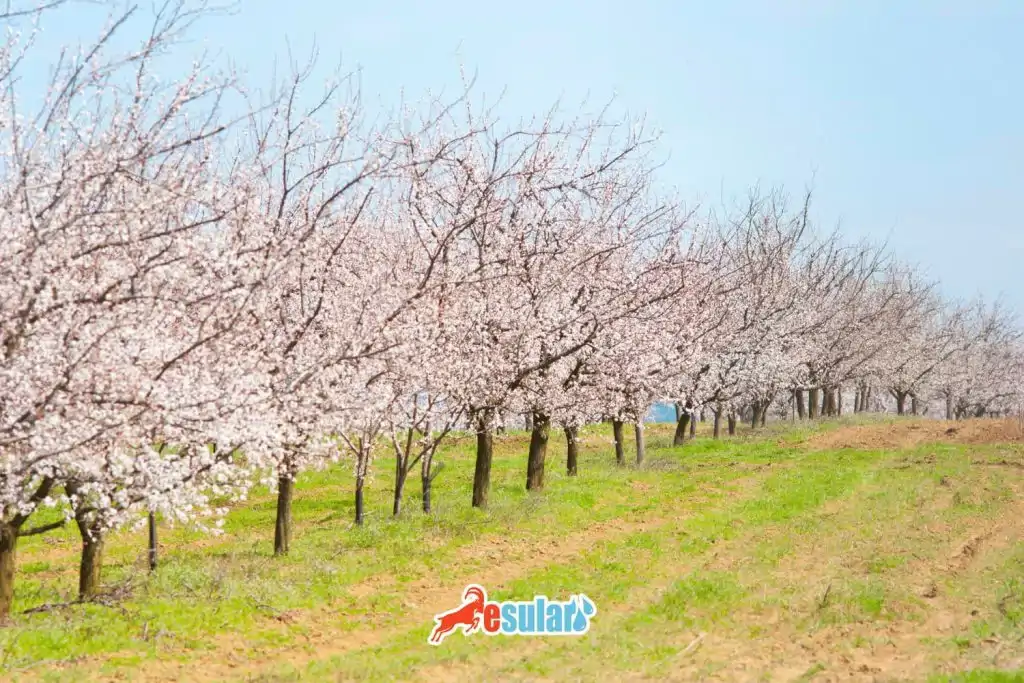
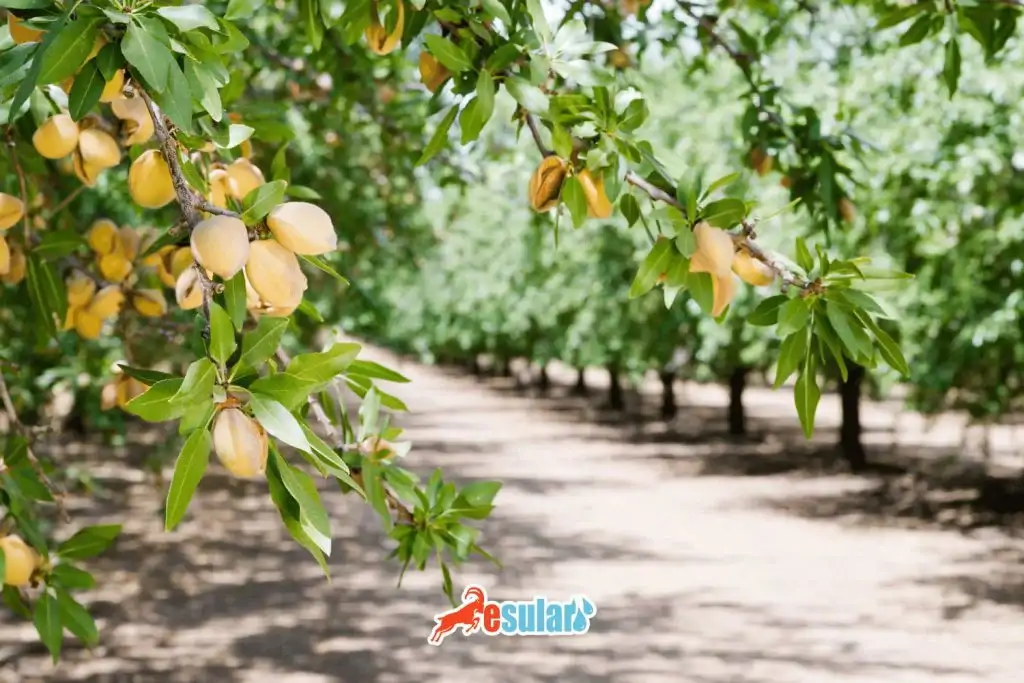
Almond Cultivation is a popular agricultural practice that is also intensively carried out in our country. This fruit, which belongs to the Prunus genus of the Rosaceae family, has both sweet and bitter varieties. Almond, a thorny and deciduous tree, generally grows in temperate climates such as the Mediterranean climate. Historically a plant native to the Middle East and Mediterranean regions, almonds are grown in many parts of the world today. Especially countries like California, Spain, Iran, and Morocco are leaders in almond production. The fact that almonds are rich in healthy fats, proteins, vitamins, and minerals makes them a popular snack and food item. In Turkey, almond cultivation is mostly carried out in the Southeastern Anatolia Region, Mediterranean Region, and Aegean Region. Turkey has an important place in almond production. Turkey's quality and quantity in almond production are important for both the domestic and foreign markets.
What are the Almond Varieties?
They are divided into two main groups: sweet almonds grown for commercial purposes and bitter almonds used for industrial purposes. Almond varieties are generally classified according to factors such as fruit quality, external appearance, kernel yield, and adaptation to climatic conditions. Here are some examples of almond varieties:
Sweet Almond Varieties:
- Nonpareil: A high-yielding and high-quality sweet almond variety. Its kernel yield is high and it generally has a thin shell.
- Carmel: A sweet almond variety widely grown in California. It has similar characteristics to the Nonpareil variety.
- Monterey: A medium-yielding variety.
- Industry: One of the sweet almond varieties used for industrial purposes. Their shells are thicker and they are generally preferred for cooking oil production.
Bitter Almond Varieties:
- Texas: A popular bitter almond variety grown in California. It is generally used as a pollinator.
- Ferragnes: A bitter almond variety grown in Southern France. It has a high kernel yield.
- Ferraduel: Another bitter almond variety used as a pollinator for the Ferragnes variety.
In addition to these varieties, there are also local almond varieties according to different regions and climatic conditions. Each variety has its own advantages and disadvantages. Therefore, for almond cultivation, climatic conditions, soil structure, and market demands should be considered when choosing the appropriate variety.
Climate and Soil Structure in Almond Cultivation
These trees generally prefer warm and temperate climates. The Mediterranean climate, with mild and rainy winters and hot and dry summers, is ideal for almond trees. However, almond trees also have a certain chilling requirement. Additionally, almond trees are sensitive to frost. For this reason, in regions where winters are very harsh, protection measures should be taken to prevent the plant from being damaged. Therefore, when establishing an orchard in regions with high frost risk, sloping lands are preferred to ensure the flow of cold air. In terms of soil structure, almond trees prefer sandy, moderately clayey soils with good drainage properties. Especially calcareous soils with good drainage are more suitable for almond trees. Furthermore, it is important for the soil pH value to be between 6 and 8 for the healthy growth of the plant and efficient fruiting.
Sapling Planting in Almond Cultivation
One of the most important stages to consider in orchard establishment is sapling planting. Almond saplings should be planted carefully, especially due to the sensitivity of the root structure. Protecting the roots from the wind is very important for the healthier growth of the sapling. Planting distances vary according to the type of rootstock. For example, for saplings with bitter almond rootstock, the distance between saplings can be 5 meters and between rows 6 meters, while for almonds with peach rootstock, these values are determined as 4 meters and 5 meters. During sapling planting, cutting the upper part after the graft ensures that the sapling shows better and more balanced growth. If the height of the sapling is between 30-60 cm, top pruning should only be done in the March-April period, and in this pruning process, a cut of one finger thickness should be performed on the topmost shoot.
In post-planting care, a gradual irrigation method should be applied to increase the survival rate of the sapling. After being placed in the planting hole, it is filled with soil up to half the graft level and 2-4 liters of life water is given. After the soil absorbs the water, soil is added again so that the graft point of the sapling remains above the soil level, it is compacted, and the sapling is supported with support sticks. For almond saplings grown with semi-dwarf rootstocks, planting distances may be narrower.
Smart Irrigation Systems in Almond Cultivation
Irrigation meets the water needs of trees by ensuring the balancing of soil moisture, especially in arid regions. Especially in spring and summer months, almond trees have a high level of water need. Irrigation carried out during these periods increases the healthy growth and fruit yield of the trees. However, pre-harvest irrigation can affect the quality of the fruits during harvest, while the lack of post-harvest irrigation negatively affects the yield of the following year. The use of smart irrigation systems in almond cultivation is one of the most important innovations brought by modern agriculture. These systems significantly increase the productivity, sustainability, and profitability of almond orchards. Smart irrigation systems determine the irrigation need in real-time by continuously monitoring soil moisture and other important parameters. Additionally, through sensors, they offer the possibility of remote intervention in case of any leak or malfunction. Thus, they ensure the efficient use of water.
These systems support the sustainable use of water resources. Additionally, they require less labor compared to manual irrigation methods and reduce operating costs. Smart irrigation systems respond precisely to the water needs of almond trees, supporting their healthy growth and yield. From an environmental perspective, smart irrigation systems help protect water resources and reduce chemical use during irrigation. Furthermore, thanks to sustainable irrigation practices, problems such as soil erosion and salinization can also be prevented. You can call us to get more detailed information about these systems.
Fertilization in Almond Cultivation
The most important nutrients for almond trees are nitrogen, phosphorus, and potassium. In addition to these, micronutrient elements (for example, iron, zinc, copper) are also necessary for the healthy growth of trees. Conducting soil analysis to determine which nutrients are missing in the soil is the first step in creating the correct fertilization program. Generally, a nitrogenous fertilizer is applied to almond orchards in winter. This encourages the trees to start growing rapidly in early spring. Phosphorus and potassium fertilizers are also applied throughout the growing season. However, excessive phosphorus or potassium inhibits the trees from taking up other nutrients by accumulating in the soil. Additionally, organic fertilizers improve the structure of the soil, increase its water-holding capacity, and support soil microbiological activity. This increases soil fertility and the overall health of the trees.
Harvest in Almond Cultivation
The harvest process begins when the fruits of the almond trees show signs of ripening. Fruits complete this ripening process with the cracking of their outer green hulls and the darkening of their color. However, harvesting should not be started before the green hull of the fruits in the inner parts of the tree has fully opened. This situation may cause a decrease in quality and a shortening of the storage period as the fruits are collected before reaching full maturity. During harvest, tools that could damage the tree, such as poles, should be avoided. The most effective harvest method is collecting the fruits by gently shaking them from the branches. This method prevents damage to the fruits and the tree.
How Much Almond is Produced from 1 Decare? How Much Does Almond Earn?
The average annual yield obtained from one decare of almond orchard is 400 kg. However, almond prices vary according to regional and global market conditions, the type and quality of the almond. Therefore, you can find out how much profit you can make by researching price averages. Additionally, there are state supports for almond cultivation. For this, what you need to do is plant certified saplings, complete the necessary documents, and apply to the district agriculture directorate.
After How Many Years Does an Almond Tree Bear Fruit?
Newly planted grafted almond saplings generally begin to bear fruit after three years. Fruit yield increases as the tree ages. Additionally, almond trees are long-lived and can produce economically for an average of 50 years. With this feature, almond cultivation is a long-term and profitable investment for producers.
Kategoriler