How to Do Soilless Strawberry Cultivation?

24 Ocak 2026 Çağla Altıntaş 24 görüntülenme
Tüm Yazılar

How to Do Soilless Strawberry Cultivation?


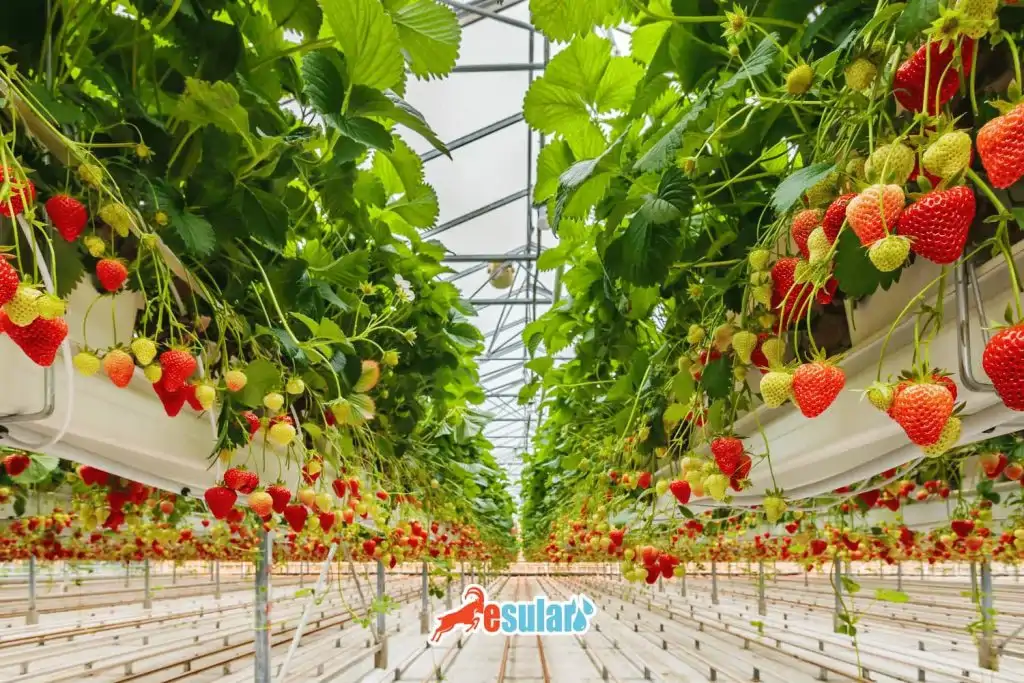
Soilless strawberry cultivation is one of the most productive and sustainable methods offered by modern agriculture. This method, which eliminates dependence on soil, provides a controlled environment where strawberries are fed directly with nutrient solutions. In this way, while plants easily access the nutrients they need, water and fertilizer use is also minimized. Especially in strawberry production, which is in high demand, thanks to this technology, both yield is increased and fruits become higher quality and more delicious. So, how is strawberry cultivation done in soilless agriculture and what are the advantages of this method? Let's examine it together.

What is Soilless Cultivation?

Soilless cultivation, unlike traditional agricultural methods, is a system where plants are grown without the need for soil. In this method, the roots of the plants are located in different environments containing water, air, and nutrients instead of soil. Soilless agriculture offers many advantages such as increasing productivity, reducing water and fertilizer use, growing plants that are more resistant to diseases and pests, and providing off-season production. Soilless cultivation methods are as follows;
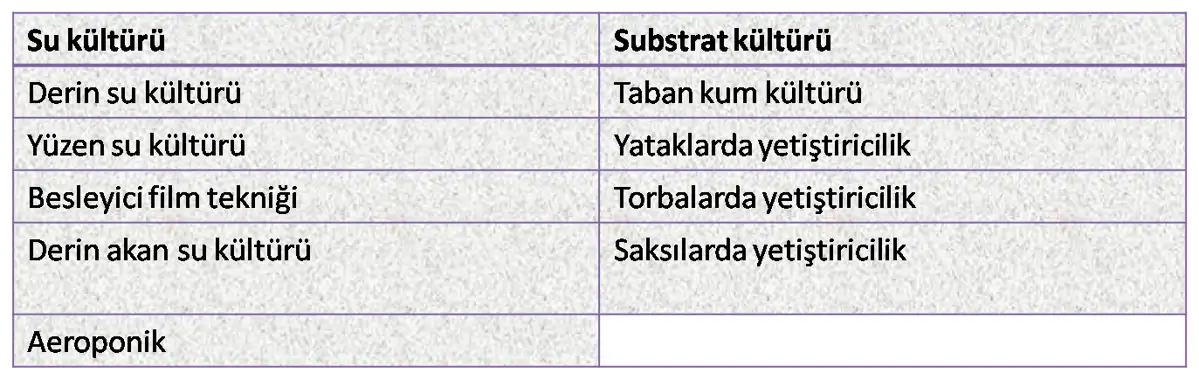
to get more detailed information on this subject; you can examine our article https://esular.com/topraksiz-hidroponik-tarim.

Why Soilless Strawberry Cultivation?

There are many advantages of soilless strawberry cultivation. Some of these are as follows;

  • Space Saving: Soilless strawberry cultivation requires less space compared to traditional agriculture.

  • High Yield Per Unit Area: In soilless strawberry cultivation, plants receive nutrients and water directly. This ensures higher yield per unit area.

  • High Fruit Quality: In soilless cultivation, since plants have easier access to nutrients and water, the fruits are generally larger and sweeter.

  • Saving on Water, Fertilizer, Pesticides, and Labor: In soilless strawberry cultivation; water, fertilizers, and pesticides are used more efficiently as they are applied directly to the root environment of the plants. Additionally, weed control and other maintenance tasks require less labor in soilless farming methods.

  • Fruit Firmness and Quality: Fruit firmness is generally higher in soilless strawberry cultivation. This results in fruits with a longer shelf life and easier transport.

  • Keeping Plants in Vegetative and Generative Phases: In soilless cultivation, the growth process of plants can be kept under control.

  • Ability to Intervene in Earliness or Lateness: With the fertigation (simultaneous application of water and nutrients) method, plant growth periods and fruit ripening processes can be controlled. In this way, applications such as off-season production or delaying fruit ripening are possible.

  • Ease of Disease and Pest Control: The risk of soil-borne diseases and pests is reduced in plants grown in soilless environments. Additionally, disease and pest control becomes more effective thanks to better ventilation and ease of maintenance of the plants.

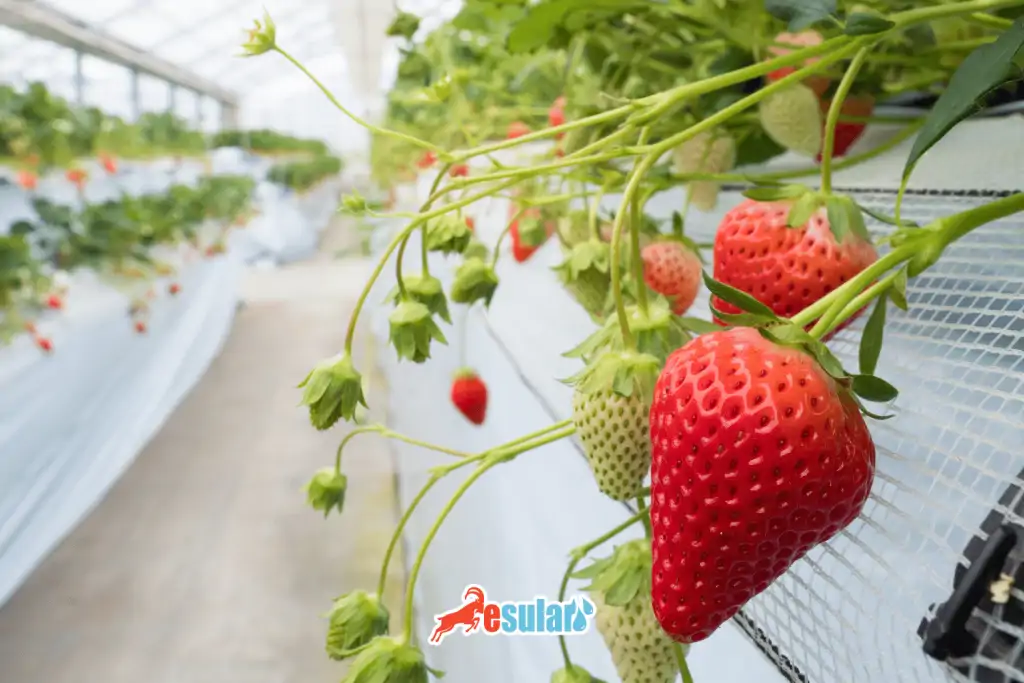
  • Cleaner and Higher Quality Fruit: In soilless strawberry cultivation, the fruits are cleaner because the plants do not come into contact with the soil.

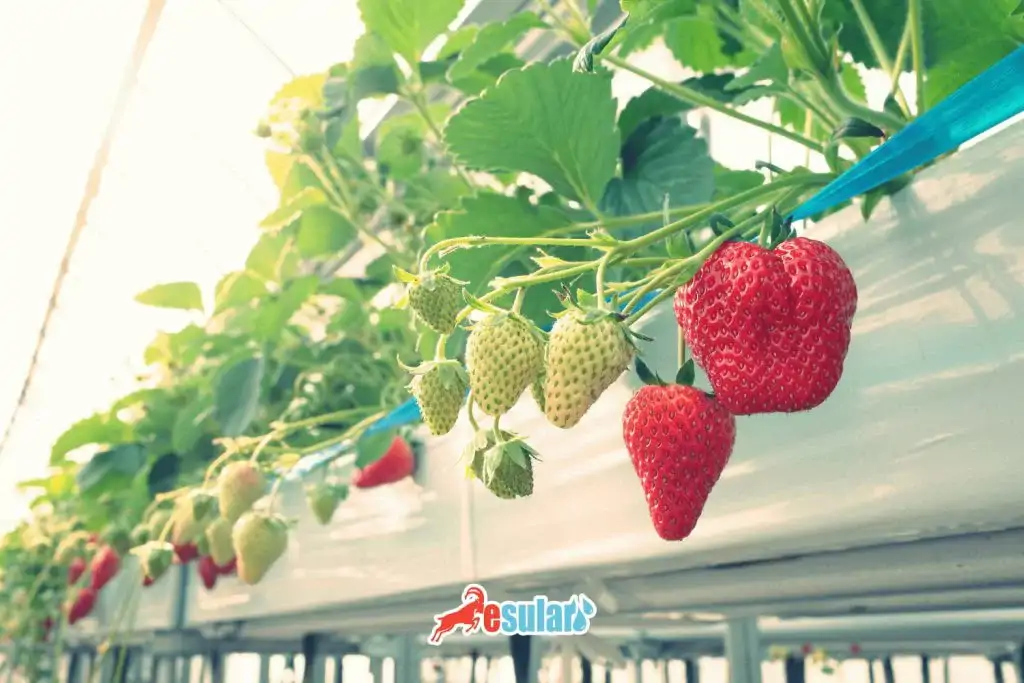
topraksiz-cilek-serasi

Disadvantages of Soilless Strawberry Cultivation

Soilless strawberry cultivation offers some disadvantages along with its many advantages. High investment cost comes first among these. Especially, the installation of modern agricultural technologies such as hydroponic systems is costly. The procurement and regular maintenance of special growing media (for example, hydroponic tanks or special substrates) used in these methods require additional cost and effort throughout the process. Additionally, sensitivity to environmental conditions (for example, light, temperature) is another disadvantage. Various external factors that have negative effects on the development and yield of plants must be managed carefully.

Soilless strawberry cultivation may also encounter physiological disorders. Especially, the inability to balance pH levels and EC values around the roots negatively affects nutrient uptake and general growth in plants. Furthermore, an expert consultant may be needed to solve the problems that may be encountered in soilless cultivation. Consequently, although soilless strawberry cultivation brings many advantages, there are also some disadvantages. These disadvantages appear as challenges for business owners that can be overcome with correct management and planning.

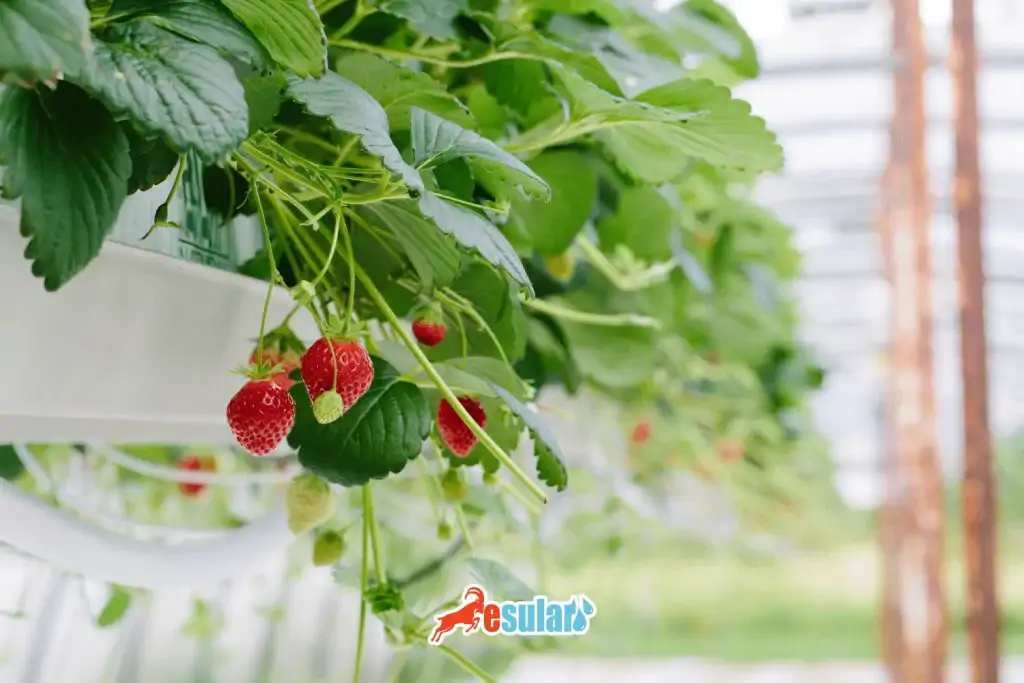
topraksiz cilek yetistiriciligi

Temperature in Soilless Strawberry Cultivation

The optimum growth temperature for strawberries is between 15.5°C and 26.5°C. At high temperatures, especially fruit firmness and soluble solids content are negatively affected. Therefore, temperature control in greenhouses is important. While ventilation can be closed or heaters can be used in cold weather, heating measures should be taken in cases where night temperatures will drop below 0°C. In hot seasons, temperature control should be ensured by actively using the ventilation system. These measures ensure that strawberries grow healthily and yield high-quality fruit. In such growing environments, to avoid risking production, temperature and humidity should be monitored continuously and intervention should be made when necessary. 

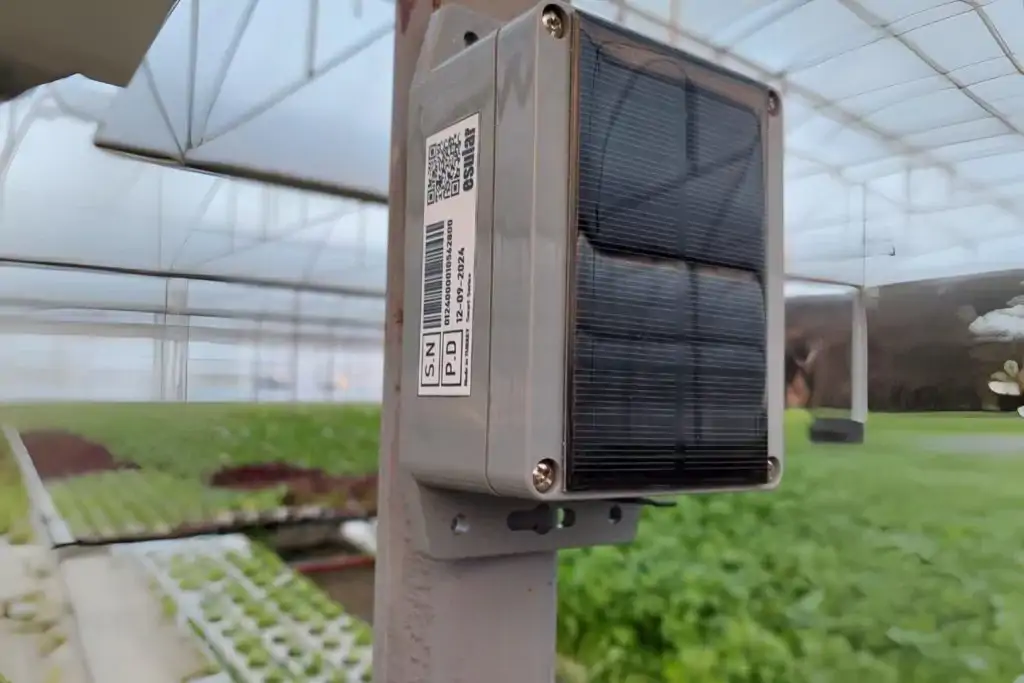
The Temperature and Humidity Sensors we offer as Esular continuously monitor the temperature and humidity levels of the growing environment and offer the possibility of remote intervention when necessary. Thanks to these smart systems, automatic window opening, ventilation, or heating processes can be performed depending on temperature and humidity values. Thus, while ensuring your plants grow under ideal conditions, you save on energy and resource use.

Support environmentally friendly methods of modern agriculture while maximizing plant health and productivity with Esular's temperature and humidity sensors. Contact us now for a more productive, sustainable, and effective cultivation experience! 🌱

sicaklik-ve-nem-olcumu

Growing Medium in Soilless Strawberry Cultivation

Soilless strawberry cultivation is a modern agricultural practice developed as an alternative to traditional soil-based farming methods. In this method, the nutrients and water required for the strawberry plant are provided using different growing media instead of soil. These media consist of materials where the roots of the plants can hold on, take nutrients, and through which water can circulate effectively. Among the growing media commonly used in soilless strawberry cultivation are materials such as peat, perlite, sand, vermiculite, rock wool, cocopeat, and rice husks. These materials must be in a structure that can absorb the water and nutrients the plants need. At the same time, it should have good air permeability and ensure that the roots receive oxygen.

Peat has been a popular choice for soilless farming for many years. It provides a suitable environment for strawberry roots thanks to its high water absorption and good air permeability. However, due to the decrease in peat resources, the tendency to turn to alternative materials has increased. Perlite has a light structure and provides good air and water circulation. Sand, on the other hand, prevents the roots from being exposed to excessive water by providing good drainage. Rock wool stands out with its high water holding capacity. Cocopeat has become a frequently used material in soilless strawberry cultivation in recent years. Additionally, the fact that cocopeat is reusable makes it an environmentally friendly option. In soilless strawberry cultivation, the choice of growing medium may vary depending on factors such as strawberry variety, climatic conditions, and availability of local resources. Therefore, it is important for strawberry growers to make a careful evaluation when choosing the most suitable growing medium.

Click Here for Soilless Agriculture Greenhouse Irrigation and Climate Control Solutions.

Which Varieties are Used in Soilless Strawberry Cultivation?

The varieties used in soilless strawberry cultivation should be selected from varieties that can adapt to soilless environments and produce productive and high-quality fruit. Some varieties have features more suitable for soilless cultivation. However, which variety will be used may vary depending on growing conditions, climate conditions, market demands, and the goals of the producer. Generally, varieties used in soilless strawberry cultivation include varieties such as 'Ventana', 'Camarosa', 'Florida Festival', 'Camino Real', 'San Andreas', 'Monterey', and 'Portola'. These varieties show good performance in adapting to soilless cultivation, high yield, and producing high-quality fruit. However, since the climate and soil conditions of each region are different, variety selection should be made according to local conditions and the needs of the producer. Therefore, it is important for a farmer to receive support from local agricultural experts and experienced strawberry growers to select the most suitable variety.

topraksiz cilek tarimi

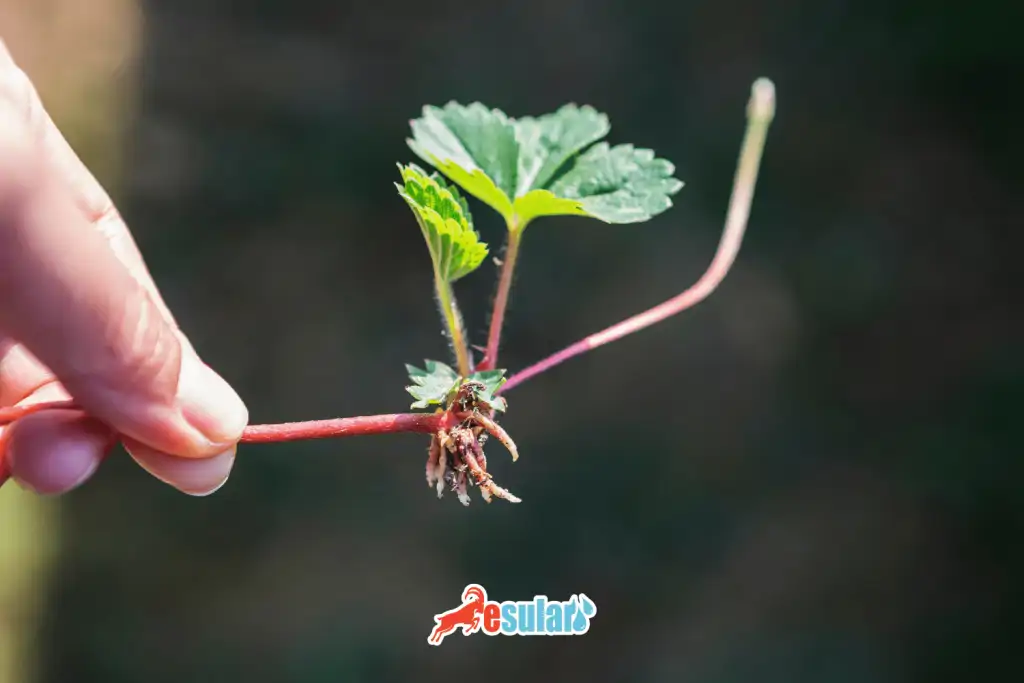
Seedling Planting in Soilless Strawberry Cultivation

The choice of seedling type and planting density in soilless strawberry cultivation is very important for farmers in determining productivity and harvest periods. Mostly preferred seedling types are fresh and plug seedlings. Research shows that frigo seedlings generally offer a higher yield, but their time to start fruiting is longer than plug seedlings. On the other hand, while plug seedlings give successful results in media such as cocopeat and pine sawdust, the highest yield was achieved in the 'Camarosa' variety in media such as peat+perlite.

Planting density refers to the number of plants planted per unit area. In soilless strawberry cultivation, this density is quite high and is significantly above traditional planting density. For example, by planting 12,000-24,000 plants per decare, the greenhouse area is used with maximum efficiency. As the planting density increases, the yield obtained per unit area also increases. Therefore, choosing the right seedling type and appropriate planting density is very important for a successful strawberry cultivation.

topraksiz cilek yetistiriciligi

Plant Nutrition in Soilless Strawberry Cultivation

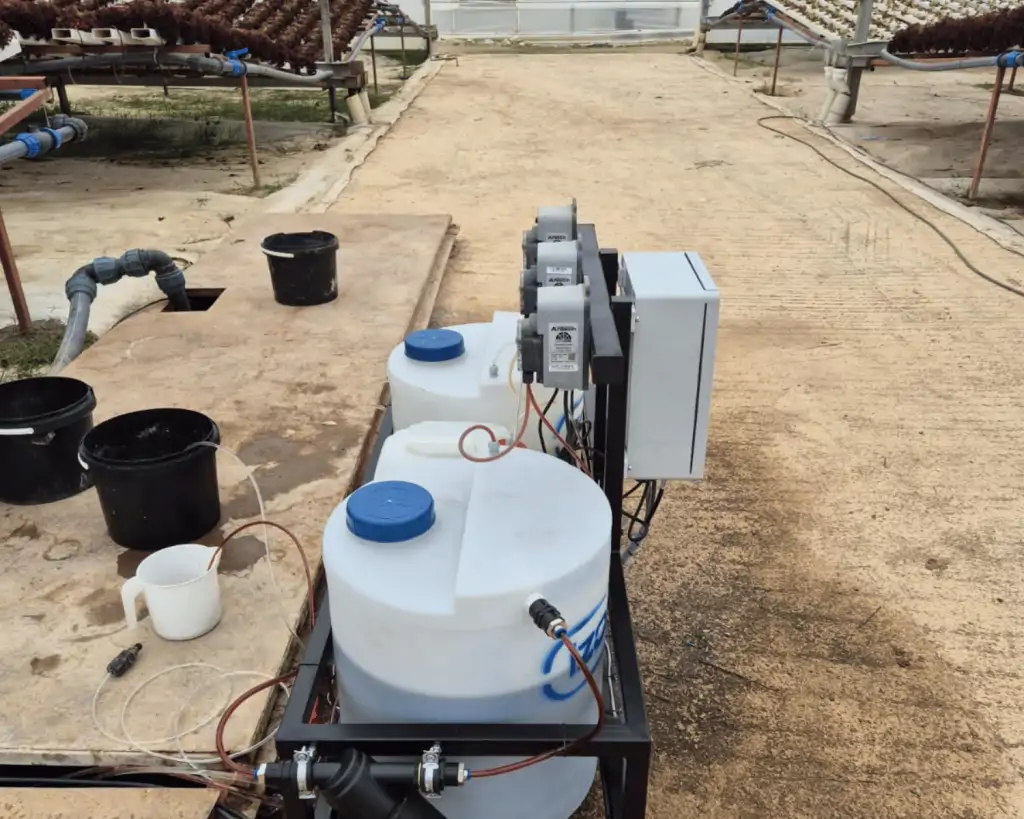
In soilless strawberry cultivation, nutrient solution management is very important to provide the nutrients the plants need and to increase productivity. While nutrient solution is discarded after application in open systems, the drained solution is collected and reused in closed systems. 150-300 ml of nutrient solution per plant can be applied daily and the EC level of the solution should be kept at 1.2-2.2 mS/cm, and the pH level should be kept in the range where plant roots can work with maximum efficiency.

As Esular, we offer advanced solutions that increase productivity in soilless agriculture. Our EC and pH sensors continuously monitor all critical values of the nutrient solution and make automatic adjustments. Additionally, our fertilization systems ensure that nutrients are given at the right time and in the right amount automatically. In this way, drainage management is optimized, resource waste is prevented, and plant health is guaranteed.

Irrigation in Soilless Strawberry Cultivation

Irrigation in soilless strawberry cultivation is generally carried out using a drip irrigation system. In this system, irrigation water and nutrient solution fall directly into the root zones of the plants. Thus, the loss of water and nutrients is minimized. Irrigation is regulated according to the needs of the plants and environmental factors. For example, strawberry plants like high humidity levels, so the frequency of irrigation can be increased to keep the humidity level at the optimum level. The amount and frequency of irrigation may vary depending on the growth stage of the plants, weather conditions, and the growing medium. Factors such as drip rate, irrigation duration, and interval should be carefully adjusted. Additionally, the quality of irrigation water is also important. Clean irrigation water with low EC value and good drainage is preferred. The irrigation process is of great importance for the healthy growth of plants and obtaining a productive crop, therefore it must be managed carefully.

What are the Diseases and Pests Seen in Soilless Strawberry Cultivation?

Soilless strawberry cultivation reduces the risk of soil-borne diseases. However, it may require fighting other diseases and pests that can affect the plant root system. Among the most common diseases in this cultivation method are fungi that cause root rot, such as Pythium and Phytophthora. Additionally, viruses, bacteria, and nematodes can also cause serious damage to strawberries. In closed systems, the reuse of nutrient solution can provide disease and pest control. However, there is a risk of pathogens spreading in these systems. Biological control methods such as the use of bacteria in the root zone can also be effective in fighting diseases and pests. Cultural measures such as the use of healthy seedlings, proper planning of greenhouse and system structures, and correct planning of drainage channels play an important role in the control of diseases and pests.

topraksiz-cilek-yetistiriciligi

Yorumlar

Daha Fazla İçerik İster misiniz?

Akıllı tarım hakkında en güncel içerikleri takip edin.