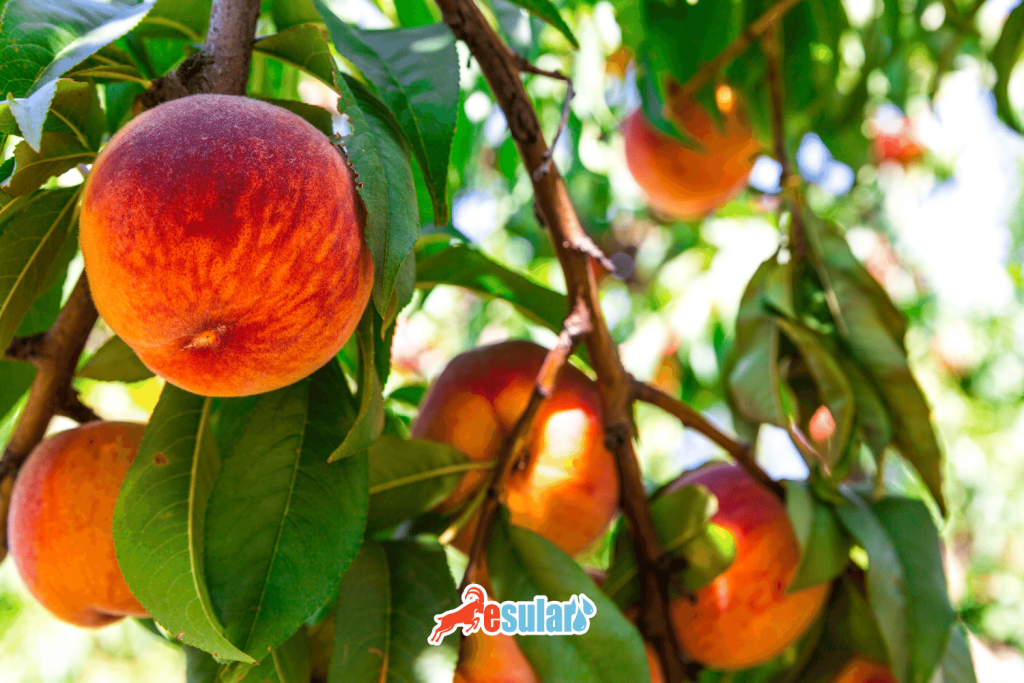
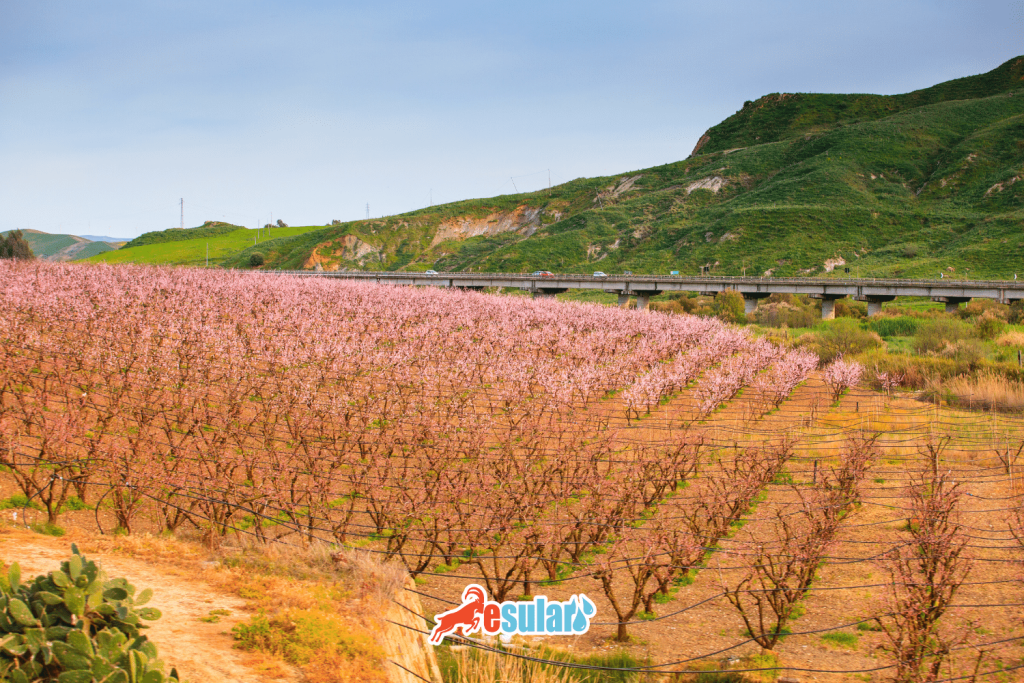
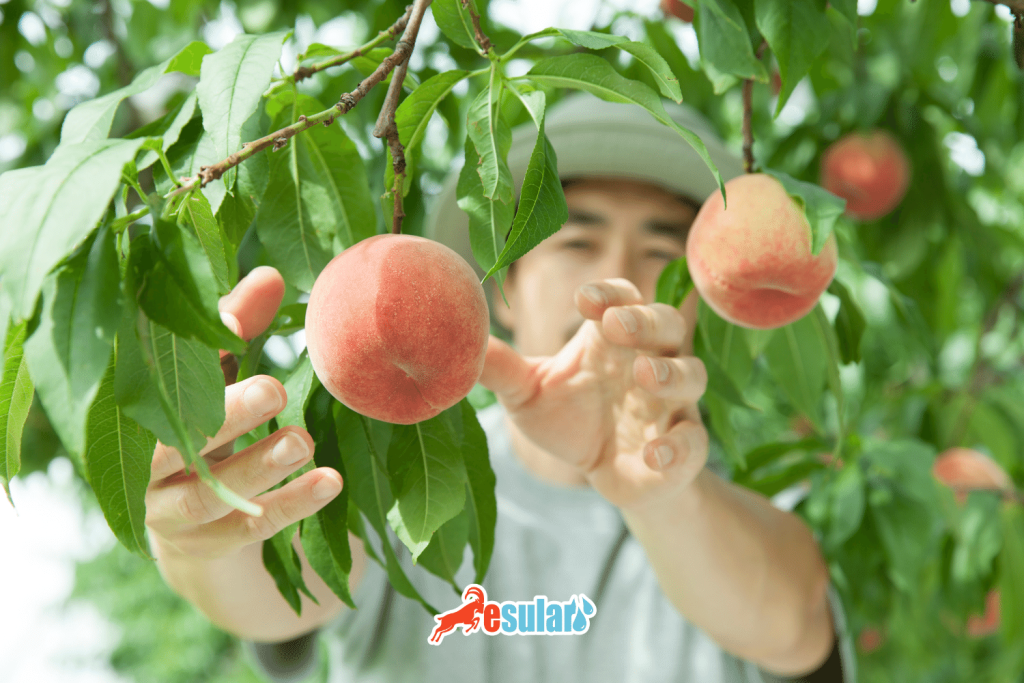
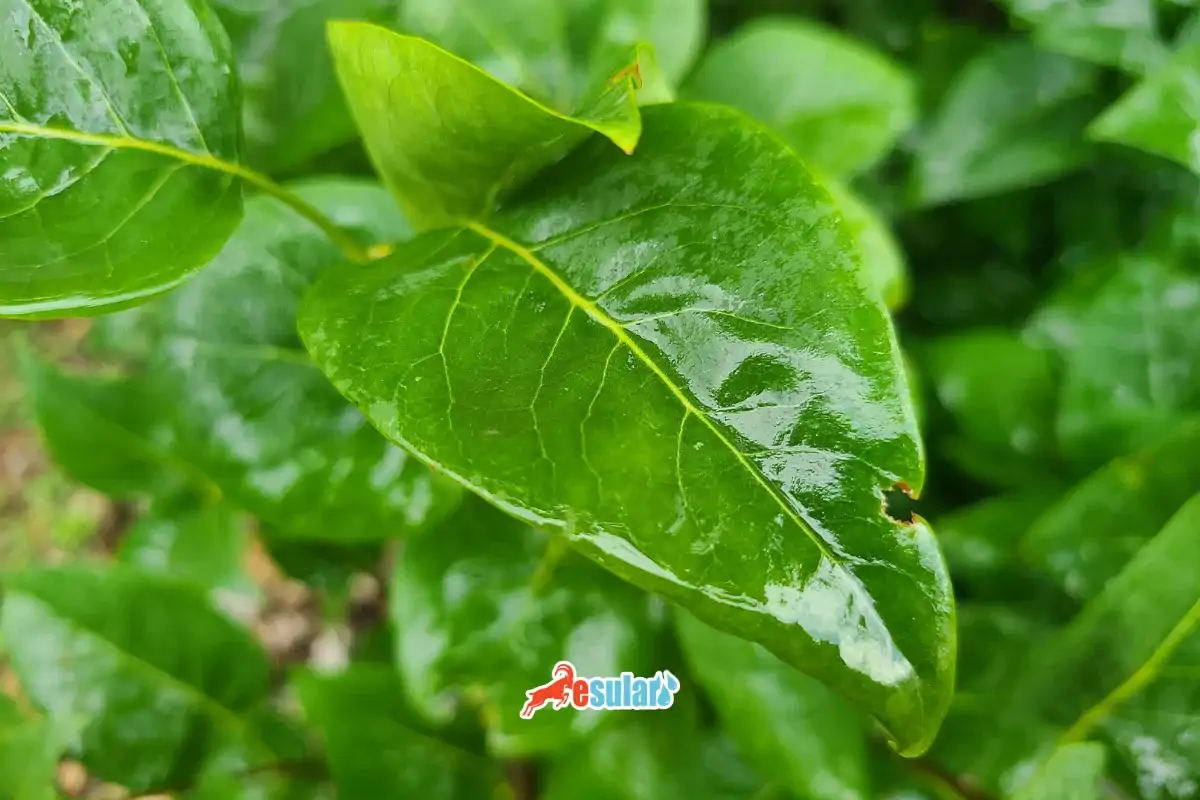
Peach, Prunus persica, is a deciduous tree or shrub in the Rosaceae family grown for its edible fruit of the same name. The peach tree is relatively short with thin and flexible branches. Leaves are alternately arranged, thin and pointed. The tree produces five-petaled pink flowers in January and February. The fruit is a velvety, soft, fleshy red to yellow-orange colored, oval-shaped fruit with a diameter of 3-8 cm. Peach trees can grow up to 8 m (19 ft) in height and can bear fruit for 10 to 20 years. Peach can also be called nectarine, which are two fruits belonging to the same species, but nectarines have a smooth skin and are believed to be of Chinese origin.
Usage of Peach
Peach trees are grown especially for their fruits consumed fresh. Peach trees are also grown as ornamental plants.
Conditions Required for Growing Peaches
Propagation Basic requirements Peaches grow best in regions with warm summers and require a summer temperature between 20 and 30 ° C (68-86 ° F) for the fruit to ripen. Trees also have a chilling requirement to break dormancy, but fruit buds can be damaged during long periods below -15 ° C (5 ° F), and therefore most production takes place in countries relatively close to the equator. Additionally, peach trees bloom early and can be damaged by late frosts. Trees grow best in well-drained sandy loams in areas receiving full sun, but they can grow in various soils as long as water does not remain on the surface after heavy rainfall. It can be beneficial to plant trees on high ground to allow cold air to flow out. Trees will grow best in soils with a pH of 6.5. Reproduction Peach trees are propagated vegetatively to maintain the desired genetic characteristic of the parent. Commercial trees are usually propagated by budding in the summer. T-budding involves joining a bud from the desired variety onto a suitable rootstock. Buds can also be collected in late summer for budding during dormancy. Budwood should be collected from healthy shoots of the current season's growth, leaves removed, and the budwood kept moist until joined with the rootstock. The bud stalk is joined to the rootstock by inserting a bud stick into a T-shaped incision in the bark of the rootstock and allowing it to grow. The rest of the tree is pruned to force the growth of the new bud with desired characteristics.
Planting Time of the Peach Tree
Planting Peach trees should be planted in full sun. Plant bare-root trees in a pre-dug hole slightly wider than the root ball. Fill the hole so that the tree is planted at its original planting depth, ensuring the bud union is above the soil line. This can usually be determined from changes in the color of the bark. If planting more than one tree, leave at least 7.6 m (25 ft) of space between them. General maintenance and care Peaches should be pruned annually, including the year of planting, and are best trained in an open center. When the tree bears fruit, it is important to thin the fruits to prevent the tree from overloading. Aim to have 1 fruit every 8 inches. This allows the fruits to grow and prevents the tree from reducing production the following year. To aid fruit development, trees should be watered regularly throughout the growing season. During dry periods, water the trees every 10 to 14 days. Apply water deeply and widely, at least to the width of the canopy. Trees will also benefit from nitrogen fertilizer application in the spring.
Our Areas of Activity
esular smart automatic irrigation system application areas
In places where water resources are scarce, we reduce your costs with drip irrigation automation. Thanks to wirelessly controllable hydraulic valves, equal water distribution is provided to every point of the field and everything is controlled from a single point.
To keep greenhouse production at the desired level, improve product quality and keep pH balance under control, we make irrigation management fully automatic in modern greenhouses.
We enable you to use and manage the world's most valuable resource in the most efficient way in all your agricultural lands without the need for cabling and external power sources. Whether you determine your irrigation scenario or perform fully automatic irrigation.
In landscape irrigations, we provide more efficient and effective irrigation by making the valves smart. With remotely controllable valves and remotely updated scenarios, all control is in your hands.
In golf and football fields, homogeneous irrigation is ensured by controlling flow and pressure values. All valves and pumps can be controlled remotely without pulling cables.
Smart Cities
In smart city applications, we ensure that irrigation zones are irrigated on time and as desired with sensors that can work wirelessly and with internal batteries for over 10+ years. No more sprinklers that irrigate when it rains.