
Precision irrigation technologies
Data-driven farming
Know exactly when and how much water your plants need with soil moisture sensors, climate data, and AI algorithms. Achieve up to 40% water savings compared to traditional methods.
What is precision irrigation?
Precision Irrigation is a modern agricultural approach that determines the water needs of plants using real-time data, ensuring water is applied at the right time, in the right amount, and to the right place. This technology bases irrigation decisions on scientific data by combining soil moisture sensors, weather stations, satellite imagery, and AI algorithms.
In traditional irrigation methods, farmers usually make decisions based on calendars or visual observation. Approaches like 'irrigate every Monday' or 'irrigate if the soil looks dry' are far from meeting the actual water needs of plants. This often leads to over-irrigation and sometimes under-irrigation. While over-irrigation causes root rot, nutrient leaching, and water waste; under-irrigation leads to yield loss and plant stress.
Precision irrigation systems eliminate this uncertainty. Soil moisture sensors measure the actual moisture level at different depths of the soil. Weather stations collect the data necessary for evapotranspiration calculation. All this data is analyzed on the cloud platform to determine the optimum irrigation time and amount. Result: 30-50% less water consumption for the same yield.
This technology is critically important today, especially as water scarcity increases, energy costs rise, and the pressure for sustainable agriculture is felt. Precision irrigation is not just an environmental necessity but also an economic requirement. Water and energy savings directly reflect on operational profitability.
40% Water Savings
Prevent unnecessary irrigation
%25 Yield Increase
Optimum growth conditions
30% Energy savings
Less pump operation
Çevre Dostu
Protect water resources
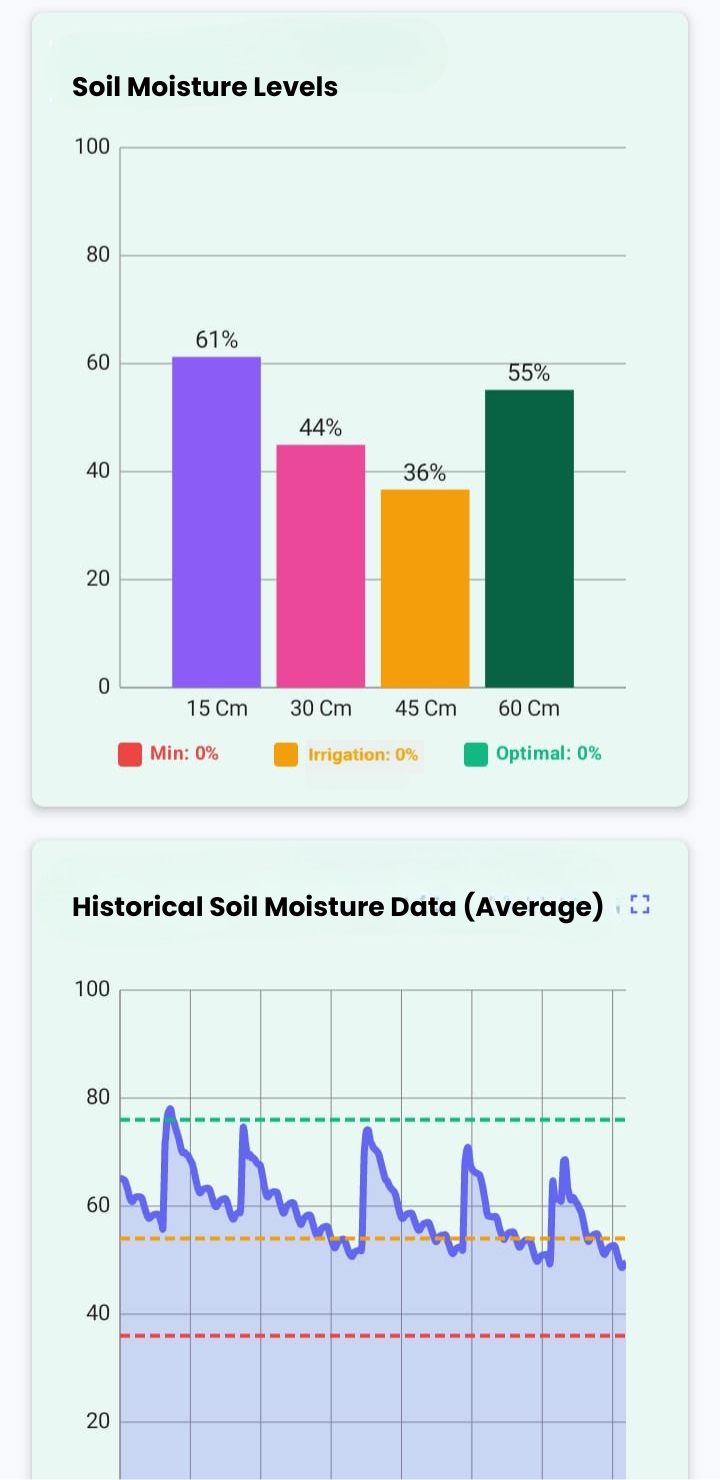
Critical data for irrigation decisions
Precision irrigation makes smart irrigation decisions by bringing together multiple data sources. Thanks to the integration of soil, atmosphere, and plant data, irrigation is no longer based on guesswork, but on science.
Soil moisture data
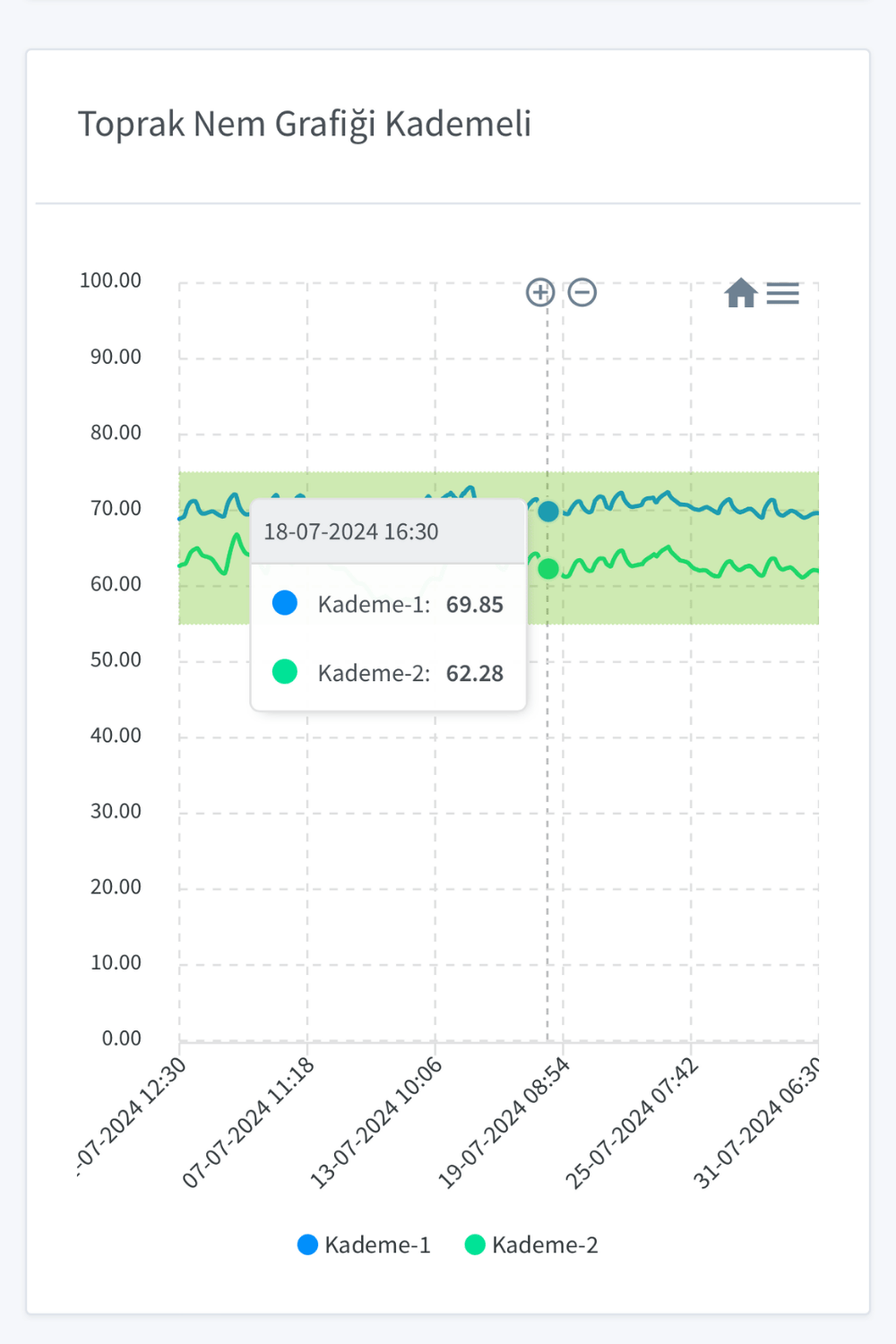
Soil moisture is the most fundamental input for irrigation decisions. Esular soil moisture sensors measure the volumetric water content (%VWC) at different depths of the soil in real-time. This data reveals the actual water status in the plant's root zone and eliminates guesswork-based irrigation.
- Surface moisture level (0-30 cm) - Critical for germination and seedling development
- Root zone moisture (30-60 cm) - Active water uptake zone
- Deep soil moisture (60-90 cm) - Water reserve and drainage tracking
- Soil temperature - Root activity and disease risk
- Electrical conductivity (EC) - Salinity and fertilizer concentration
Climatic data
Atmospheric conditions directly affect the plant's water loss. Evapotranspiration increases on hot, dry, and windy days; it decreases on cool and humid days. Agricultural weather stations collect all the data necessary for ET calculation and disease prediction models.
- Air temperature and relative humidity - Fundamental inputs for ET calculation
- Wind speed and direction - Evaporation and spray drift effect
- Solar radiation - The engine of photosynthesis and transpiration
- Precipitation amount - Measurement of natural water input
- Atmospheric pressure - Weather change indicator
Plant data
Every plant's water need is different, and even the same plant consumes different amounts of water depending on its growth stage. Plant coefficients (Kc) and phenological stages are critically important for the accurate calculation of the irrigation amount.
- Plant species and variety - Species-specific water needs
- Growth stage (Kc coefficient) - Initial, vegetative, flowering, maturity
- Leaf Area Index (LAI) - Surface area affecting transpiration
- Root depth - Determines the soil volume to be irrigated
- Stress thresholds - Intervention point before yield loss begins
Esular precision irrigation products
Field-proven, industrial-grade sensors and control devices
Wireless Soil Moisture Sensor
Wireless sensor that measures moisture and temperature values at different soil depths, providing long-range communication with LoRaWAN. Maintenance-free with 5+ years of battery life.
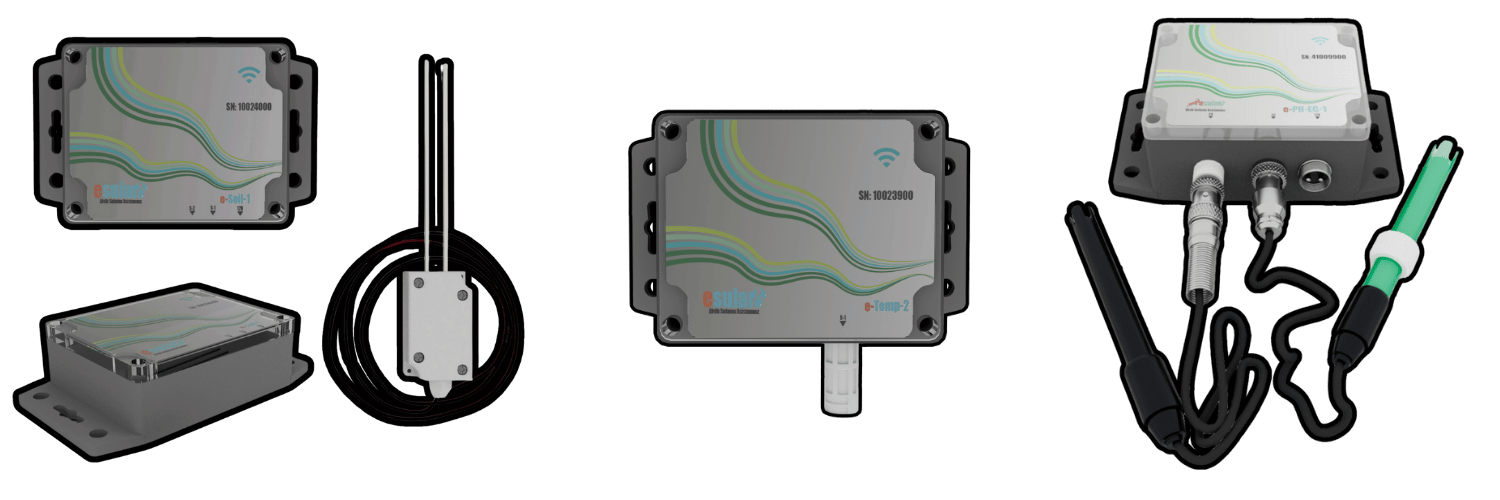
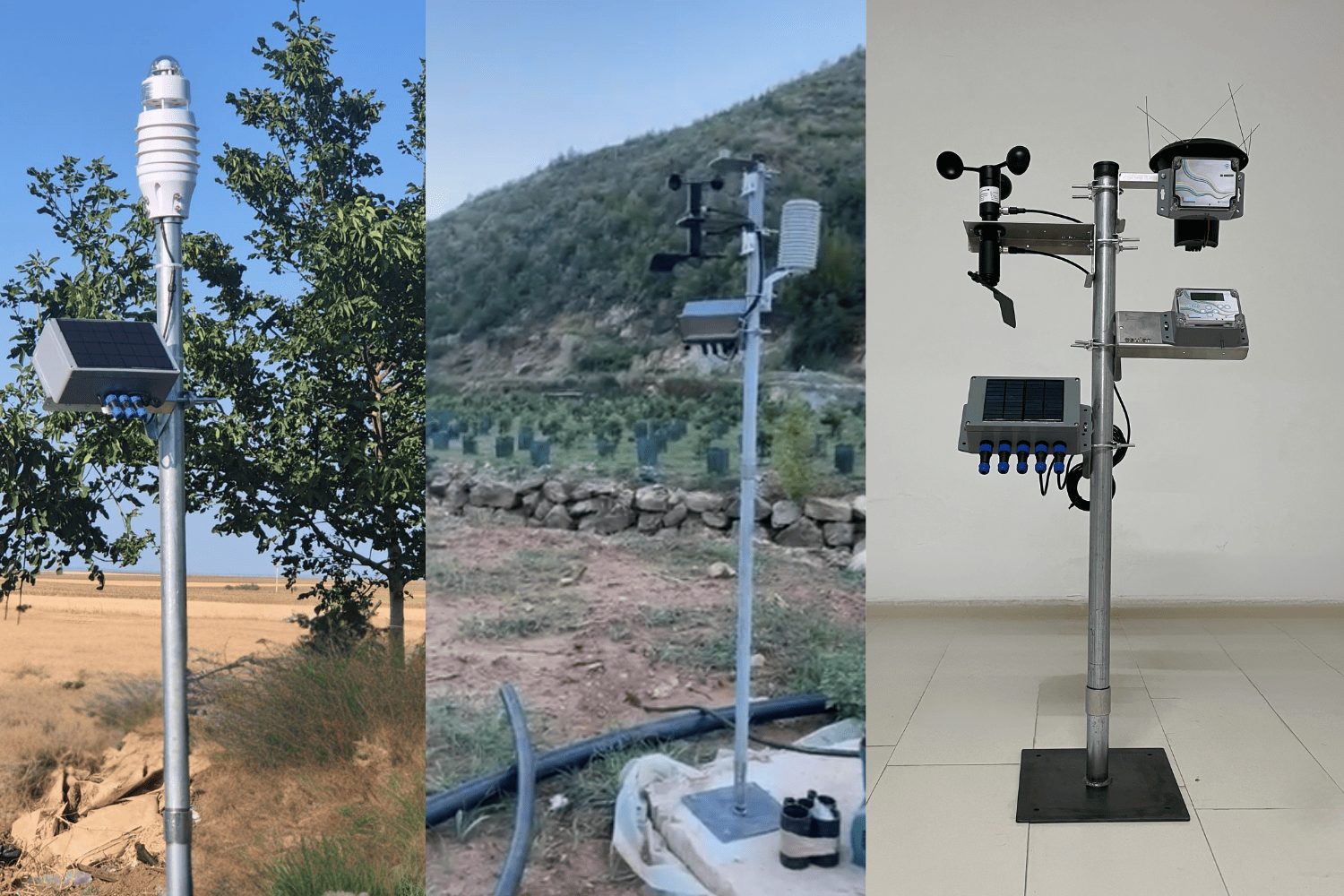
Agricultural weather station
Fully equipped weather station measuring air temperature, humidity, wind speed, precipitation amount, solar radiation, and more. All data necessary for ET calculation and disease prediction models.
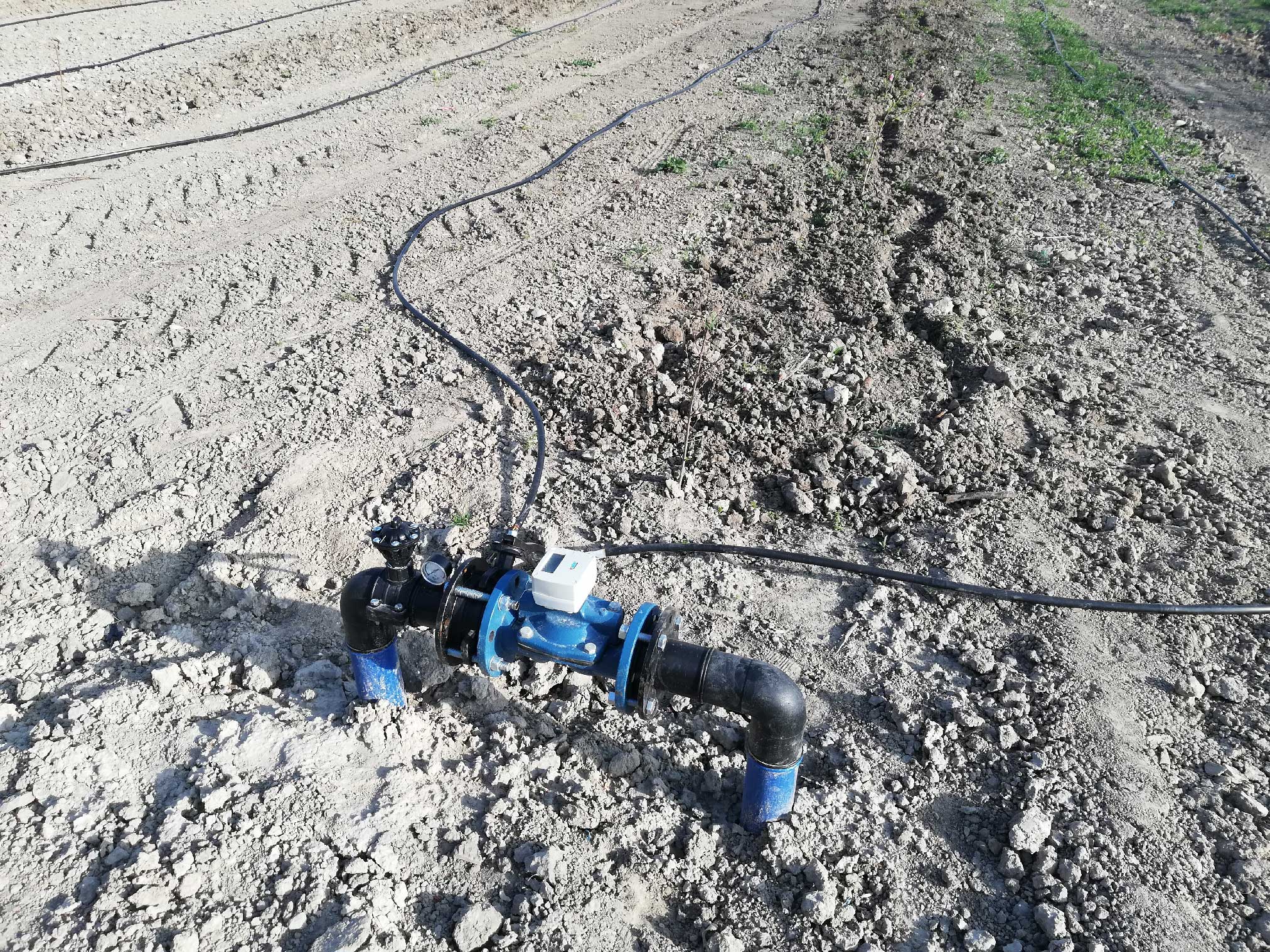
Wireless valve control device
Programmable wireless control device that opens and closes irrigation valves remotely. Automatic irrigation based on sensor data or manual control capability. Support for hydraulic and solenoid valves.
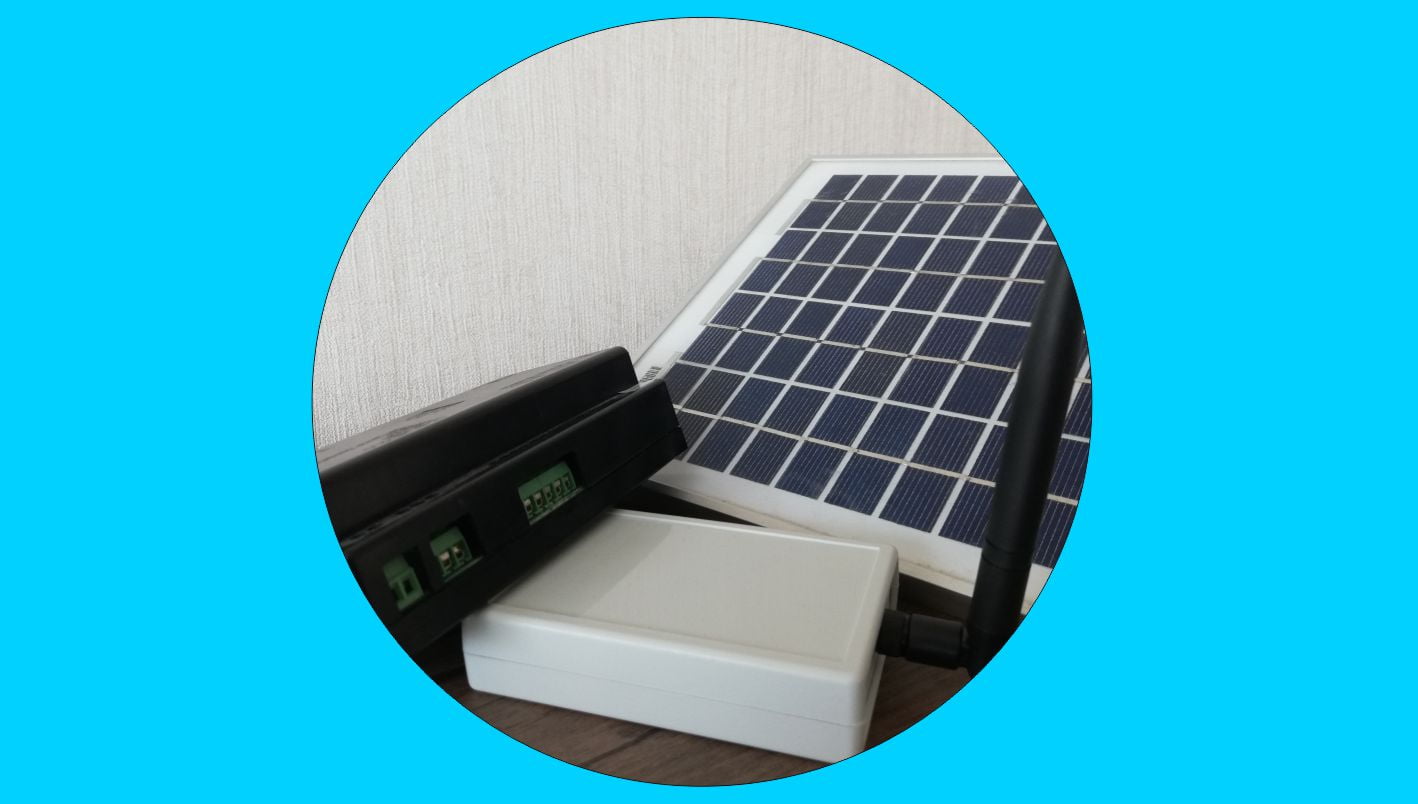
LoRaWAN Gateway
The central communication device that collects data from all sensors and control devices in the field and transmits it to the cloud. Manage hundreds of devices within a 10 km radius with a single gateway.
Precision irrigation process
From data to action: smart irrigation in 4 steps
Data collection
Soil moisture sensors and weather stations continuously collect field data and send it to the cloud.
Analysis
AI algorithms analyze data, calculate plant water needs, and generate irrigation recommendations.
Decision
The system makes an automatic irrigation decision or sends a notification to the user via the mobile app.
App
Valve control devices start irrigation. The system optimizes irrigation duration and amount.
Traditional vs precision irrigation
See the difference, measure the benefit
| Feature | Traditional irrigation | Precision Irrigation |
|---|---|---|
| Irrigation decision | Calendar-based or guesswork-based | Based on real-time sensor data |
| Water use | Usually more than needed | Only as much as needed, 40% savings |
| Energy consumption | High pump operation time | Optimized, 30% savings |
| Yield | Variable, affected by over/under irrigation | Optimized, up to 25% increase |
| Monitoring | Requires manual observation | 24/7 remote monitoring and alarm |
| Weather compatibility | Automatic adjustment | |
| Reporting | Detailed analysis and historical data |
Predictive Irrigation: Smart Systems that Predict the Future
Predictive Irrigation is fundamentally different from traditional reactive irrigation approaches. While traditional methods irrigate when the soil is dry or plants start to wilt, predictive systems prevent this from happening. It calculates how much water will be needed in the coming days in advance by combining meteorological data, soil moisture measurements, and plant physiology models.
Evapotranspiration (ET) refers to the amount of water lost to the atmosphere from plant leaves and the soil surface. Esular systems automatically calculate daily ET values using the Penman-Monteith formula recommended by the FAO. This calculation uses solar radiation, air temperature, relative humidity, wind speed, and species-specific plant coefficients (Kc). As a result, the amount of water the plant draws from the soil is determined scientifically every day.
Weather forecasts are one of the most critical components of predictive irrigation. Our system continuously analyzes 5-7 day weather forecasts. If precipitation is expected tomorrow or in the coming days, today's irrigation is automatically postponed or reduced. This simple but effective approach provides an additional 15-20% savings in annual water consumption. Additionally, issues such as nutrient leaching and root rot caused by over-irrigation after precipitation are prevented.
The soil water balance model treats the soil like a reservoir. Inflowing water (precipitation, irrigation, capillary rise) and outflowing water (evapotranspiration, surface runoff, deep percolation) are continuously monitored. The model determines the optimum irrigation time and amount by considering the soil's current moisture status, field capacity, and wilting point. This ensures that plant roots are always kept in ideal moisture conditions.
Predictive irrigation systems also analyze long-term climate trends. Irrigation strategies are planned at the beginning of the season, taking into account seasonal precipitation patterns, temperature changes, and drought cycles. For example, if a dry summer is predicted, water storage capacity is increased or more resilient irrigation programs are implemented. This proactive approach prevents water shortages during crisis moments.
Evapotranspiration (ET) calculation
Daily reference ET and crop water consumption (ETc) are automatically calculated using the FAO Penman-Monteith formula. Solar radiation, temperature, humidity, wind, and Kc coefficients are used.
Smart precipitation forecast integration
5-7 day weather forecasts are analyzed. Upcoming precipitation is known in advance, and irrigation programs are automatically adjusted. Unnecessary irrigations are prevented, providing 15-20% additional savings.
Dynamic water balance model
Water inflows and outflows in the soil are continuously monitored. Field capacity, wilting point, and available water are calculated. The root zone is always kept at optimum moisture.
Optimization with machine learning
The system makes more accurate predictions over time by analyzing historical irrigation data and its results. It develops a more efficient irrigation strategy with less water consumption every season.
Switch to precision irrigation
Let our expert team inspect your land and design a custom precision irrigation solution for you. Water savings and yield increase guaranteed.