Tüm Yazılar


What is Anthrax Disease?
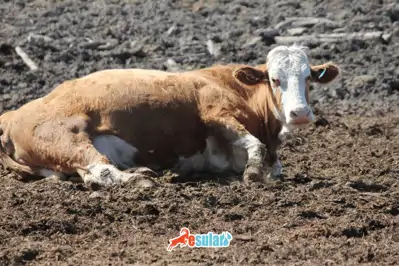
Anthrax disease is an infectious disease caused by a germ called Bacillus anthracis. It occurs suddenly, especially in grass-feeding animals such as cattle, sheep, and horses, and can also be transmitted to humans. It is an infectious disease found in all mammals. Humans usually contract the disease from infected animals or their products. When the germ enters the human body through the skin, it causes the disease called "black boil" or "butcher's boil," which is a characteristic regional boil and edema. If the germ enters the bloodstream, sepsis (blood poisoning) and lesions in internal organs may occur. Consuming contaminated meat can cause severe intestinal diseases. In animals, symptoms of the disease include increased body temperature, swelling of the spleen, dark-colored blood, and non-clotting.
What are the Characteristics of Anthrax Disease?
Anthrax is one of the oldest known diseases in animals. The agent causing the disease is a microorganism called Bacillus anthracis. Its spore form is extremely resistant to physical and chemical effects and can maintain its vitality and infectivity for 50-60 years under natural conditions. The disease is commonly seen especially in animals such as cattle, sheep, goats, buffalo, camels, and deer; in rarer cases, it can occur in pigs, horses, and carnivorous animals. Young animals are more susceptible than adults and elderly animals. Stress factors such as hunger, fatigue, travel, poor care, internal and external parasites, extreme hot or cold weather, and inadequate nutrition can contribute to the emergence and spread of the disease. Infected animals can spread bacilli through their milk, feces, and urine 1-2 days before death. The agent can also be transmitted through the milk of recovered animals for a short period. Bacillus anthracis does not form spores inside the bodies of dead animals. However, if an autopsy is performed on the animal or if blood flowing from natural orifices after the death of the animals comes into contact with air, bacillus spores can be produced. Unopened carcasses decompose within 3-6 days due to the effect of putrefaction on vegetative forms. In contrast, its spores are very durable. These spores can remain alive in water, soil, and pastures for a long time (50-60 years), so places contaminated with these spores can act as a source of infection. For this reason, carcasses should be buried at least two meters deep in places far from pastures and streams before being opened, and quicklime should be poured over them.
Animals grazing in contaminated pastures or those consuming contaminated feed obtained from there can contract the disease. The disease can occur in any season, but it most frequently appears during the pasture season. Especially when the grass starts to dry, microbes can easily enter the body through wounds opened in the mouth by thorns. Animals in the barn can take in the microbe through contaminated feed and grass; the disease can also be transmitted through respiration and skin. Overused pastures, swamps, and rugged terrains can lead to more frequent occurrences of the disease as hunger, fatigue, long-term, and difficult animal transport reduce the animals' resistance. Seasonal changes, such as excessive rainfall or severe drought, can increase the risk of the disease spreading. In hot and humid regions, more disease may be seen compared to other regions.
How to tell if there is anthrax in meat?
There are some distinct characteristics to identify anthrax-infected meat. Differences can be observed in the meat of animals that died of anthrax or were slaughtered and sold despite their illness. Rapid decay occurs in the meat of animals with anthrax, and this decay manifests itself with a distinct putrefaction. Edema and swelling can be seen in anthrax-infected meat. When the skin is flayed, the vessels under the skin are usually full, and black-colored blood may flow from the cut vessels. The blood of an animal with anthrax is usually dark in color and does not tend to clot. However, after some contact with air, the color of the blood may turn red and begin to clot. There may be significant swelling and enlargement in the liver, kidneys, and spleen. A tar-like blood may leak from anthrax-infected meat whose cut surface is dark in color.
How is Anthrax Disease Transmitted?
Animals become ill 2-3 days after taking in the microbe. Symptoms such as loss of appetite, tremors, difficulty breathing, staggering, inability to stand, and high fever are observed. Sheep and goats may die immediately after the symptoms appear. In cattle, additional symptoms such as pain, diarrhea, and bloody urine accompany these signs, resulting in death within a week. Blood traces or a bloody discharge may be found in various limbs (mouth, nose, anus, etc.) of dead animals. The color of the blood of the slaughtered animal is black and does not clot. Humans contract the disease by eating the meat of diseased animals or by coming into contact with their skin and wool. In addition to these,
Through the digestive system: It occurs with the consumption of foods such as contaminated water, grass, and feed.
Through the respiratory tract: This form of transmission, which is rare in animals, occurs in humans as a result of contact with spores through animal hides, hair, wool, and fleece.
Through the skin: It occurs with the entry of the agent through various injuries formed on the skin (biting, shearing, abrasion, scratch, etc.). Humans can contract the disease through contaminated meat, blood, and contact. Blood-sucking and biting flies can also transmit the infection in this way.
Symptoms of Anthrax Disease
The incubation period varies between 1-14 days depending on the species of the animal, its resistance, the amount of microbe entering the body, the strength of the microbe, and the route of entry. The disease follows a sudden and rapid course in sheep and goats, usually resulting in death within 2-4 days. Clinical findings such as tremors, staggering, difficulty breathing, bloody urine, blood coming from natural orifices, edema under the throat and in other parts of the body, necrosis, and pustules on the skin are most commonly seen. The symptoms in sheep and goats are also common for cattle. The only difference is that the symptoms are less prominent in cattle. In humans, the disease is seen in three different forms: cutaneous, pulmonary, and rarely intestinal anthrax.
Cutaneous anthrax: can be seen as necrotic ulcers covered with a black scab. In addition, it can also be seen as edema under the neck, chest, and eyelids, and as blisters on these edematous areas.
Intestinal anthrax: Occurs in humans who consume anthrax-infected animal meat. It manifests itself with symptoms of malaise, weakness, headache, and excessive sweating. Fever rises along with nausea, vomiting, diarrhea, and abdominal pain. Bloody diarrhea can also be seen from time to time. The pulse quickens and can kill patients within 2-3 days.
Pulmonary anthrax: Develops as a result of inhaling spored dust and hair. Starting with a sudden tremor, the body temperature rises to 40-41 °C. Severe vomiting symptoms are observed. The pulse weakens and quickens. It can kill the patient within 2-3 days.
In how many days does anthrax kill?
The course of anthrax can vary depending on the species of the organism affected, the type of disease, and the treatment. However, anthrax is generally a disease that follows a rapid course. In animals and humans, it can cause death within 2 to 6 days after the symptoms of the disease appear. It is a disease known especially for its rapidly progressing form. Sick animals and humans can usually lose their lives shortly after symptoms are seen. For this reason, it is emphasized that anthrax is a rapidly effective pathogen and should be taken seriously.
Treatment of Anthrax Disease
First intervention in the anthrax-infected area involves not touching the wound. Anthrax bacteria do not reproduce above 42 °C. Heat application can be performed by taking advantage of this feature. Penicillin is generally used in the treatment of anthrax. However, it is important that its dose is high. 10-15 million units of crystallized penicillin (penicillin G) should be given intravenously every 6 hours. The second choice of drug is one from the tetracycline group, and 500 mg every 6 hours is recommended. In this way, anthrax blisters and types of edema can be treated, and the spread of the microbe is prevented. Sulfadiazine can also be used in mild cases. Although streptomycin is not as effective as penicillin and tetracycline, it is an option. Among these, the most effective treatment method is the combination of penicillin and streptomycin. Satisfactory results can be obtained if a combination of 10-15 million units of penicillin per day and 1 g of streptomycin per day is used.
Protection from Anthrax Disease
Anthrax is an infectious disease transmitted from animals to humans. Within the scope of prevention measures, the first step is to control the disease in animals. When sick animals are identified, they should be killed and their carcasses should either be burned or buried in lime pits. It is important that the pits are deep enough; if they are near the surface, anthrax spores can be carried to the soil surface by worms and insects. The animal herd should be moved away from pastures exposed to anthrax spores, and these grasses should be burned. Contaminated barn residues and manure should also be burned in the same way. Anthrax spores are usually transmitted to humans outside of professional relationships through wool and skin. Suspicious materials should be destroyed by burning. Dressing materials used by sick people should be burned and metal tools should be sterilized.
Kategoriler
Etiketler