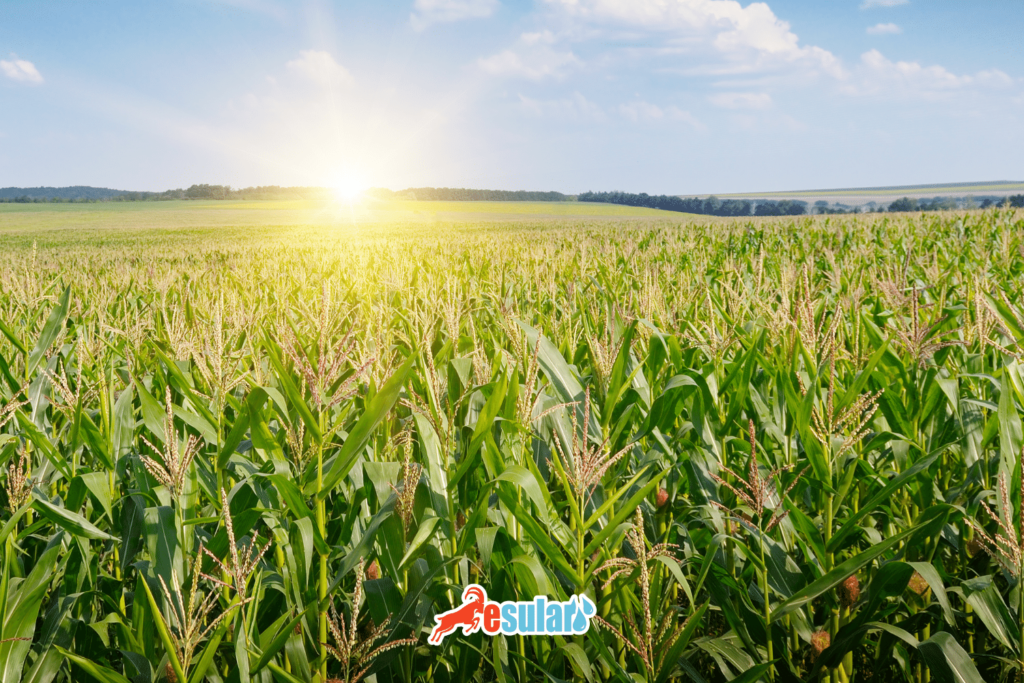
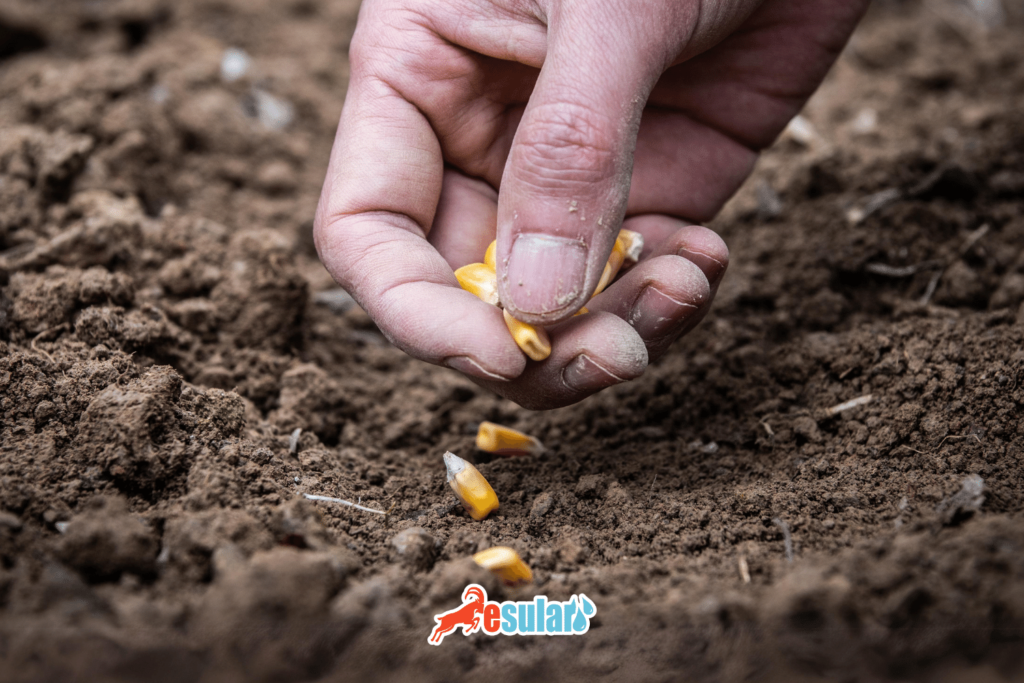
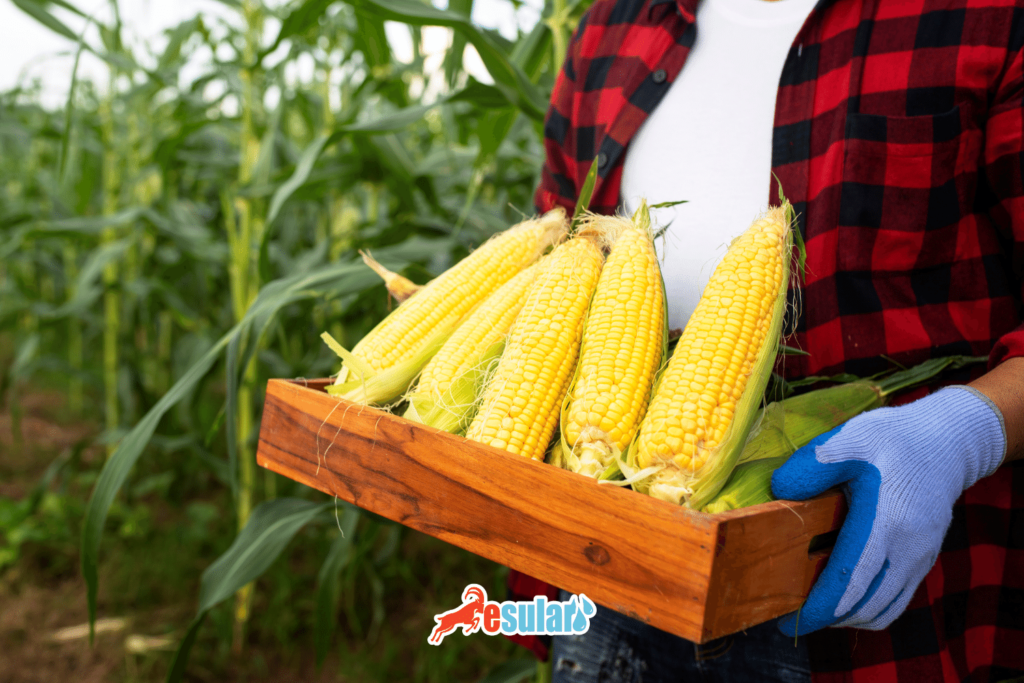
Before answering the question of when corn is planted, it is necessary to look at climate and regional conditions and whether it is grown as a main crop or a second crop. In the case of planting corn as a main crop, the most suitable planting time is usually between the middle of April and the first week of May. For second crop plantings, it is recommended to plant immediately after the wheat harvest and at the latest by the beginning of July.
Temperature Requirement of Corn
Temperature Requirement of Corn; under normal conditions, the corn plant begins to germinate at a temperature of 10-11 °C. When the temperature at a depth of 5-10 cm in the soil reaches 15 °C, the germination process accelerates. During germination, there is a linear relationship between the amount of root and stem elongation and temperature, which is most effective in the range of 10-30 °C.
When the temperature reaches 32 °C, a sudden decrease in root and stem elongation is observed, and when the temperature reaches 40 °C, the sprouts die. On the other hand, root elongation stops when the temperature falls below 9 °C. The ideal temperature range for corn production is 24-32 °C.
Although corn is generally a warm-climate plant, it is not a plant that can withstand extreme heat. When the temperature reaches 38 °C, even under irrigation conditions, the plant cannot meet the water it loses through its roots with transpiration. In this case, the plant loses its turgidity. If this condition continues for several days, the cell structure loses its flexibility and may lose the ability to return to its old form.
Soil Depth in Corn Planting
Soil depth in corn planting should be 5-6 cm as recommended for the main crop, and 6-8 cm for the second crop. Although the amount of seed to be sown per decare varies depending on the varieties, sufficient plant density can generally be achieved by using 2-2.5 kg/da of seed.
Row Spacing and Plant Density
The recommended row spacing for the main crop should be 70*25 cm, and for the second crop, it should be 70*20 cm. These row spacings and distances within the row provide a density of 7000 plants/da for early and short varieties, and 6000 plants/da for late and tall varieties.
These recommended planting and plant density guidelines can create ideal conditions for productive corn farming. However, it is also important to make compatible adjustments to these values depending on varieties, regional climate conditions, and soil characteristics.
When is Corn Harvested
The most accurate method for determining the harvest maturity of corn is to measure the moisture content in the kernels. However, if there is no possibility of moisture measurement, a decision can also be made by looking at the physical characteristics of the kernel. In a corn plant that has reached harvest time, a black layer forms where the kernel joins the cob (at the base). This black layer first starts at the point where the kernel joins the cob, then progresses to the cob part, and finally appears at the base of the kernel. By cutting the kernel with a knife, the presence of the black layer can be easily observed.
When a cob is considered mature, at least 75% of the kernels in the middle of the cob must have a black layer. Corn kernels that have reached physiological maturity usually contain 35% moisture. During this period, the kernels have completed their normal development and have become harvestable by hand. However, in mechanical harvesting, high moisture content can increase harvest loss due to the softness of the kernels. The most suitable moisture content for harvesting corn by machine is usually between 21-28%. The most ideal harvest time is when the moisture content in the kernel is around 25%. This is the most suitable period in terms of minimum loss and preservation of quality.