How is Wheat Cultivation Done?
How wheat cultivation is done is one of the most curious and most researched questions. Wheat is one of the cultivated plants that ranks first in terms of sowing and production worldwide and is widely used in human nutrition. The wide adaptation ability of the wheat plant is an important factor in this success. Additionally, thanks to the suitable nutritional value provided by the wheat grain, and its ease of storage and processing, it has become the basic food source for approximately 50 countries. As we can understand from all these reasons, wheat cultivation is an important issue for humanity.
Wheat Growing Conditions
Climate and Soil Requirements
Although wheat has a wide adaptation ability, it is a cool-climate cereal that does not like excessive heat and humidity. Especially during the germination and tillering periods, it is sufficient for the temperature to be between 8-10 °C and the relative humidity to be above 60%. Between tillering and stem elongation, temperature conditions of 10-15 °C, 65% humidity, low light, and semi-shaded weather conditions are considered suitable. During the stem elongation period, temperature and humidity demands increase. It is observed that high relative humidity before heading positively affects wheat yield. During the fertilization process, low humidity and high temperature increase the quality of the grain. 500 mm of appropriately distributed precipitation for the development period is considered sufficient for maximum yield.
Where does wheat grow?
Wheat, which is suitable for cold weather conditions, can be grown in all regions of Turkey. However, to obtain high-quality yield and protein content, the most suitable regions are Central Anatolia, Marmara, Çukurova, and Southeastern Anatolia regions. The question "Where does wheat grow?" can be answered as: it grows in regions where the average annual precipitation and soil nutrient values are high. For obtaining quality grain, it is important to grow wheat in regions receiving an average of 500-600 millimeters of precipitation. The Central Anatolia Region is one of the most suitable regions for wheat cultivation in Turkey due to its appropriate climate and soil structure. Furthermore, research shows that the gene center of wheat is the Anatolia Region, Western Iran, and the Caucasus. Wheat is considered a developed plant species worldwide.
Soil Preparation
Tillage and soil preparation are among the indispensable steps for obtaining high-quality and abundant products in wheat cultivation. The timing and method of tillage in wheat farming vary depending on the intended farming system and climate conditions. In the fallow-sowing system applied in arid and semi-arid regions, the purposes of tillage include weed control, retaining water in the soil, and preventing erosion. Tillage with methods that will not cause erosion is of great importance. Tools that do not turn the soil upside down, do not overturn it, and work from below should be used. For the first operations, tools such as sweep plows and cultivators should be preferred. In irrigated or humid regions where products are obtained every year without fallowing, plowing should be carried out at a depth of 15-20 cm with a plow by shading immediately after harvest. Before sowing, a good seedbed should be prepared using a cultivator and a harrow set.
Sowing
When is wheat sown?
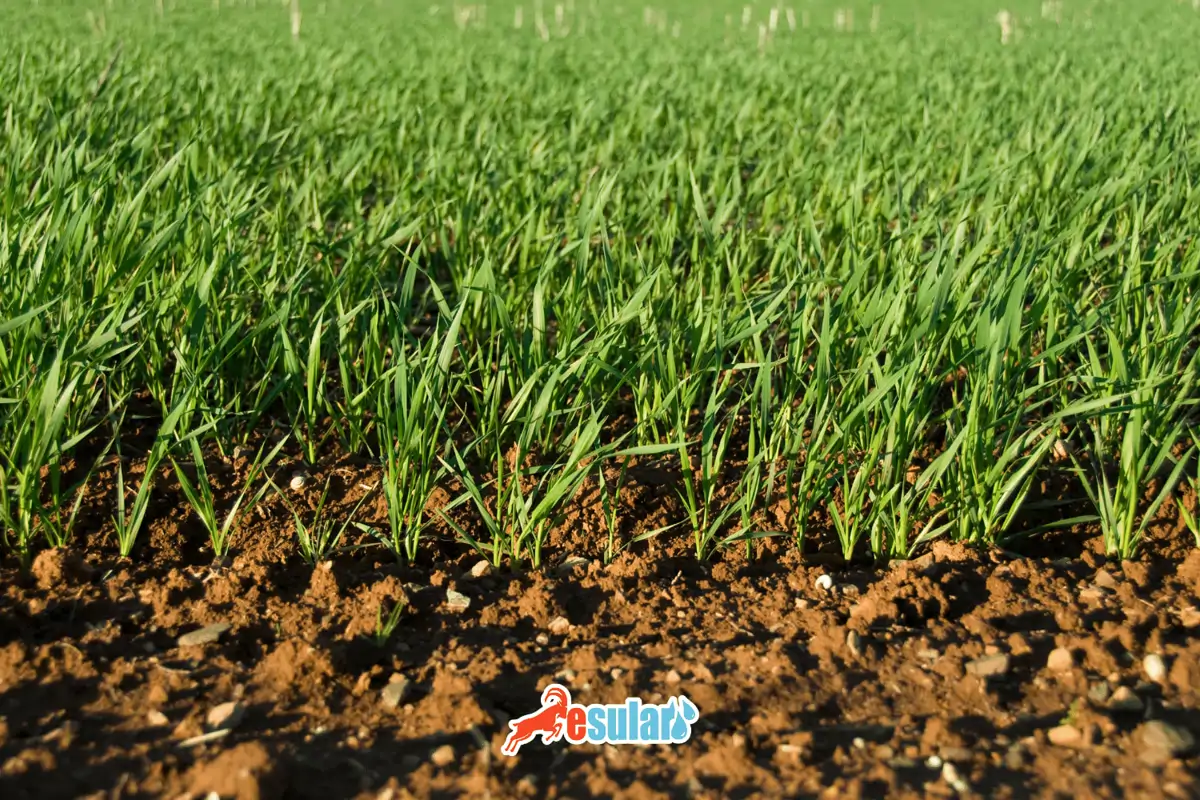
Sowing is an important step in wheat farming to obtain high yield and quality products. Wheat is generally sown in the autumn and winter months in our country. Winter sowing provides higher yields compared to summer sowing. Sowing time varies depending on the variety's cold tolerance and vernalization requirement. The sowing period, which lasts from the beginning of November to the end of December, is considered the most suitable time especially in our coastal regions between November 15-December 15. Sowing should be done when the soil temperature is 8-10 °C. The amount of seed varies between 18-24 kg depending on the sowing time, thousand-grain weight, and germination power.
Wheat can be sown using seeder or broadcasting methods. In sowing with a seeder, 22-24 kg of seed per decare should be used, while in broadcasting sowing, 26-28 kg of seed should be used. Seed treatment with pesticides must be done before sowing. The number of plants should be between 550-600 per m2. Seed sowing depth should be between 4-6 cm.
Sowing time is of great importance.
- Early sowing (October 15-November 15),
- Normal sowing (November 15-December 15)
- Late sowing (December 15-January 15) are the three different time intervals.
The highest yield is generally obtained during the normal sowing time. In early sowing, wheat reaches the stem elongation stage in January-February but may suffer from cold damage. While wheat in the tillering stage during normal sowing can withstand -3 °C cold, in early varieties, if the winter is mild, the risk of lodging and disease may increase due to rapid growth. Diseases and pests appear earlier in early-sown wheat. In early and densely sown early wheat varieties, excessive nitrogen fertilizer application may cause lodging, which reduces yield. Medium-early wheat varieties provide an increase in yield per decare with appropriate density and nitrogen fertilization during the normal sowing time. Disease and pest control during the heading period should be done with ground tools since planes cannot be used. Tramline sowing is important to protect the wheat on tractor wheel tracks.
Seed Stock
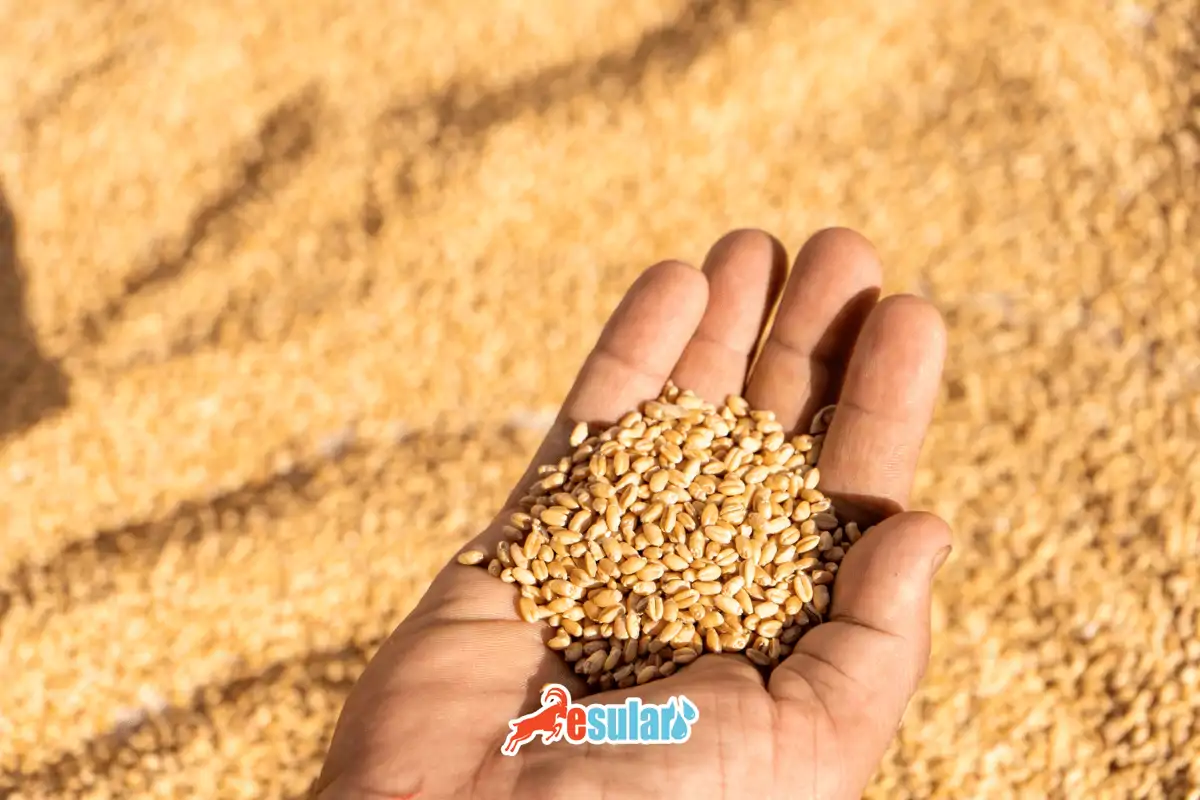
The use of certified seeds is important for obtaining high yields. These seeds can provide an increase in grain yield of up to 40%. Care should be taken when purchasing seed stock that they have special packaging, a label on the packaging, and attention should be paid to the information on the label. It should also be ensured that they have been treated against diseases and pests.
Fertilization
Wheat is a plant that generally responds positively to fertilizer applications. To ensure balanced fertilization in wheat, fertilizer must be applied based on soil analysis results. All phosphorus fertilizer should be given with sowing. 1/3 of the nitrogen fertilizer should be given with sowing, 1/3 during the tillering period, and 1/3 during the stem elongation period. If soil analysis has not been conducted, 12 kg of nitrogen and 6 kg of phosphorus per decare on a pure substance basis are recommended. Accordingly, 13 kg of Diammonium phosphate (DAP) can be given per decare with sowing, and depending on the soil pH, 20-30 kg of nitrogen fertilizer in the appropriate form can be given.
Before fertilizing, paying attention to the following issues will be for the benefit of our farmers and our country's economy:
- We should have our soil analyzed in accordance with its technical characteristics.
- Calcium Ammonium Nitrate (26% CAN) should be used in soils with low lime and an acidic structure.
- In soils with a pH around 7, UREA, 26% Ammonium Nitrate, or 33% Ammonium Nitrate fertilizer should be preferred as top-dressing.
- 18-46-0 is the most suitable base fertilizer, because in this way, all of the phosphorus needed by the wheat and 1/3 of the nitrogen are met.
- If it does not rain for at least 15 days after top-dressing is applied to wheat, plants only take up a maximum of 26% of the applied fertilizer; the remaining 74% mixes into the air as gas.
- If it rains within 1-2 days after top-dressing is applied, the plant takes up 96% of the applied fertilizer.
- Among the fertilizers used as top-dressing in wheat, the loss as gas into the air is highest in urea fertilizer, followed by 33% Nitrate, and least in 26% Nitrate fertilizer.
Maintenance
The basic point in the maintenance of wheat is the application of nitrogenous top-dressing during the stem elongation period. Another critical maintenance operation is weed control.
Irrigation
How much water does wheat need?
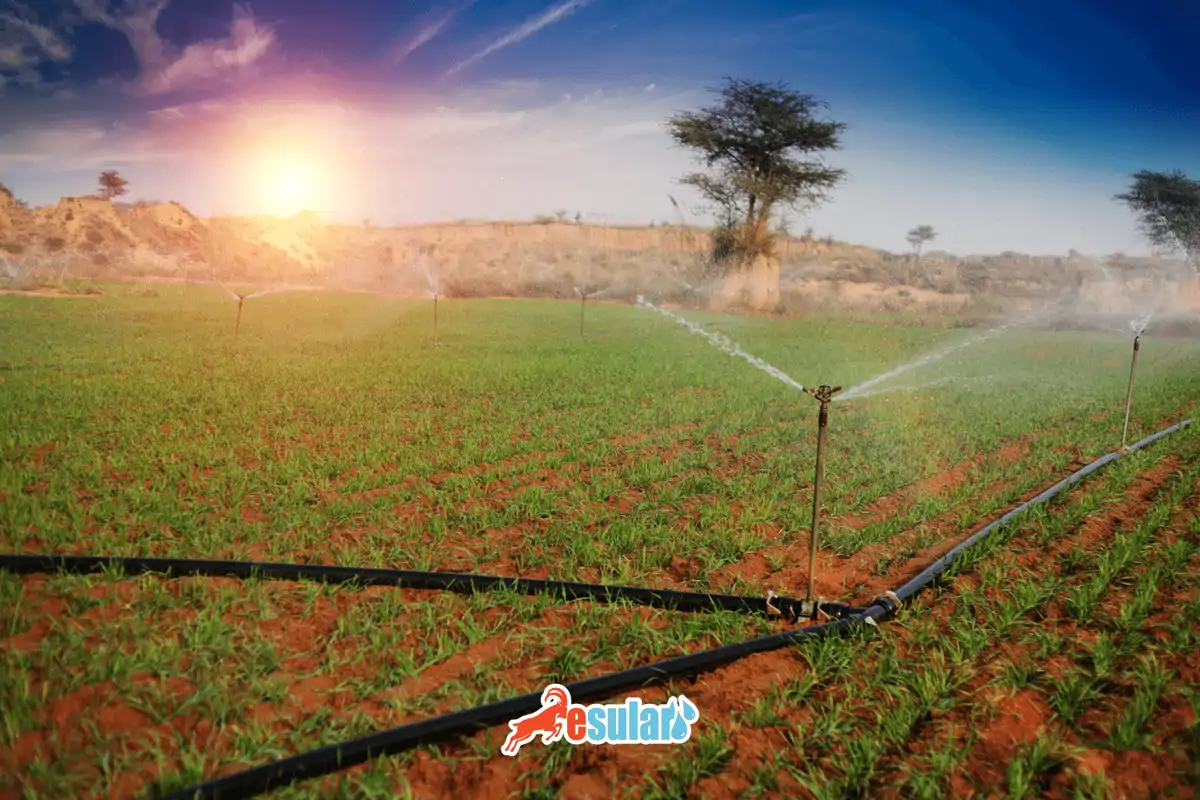
In our country, wheat cultivation is mostly done without irrigation. The water requirement of the wheat plant requires irrigation twice, especially during the stem elongation, beginning of heading, and milk stage phases. However, in regions where water is costly and limited, if there is an opportunity to irrigate once, this irrigation should be carried out at the beginning of heading. In case there is not enough moisture in the soil during the sowing season and the season is dry, irrigation should be applied at the sowing stage. Irrigations should be organized to wet the soil at a depth of at least 90 cm. Nevertheless, an increase of up to 50% in yield is observed with correct irrigation systems in wheat cultivation. The amount of water to be given in each irrigation is as important as the irrigation of the wheat itself. Because if a sufficient amount of water is not given in each irrigation, the expected yield increase from irrigation cannot be achieved. For this reason, smart irrigation is very important in wheat cultivation. Do not forget to check our content below for more detailed information about smart irrigation in wheat cultivation.
Diseases and Pests
Diseases :
The most common wheat diseases in wheat cultivation:
- Rust diseases (yellow rust, brown rust, black rust)
- Root and foot rot
- Septoria
- Fusarium
- Bunt
- Smut
For detailed information about wheat diseases, you can look at our content below.
Pests :
The most common wheat pests in wheat cultivation:
- Cereal ground beetle (zabrus)
- Sunn pest
Harvest and Storage
The wheat harvest time in our country covers a 3.5-month period varying between May and mid-August, and this period may show regional differences. Tools such as combine harvesters, scythes, and sickles can be used for harvesting wheat. When determining the harvest time, grain shattering status, moisture content in the product, and the working capacity of the machines should be taken into consideration. In harvest done with a combine harvester, the grain moisture content should generally be between 13-15%. Harvest is carried out during the period when the plants turn completely yellow and the grains harden. Wheat seed should be passed through a selector to be purified from weed cereals, stones, and soil. Places to be used for storage purposes should be away from moisture, dry, airy, and bright. An area of 1.5 square meters should be reserved for each ton of product. The ideal temperature for the warehouse is +4 °C. For long-term storage, the warehouse must be treated with pesticides against pests.