Tüm Yazılar
How to Cultivate Canola
For farmers looking for an answer to the question of how canola cultivation is done, appropriate agricultural techniques and a carefully planned production process are important. Canola, considered a source of vegetable oil, was introduced to Turkey through immigrants from Bulgaria and Romania during World War II. Subsequently, it began to be cultivated in the Thrace region. Canola, also known in Turkey by names such as rapiska, rapitsa, and rapeseed (kolza), is an oilseed plant with two different physiological periods: winter and summer. Canola seeds contain 38-50% oil and 16-24% protein, and have a rich oleic and linoleic acid content. In addition, the high boiling point of canola oil (238 °C) makes it an important oilseed plant. Worldwide, after palm and soybean oils, canola oil ranks third in the ranking of vegetable oil consumption. The remaining meal from oil extracted from canola seeds is used as a valuable animal feed because its meal contains between 38-40% protein. The high oil content of canola has made it particularly preferred for biodiesel production. This feature ensures its widespread use worldwide and in Turkey. The Ministry of Agriculture and Forestry has launched a support program that includes a premium paid per kilogram to support canola producers (500 TL/ton in 2019). Since it is sown in the autumn, the irrigation requirement of canola is 30-50% less compared to other spring plants.
Are Rapeseed and Canola the same thing?
Canola was brought to our country in the 1960s by immigrants from the Balkans and began to be sown in Thrace under the name rapeseed (kolza). Canola, known as rapeseed in Turkey, is one of the oilseed plants that has gained importance. Significant changes are seen in sowing areas and production amounts from year to year.
Climate and Soil Requirements for Canola Cultivation
The canola plant is an agricultural product that is mostly preferred as a winter crop in our country. It is resistant to winter conditions down to -25 degrees. However, it is important for it to have a strong root system and for the root thickness to be 0.8-1 cm. For this reason, emergence should be ensured by sowing in moist soil at the beginning of October. Otherwise, entering the winter before root development is completed may cause it to be negatively affected by cold weather conditions and the plant may perish. Summer canola is mostly grown in temperate climate regions such as the Aegean and Mediterranean. The canola plant, which has a taproot structure, is quite tolerant to drought. During the growth process, around 400 mm of water to be provided to the soil through precipitation or irrigation is sufficient to obtain the best yield. Canola can grow in almost any type of soil except sandy and light soils. However, it can be adversely affected in agricultural areas that hold water and are prone to ponding. The soils where it develops best are generally humus-rich, deep-structured, neutral or slightly alkaline to slightly acidic (pH: 6.5-7.5).
Soil Preparation for Canola Cultivation
Since the canola seed has low power to emerge to the soil surface after germination, the seedbed must be prepared with care. The seedbed should be arranged similarly to the seedbed prepared for sugar beet sowing. If canola sowing is to be done after grain harvest, the stubble is buried under the soil using a plow in shade moisture or after rains. Irrigation is performed at the time of sowing, and its own seeds are germinated. The soil is leveled and a fine seedbed is created using a goblet disk and harrow. If necessary, a roller should be used to level and compact the soil surface before and after sowing.
Sowing Time for Canola Cultivation
To ensure good germination, the soil temperature must be at least 10-12 degrees. Canola sowing should be done between September 15th and October 15th in the Thrace, Marmara, Aegean, and Southeastern Anatolia regions. While the most suitable sowing time in the coastal belt of the Black Sea region is September 15th-October 20th, the dates of September 20th-October 10th constitute the ideal sowing time for canola in the inner parts. In this way, canola plants that emerge healthily enter the winter in the 4-6 leaf stage and do not suffer from cold damage by developing a strong root system. If canola sowing is extended until November, young seedlings may be adversely affected. For this reason, canola sowing should be carried out on time. In case there is not enough moisture in the soil, the sprinkler irrigation method should be used to support canola germination. The sowing process should be carried out using precision grain seed drills or small seed drills, even pneumatic (air) drills. Row spacing should be set at 14-30 cm and intra-row distance at 5 cm. Sowing depth should be 0.5-1 cm below the soil surface. To obtain appropriate plant density, 200 grams of seed per decare should be sown with pneumatic drills. If a pneumatic drill is not available, 400-600 grams of seed per decare should be sown with other precision drills. A roller should be used to compact the soil after sowing. In addition, the seeds used for sowing should be renewed every year.
Fertilization in Canola Cultivation
Canola, which has modest needs in terms of fertilization, consumes 15-20 kg of nitrogen, 8 kg of phosphorus, and 6-7 kg of potassium per decare. Since canola requires more sulfur during its growth period compared to other plants, it will be beneficial to use sulfated or sulfurous nitrogen in top-dressing. Soils should be analyzed, and the recommended fertilizer type and amount should be determined based on the analysis results. Phosphorus and potassium should be given before or during sowing. 1/4 of the nitrogenous fertilizer should be applied with phosphorus and potassium, and the remaining large portion should be applied by broadcasting in the spring to support rapid growth.
Irrigation in Canola Cultivation
Since canola seeds are extremely small, if the seeds cannot germinate due to surface sowing or if a crust layer has formed on the surface, irrigation must be performed to ensure timely emergence. Since the canola plant completes its development in the spring months, irrigation should be applied during periods when precipitation is insufficient.
Does the canola plant need water?
The canola plant is equipped with a taproot structure and has a high tolerance to drought. Canola generally has an irrigation requirement that varies depending on the soil characteristics, climatic conditions, and growth stages in which it is grown. During the growth period, around 400 mm of water to be provided through precipitation or irrigation is sufficient to obtain the highest level of yield. Mostly, the canola plant may need an average of 25-30 mm (25-30 liters per square meter) of water per week.
Crop Rotation in Canola Cultivation
To obtain high yields, appropriate rotation systems must absolutely be applied in canola cultivation. Some rotation models in which Canola is included are as follows:
Model 1: Sunflower → Canola → Wheat → Corn
Model 2: Wheat → Canola → Legume → Sunflower
Model 3: Wheat → Canola → Sugar beet → Melon-Watermelon
Model 4: Sunflower → Canola → Wheat
Weed Control in Canola Cultivation
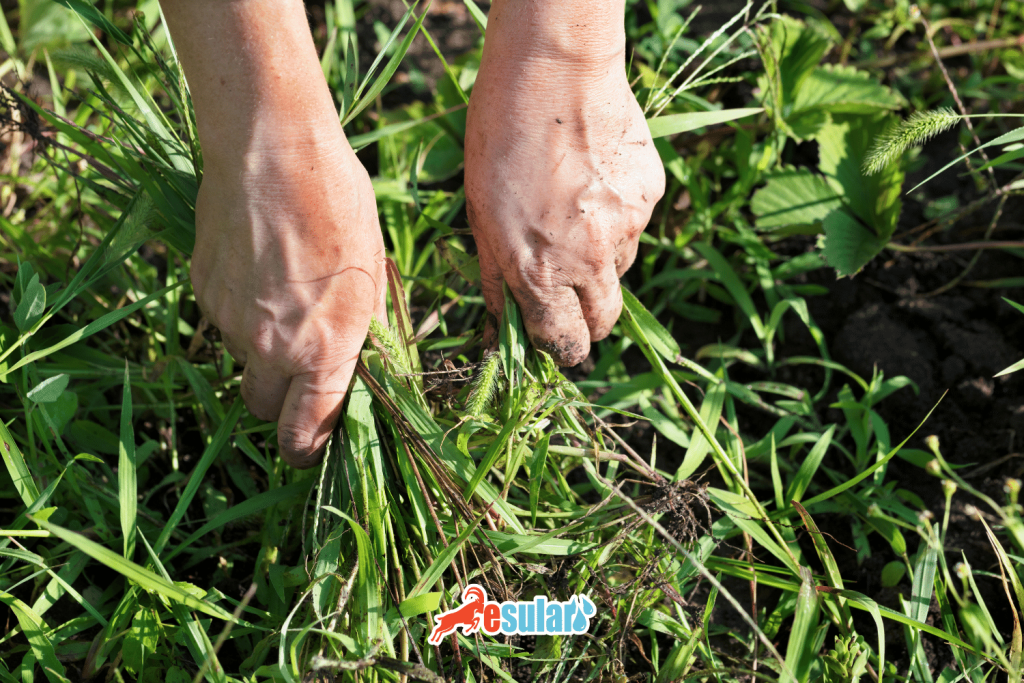
In canola cultivation, weed control is of great importance in the first growth stage of canola. Weed control can contribute to obtaining 20-30% more yield. Weeds with rapid growth characteristics, especially in the first growth stage, can cover the field area and prevent the growth of the canola plant. Additionally, they can cause significant damage by sharing plant nutrients. When the canola plant reaches a size of 30-40 cm, it develops rapidly. Then, by creating shade, it largely prevents the growth of other weeds. In sowings carried out at normal sowing times, canola usually does not contain weeds because it grows rapidly. If there is a weed such as mustard in the field, canola sowing is not done. Because these two plants belong to the same family and their control is difficult. Also, it can negatively affect quality by mixing into the canola product in the subsequent harvest period. Furthermore, canola plants are quite sensitive to soil water level and water holding capacity during the growth period until April. For this reason, in case of water accumulation in the field during rainy periods, drainage should be provided immediately.
Harvest and Storage in Canola Cultivation
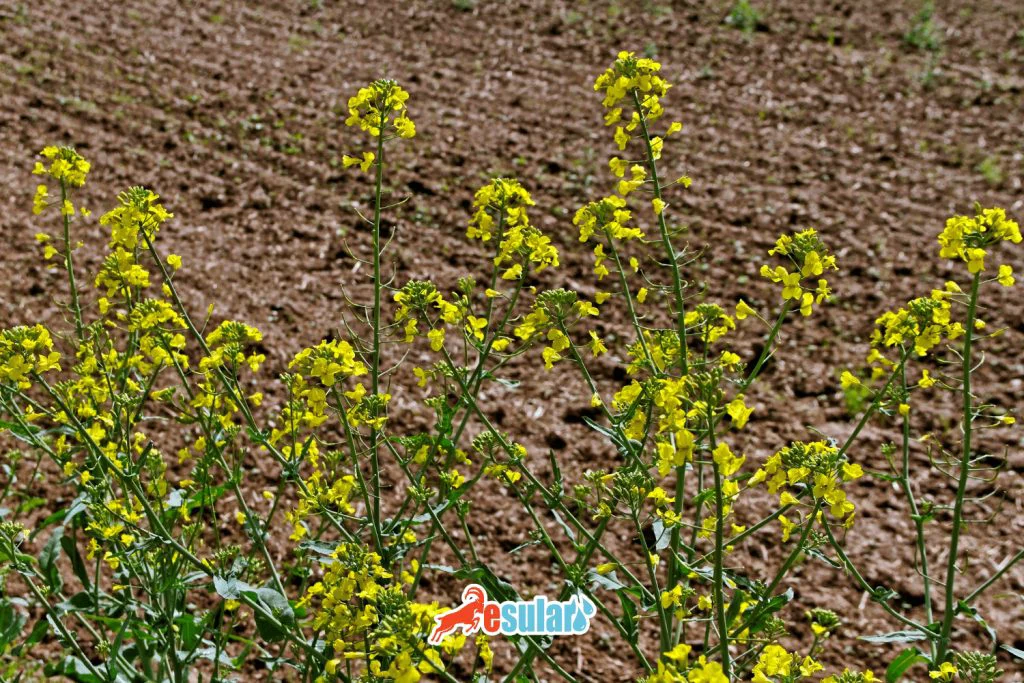
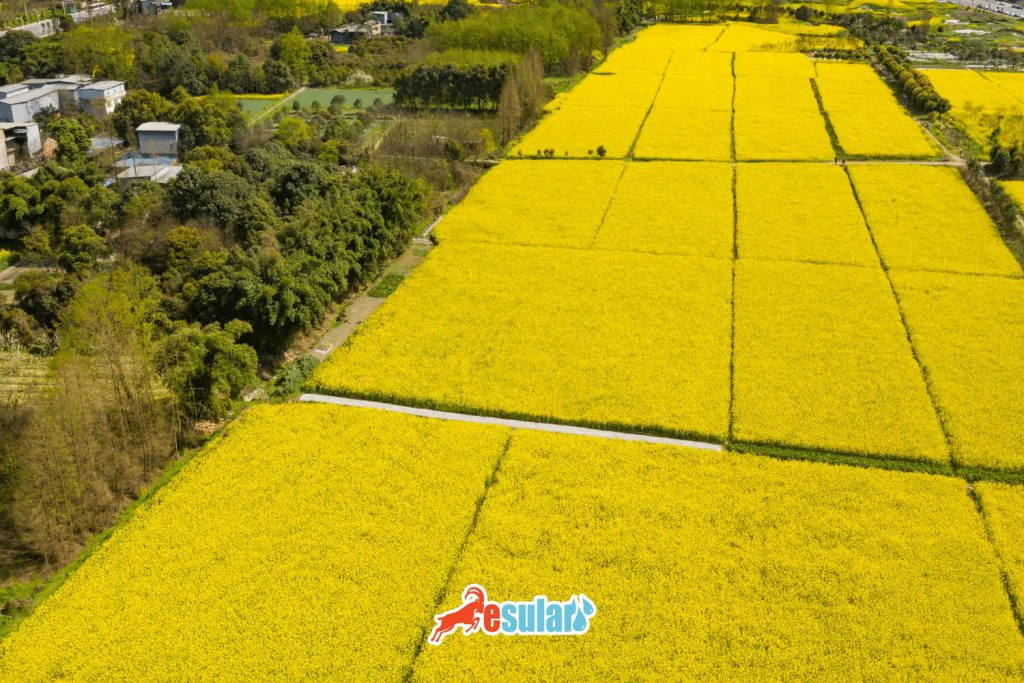
After the flowering process, the canola plant usually reaches harvest maturity within 40 to 50 days, depending on the air temperature, precipitation status, and the maturation speed of the variety used. Canola harvest can be carried out from June 10th in the Thrace region and starting from May 10th in the Mediterranean region. When harvest maturity is reached, the stems, leaves, and capsules of the plants dry and turn yellow completely, taking on a reddish-yellow color. When the seeds turn brown, it means the canola plant is suitable for harvest. The maturation process in the canola plant occurs from bottom to top. If full maturation of the plants is awaited during harvest, cracking and shedding may be seen in the lower capsules. However, in early harvest, yield loss may be experienced due to the incomplete maturation of the upper capsules. Since canola seeds are quite small, it is important to carefully adjust the combine harvester before starting the harvest. The yield obtained for each decare varies between 400-600 kg depending on the yield potential of the sown variety, soil quality, and climatic conditions. For safe storage, the moisture content of the seeds should not exceed 9%. It should be stored in dry storage areas. Otherwise, you may face the risk of rapid heating and molding.
How much canola is produced from 1 decare of field?
Canola yield can vary depending on a number of factors. For this reason, the amount obtained per decare can vary significantly. Canola yield varies depending on the yield potential of the variety sown, soil quality, and climatic conditions. Nevertheless, in our country, canola yield per decare usually varies between an average of 400-600 kg. In European countries, the seed yield obtained from the canola plant sown per decare usually goes up to 300kg. On average, 180-200 kg/da of seeds are obtained. The amount of stem and husk obtained from the decare is usually around 450 kg. Husk yield is 1/3 of the stem yield. When sowing time, plant density, fertilization, and maintenance operations are done well, the yield can go up to 500 kg/da with suitable precipitation. For example, a yield of 186 kg/da was obtained in a sowing made with the Eurol variety.
Diseases and Pests in Canola Cultivation
The main pests of canola include flea beetles, field snail, canola stem weevil, cabbage butterfly, and aphid. Especially in the Thrace region, the cabbage butterfly, and in the Black Sea Region, aphid damage is more prominent. These pests cause whitening by sucking sap from leaves and flower stems and can cause serious yield losses. Pesticide measures should be taken to control these pests. Important diseases of the canola plant include downy mildew, clubroot, and gray mold. Diseases are usually not common in the Thrace region.
Where is Canola Grown Most in Turkey?
Canola farming is carried out quite widely in our country. The province with the largest sowing area is the province of Adana with an area of 17,800 hectares. The average yield per decare in Adana province is approximately 236 kg. In 2006, total canola production in Adana province was realized as 4,197 tons. Adana is followed by the province of Tekirdağ with a sowing area of 7,581 da. Tekirdağ is followed by the province of Balıkesir with a sowing area of 5,500 da. Significant increases and decreases are observed in canola sowing areas from year to year.
Worldwide canola production is at a level of approximately 25 million tons. Among the largest producers, China (5 million tons), India (4.4 million tons), and Canada (3 million tons) stand out. In Europe, Poland (500 thousand hectares), France (500 thousand hectares), Germany (400 thousand hectares), and England (250 thousand hectares) are the countries with the largest sowing areas.
Is canola cultivation profitable?
Canola cultivation is generally accepted as a high-yield and profitable activity. However, costs such as equipment, fertilizers, and pesticides necessary to grow this plant should also be taken into account. The fact that the canola plant is suitable for crop rotation is one of the factors that makes it attractive. In each decare, 450 kg of stem and husk can be obtained.
Is canola sowing and canola oil banned in Turkey?
This plant was brought to Turkey in the 1960s by immigrants from the Balkans and began to be sown in Thrace under the name rapeseed (kolza). However, its sowing was banned in 1979 because the oil of the plant contained erucic acid, which is harmful to human health. As a result of subsequent studies, types that do not contain erucic acid were developed. Since these types were first bred in Canada, the plant was named "canola". In our country, canola cultivation is carried out as winter and summer crops.
Kategoriler
Etiketler