How to Grow Celery
Celery (Apium graveolens dulce) is a plant belonging to the parsley (Apiaceae) family, an edible biennial plant that grows naturally in western and northern European coastal regions, especially in marshy areas. It can reach a height of up to one meter. Its flowers are 2-3 mm in diameter, white and cream-toned, and it is a plant known by the ancient Greek civilization. The first traces of the use of celery as food were found in remains on the island of Samos. In Homer’s Iliad, it is stated that horses grazed on wild celery growing in the marshes near Troy, and in the Odyssey, it is described that wild celery grew near Calypso’s cave. Celery is widely consumed with olive oil, as stuffed, as a boiled vegetable, in salads or soups. It has an important place especially in the southern European culinary tradition, French cuisine, and the Louisiana region of the USA. Celery seeds are used as a delicious spice, and for spice purposes, celery seed is mixed with table salt and offered for sale under the name “celery salt,” thus creating an alternative to normal salt in dishes and cocktails. The Bloody Mary cocktail and hot dog sandwiches are two well-known products identified with celery salt. Chinese celery or Oriental celery has thinner stalks and a sharp taste. In Chinese cuisine, it is generally used in stir-fries and soups. Celery has nutritious, mildly stimulating, and strengthening properties. It can be consumed as food, or celery juice can be obtained. It is also available in powder or capsule form. In the medicinal use of celery, its diuretic property primarily comes to the fore.
Botanical Characteristics of Celery
Celery, a winter vegetable, is a plant utilized for its root and leaf stalks. Celery is a biennial plant for seed production, and an annual plant if grown as a vegetable. The cultivation area and production amount of celery vary from year to year. In our country, approximately 18,000–20,000 tons of celery are produced in an area of generally 1200–1500 hectares. Celery can be grown in many regions worldwide. America, Europe, Australia, and India are considered the homelands of celery. Wild celery species are found in various parts of Europe, especially on the Mediterranean coasts, in river valleys, and in wetlands.
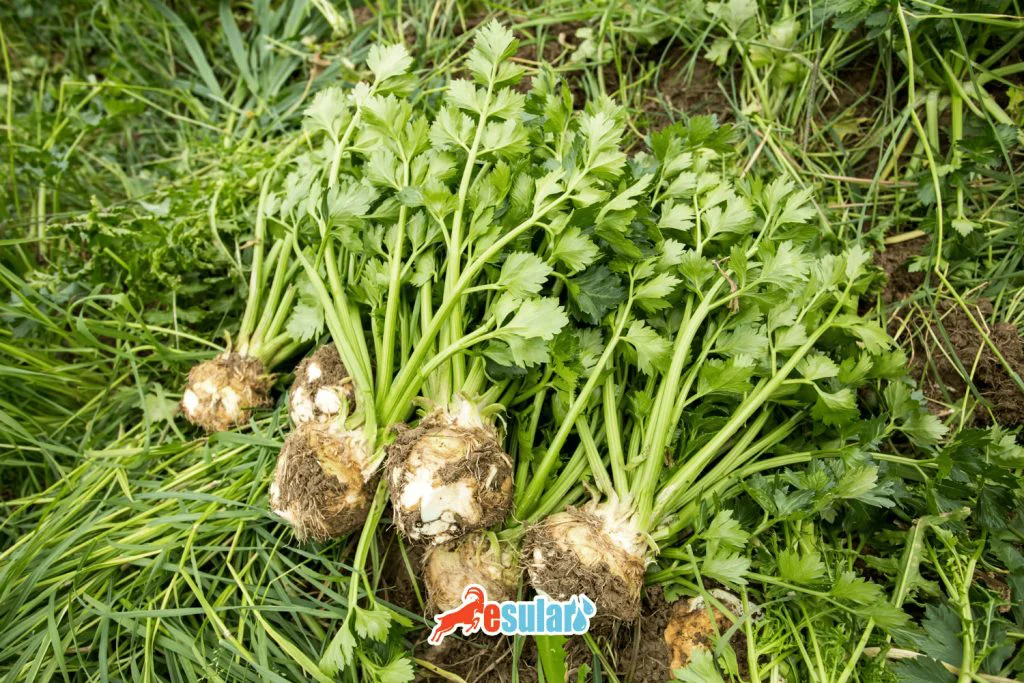
The roots of celery form from the lower part of the tuber. In root celeries, the roots are thick and fleshy, while in stalk celeries, they are thin and net-like. Roots can go down to a depth of 1–1.5 m depending on soil structure and water level, but the majority are usually at a depth of 20–30 cm. The tuber develops in root celeries, but no distinct tuber forms in stalk celeries. The tuber can be in various forms such as round, inverted top, or cylindrical. The shape of the tuber changes with variety characteristics and the distance between plants. It is observed that as the distance between plants decreases, the tubers become smaller. Tuber weight varies depending on climate conditions, soil structure, water level, length of the growth period, and variety characteristics. Tuber weights can range from 100 g up to 1000 g, averaging between 150–400 grams. If the harvest is delayed, pithiness or hollowing may occur inside the tubers, in which case the market value of the tubers decreases. Flowering begins after the chilling requirement in celeries is met. The stem is 80–100 cm tall and produces many branches. The inside of the stem is hollow but durable. The leaves form leaf stalks ranging from 15 cm to 60 cm, depending on the variety. In stalk celeries, the leaf stalk is thicker and fleshier. Shoots emerging from leaf axils on the stem end with an umbrella-shaped flower head. The umbrella-shaped flower head can be flat, concave, or convex. There are many flowers on the flower head; the color of the flowers starts from green and turns to off-white and yellow over time.
Climate and Soil Requirements for Celery Cultivation
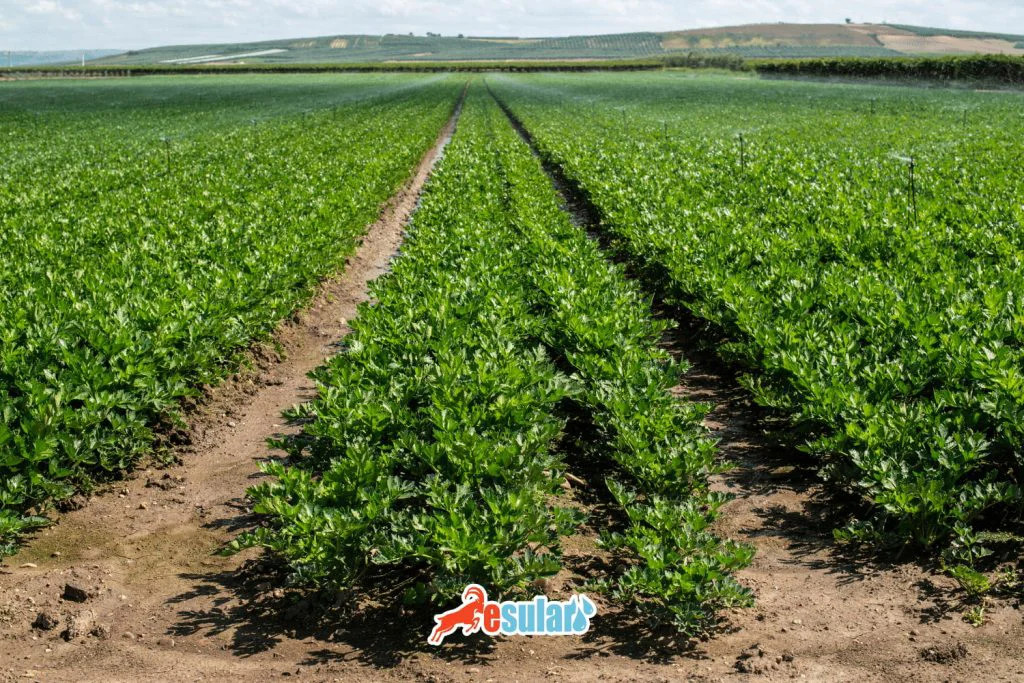
Celery develops healthily in regions with mild winters and summers that are not excessively hot and dry. The optimal temperature range during the growing period is 15–20 °C, and it is not resistant to low or high temperatures. Temperatures above 30 °C negatively affect the development of the plant. A temperature of at least 4 °C is required for the seeds to germinate in the soil. The plant can withstand low temperatures down to -1 °C, but late frosts in spring can have negative effects. At temperatures of -2 °C, root celery tubers under the soil may be damaged. Plants are subjected to vernalization at low temperatures below 10 °C, and this situation leads to early flowering. During the vernalization process, the age of the plants increases the flowering rate. The most critical factor in the transition of celery from the vegetative stage to the generative stage is low temperatures.
Celery is not a selective plant regarding soil requirements, but it generally prefers deep, loamy, and sandy soils and develops healthily in such soils. If cultivation is being done in light-structured soils, care should be taken for regular fertilization and nutrition of the plant. In clayey soils, tubers usually remain small. The soil pH level should be approximately 7.0. As the humus content of the soil increases, the size and quality of the tuber also increase. For root celery, light clayey soils with a soil pH ratio between 6.5–7.0 can be preferred, as well as heavy sandy and clayey soils. You can access detailed information about soil pH from our content at https://esular.com/toprak-phsi . The soil should contain a sufficient amount of organic matter. The use of very heavy soil can cause problems in harvesting the product during rainy days in the autumn months.
Soil Preparation and Seedling Planting in Celery Cultivation
The soil used for celery production must be meticulously prepared before sowing or planting. For this reason, the soil should be processed by plowing deeply several times. Before sowing or planting, the soil should be plowed deeply again, and fertilizer containing nitrogen, phosphorus, and potassium in a ratio of 4:4:8 (12kg N, 12kg P, 24kg K) should be given per decare. Celery can be grown directly by sowing seeds, or it is generally grown with seedlings in our country, as in many countries. In regions where the vegetation period is long and autumn is mild, successful results can be obtained with direct seed sowing. However, growing with seedlings is generally preferred over seed sowing. Celery seedlings are grown either without any transplanting in hot beds or by being sown in boxes and then transplanted to hot beds after they emerge above the soil. Then, celery seeds are mixed with soil prepared by fine sieving and sprinkled several times so that there are 2 grams per square meter. After sowing, a cover with a thickness of 2–3 mm is added over the seeds. After adding the cover, water is given using a very fine sieve so as not to wash away the seeds and cover. The box is covered until the first germination is seen. During this process, the temperature must be at least 10 °C. The best germination usually occurs at temperatures of 25–30 °C.
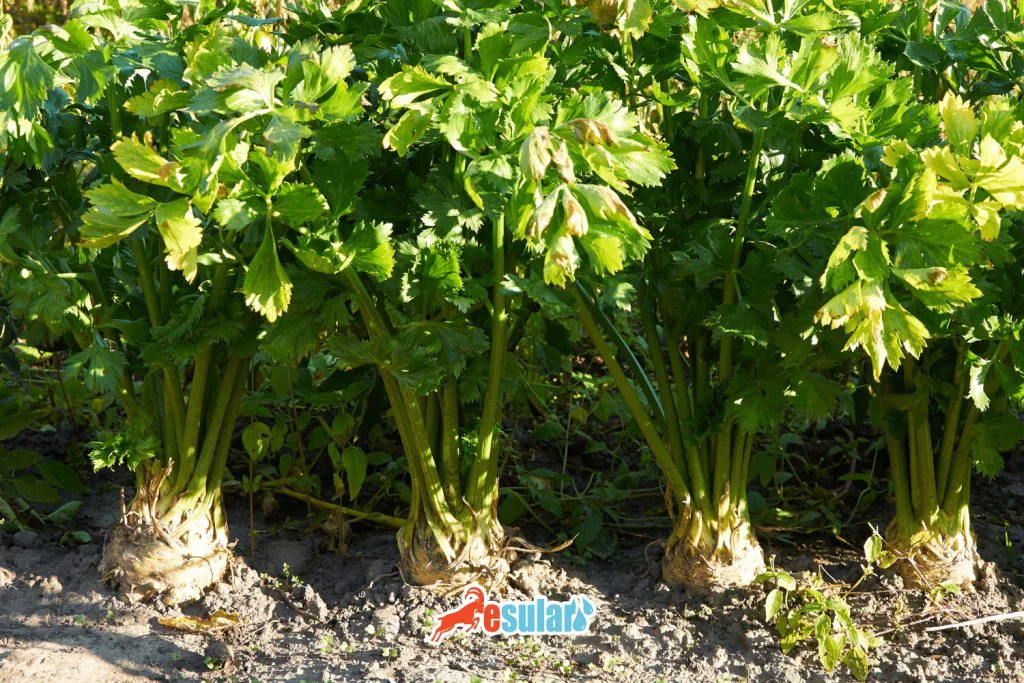
Two weeks after seed sowing, the germination process begins and is completed at the end of the 4th week. In regions where celery production receives regular rainfall or irrigation is carried out by the sprinkler method, the planting of seedlings is done regularly. In planting, the distance between rows should be 50–60 cm, and the distance on the row should be 30–40 cm. However, while planting distances can be lower in varieties that grow vertically, these distances can be wider in varieties that develop horizontally. Sprinkler irrigation is applied immediately after planting, and 4000–6000 seedlings are planted per decare. The production method of stalk celeries is essentially no different from the production of root celeries. The only difference is in the planting density and the processes performed for blanching the leaf stalks. Since stalk celeries grow vertically, they are planted with 40–50 cm between rows and 25–30 cm on the row. Additionally, leaf stalks are wrapped with covers such as black, light-proof aluminum foil, black photographic paper, etc., in the 25–30 cm height range to prevent them from receiving light. Depending on the variety characteristics and maintenance conditions, 2500–3000 kg of root celery can be harvested per decare. As stalk celery, 6–8 thousand bunches of stalk celery can be obtained per decare.
Celery seed
The seeds formed by the celery plant are actually a type of fruit, and these seeds are quite small. It is known as one of the smallest seeded vegetables and contains a unique scent. This scent originates from the oils contained in the seed. The weight of every thousand seeds varies between 0.35–0.50 gram and the number of seeds in one gram is generally between 2000–3000. Ideally, it is aimed that at least 75% of the seeds have the power to germinate. Seeds maintain their germination property for 4–6 years. Seeds stored under controlled conditions generally maintain their germination ability for 15 years. The optimal temperature range for seeds to germinate is 20–30 °C, and at this temperature, the germination process is usually completed within 14–15 days.
In which month is celery planted?
Varieties rich in leaf development are suitable for planting in March, while varieties with weaker leaves can be planted in mid-April. The most suitable planting time for varieties with leaf richness is generally late May. However, planting can be done from the beginning of May (as of May 10). The best planting time for varieties with short leaves and suitable for light soil is June. For these varieties, the latest planting date should include the end of June.
How is celery sowing done?
The soil used for celery production must be meticulously prepared before sowing or planting. For this reason, the soil should be processed by plowing deeply several times. Fertilizer should be given. Seed Selection: Quality and fresh celery seeds should be selected. Seeds should be properly preserved before sowing. The ideal time for sowing is the spring months. Sowing Distances: In root celeries, the distance between rows should be 50–60 cm, and the distance on the row should be 30–40 cm. Since stalk celeries grow vertically, they are planted with 40–50 cm between rows and 25–30 cm on the row. Sprinkler irrigation is applied immediately after planting. Two weeks after seed sowing, the germination process begins and is completed at the end of the 4th week.
Fertilization in Celery Cultivation
Celery requires a high proportion of organic matter. A sufficient amount of organic matter in the soil increases product quantity and quality. If farming is done in light-structured soils, organic fertilization is of great importance. To get a good yield in such soils, 3–4 tons of well-rotted farmyard manure should be applied per decare. However, farmyard manure is not sufficient for the growth and development of the plant. Since celery is a plant hungry especially for nitrogen and potassium, fertilizer should be given at a ratio of 4:4:8 (12 kg N, 12 kg P, 24 kg K) per decare during the soil preparation stage before planting. Later, depending on the development of the plant, 1–2 months after planting, fertilizer supplementation is made by adding around 4 kg of pure nitrogen per decare. A fertilization program should also be applied in root celery cultivation. Depending on the structure of the soil, giving 15–16 kg N/decare in sandy and humus soils may be appropriate. In heavy soils, this ratio should increase to 24 kg N/decare.
Irrigation in Celery Cultivation
Celery is a water-loving plant. Its growth is delayed in regions where water is limited, and this situation can cause a decrease in the product amount. Tubers do not reach the desired size. The water capacity in the soil should not exceed 80%, otherwise, excess water may cause rot in the roots. The soil groundwater level should not be higher than 60 cm. After planting, the water requirement of the plant must be met regularly. Cutting off or giving insufficient water can negatively affect the growth of the plant and the quality of the parts used as vegetables. Additionally, rust disease may be seen in celeries grown in excessively irrigated or rainy regions. Rust disease, in addition to reducing the market value of the product, negatively affects root development.
Harvest and Storage in Celery Cultivation
A harvested celery must comply with the following criteria:
- Integrity: Celery must be whole. (The upper part of the stalk celery may have been removed.)
- Soundness: Root celery must not be rotten, deteriorated, and must be in a condition suitable for consumption.
- Cleanliness: Celery must not contain visible foreign matter and must be clean.
- Freshness: Celery must have a fresh appearance.
- Harmlessness: It must not contain insects and insect damage.
- Frost Damage: There should be no frost damage.
- Texture: Celery must have a hard and firm structure.
- Absence of Shoots: It must not have given side and flower shoots.
- No Fibrousness: Celery must not be fibrous.
- Smell and Taste: There should be no foreign smell and/or taste in the celery.
- Wetness: There should be no abnormal wetness on the outer surface.
- Specifically for Stalk Celery: In stalk celeries, the main root must be thoroughly cleaned and its length should not exceed 5 cm.
Root celery can be stored using ventilation systems or mechanical cooling systems for storage. Optimal storage temperature is between 0-1°C, and under these conditions, root celery can be stored for about 5 months. To prevent problems such as softening of the product during storage, an effective ventilation system must be present. Root celery should not be washed before storage, as this is important for healthy storage. The fact that the product does not suffer any damage in the field is another factor that should be considered for successful storage. Large-scale harvests can be carried out using a beet harvester. Additionally, celeries can also be harvested by hand.
How many days is celery harvested?
Celery plants occupy their places for a minimum of 16–24 weeks and a maximum of 24–34 weeks. Depending on the place where they are sown, early or late varieties determine the time from planting to harvest.
Where does celery grow in Turkey?
Celery can be grown in many regions worldwide. America, Europe, Australia, and India are considered the homelands of celery. The celery plant, originating from the Mediterranean and the Middle East, grows naturally in the Mediterranean basin, Europe, and the Caucasus regions. In Turkey, it is mostly grown in the Mediterranean Region.