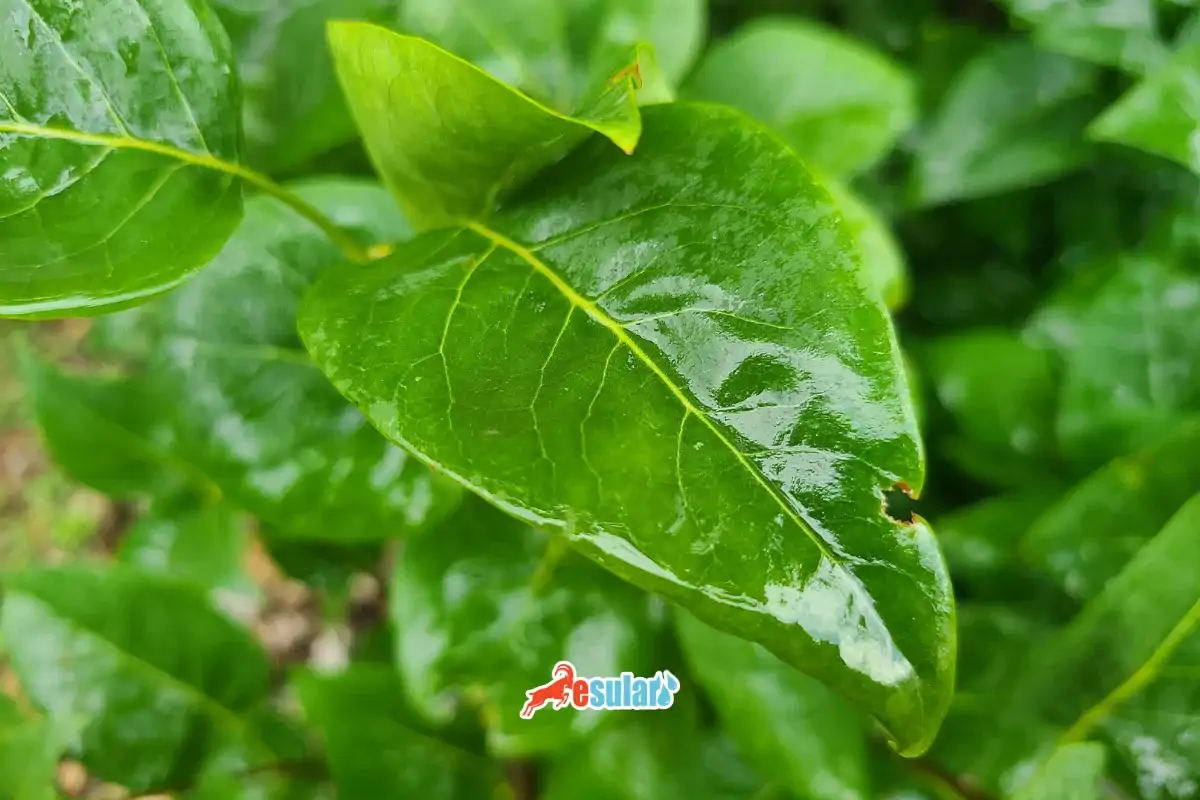
How to Grow Peas?
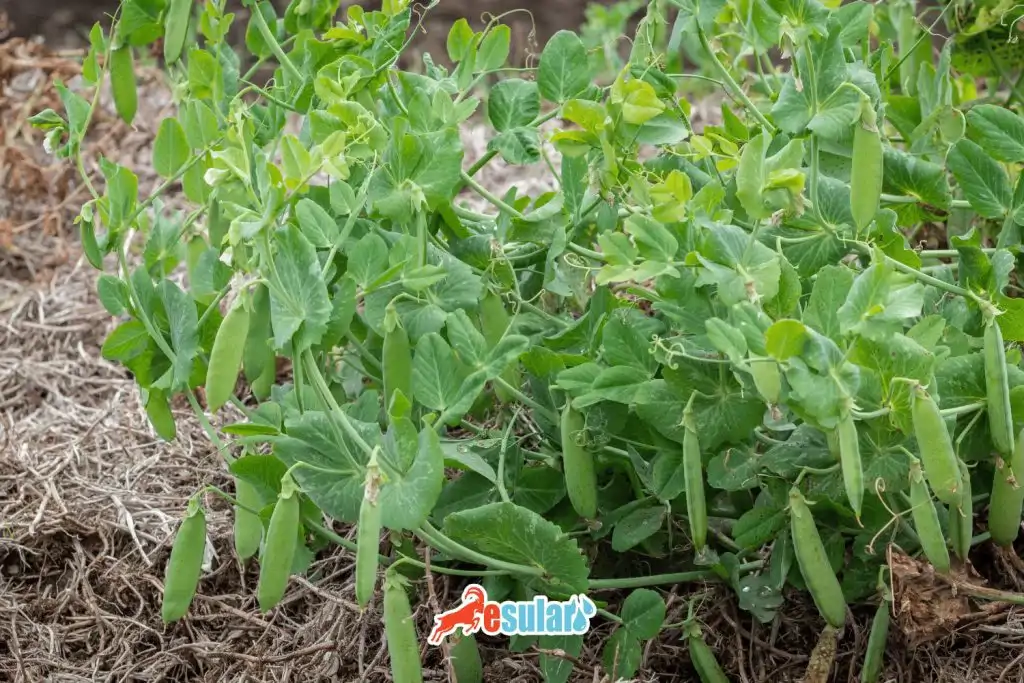
Pea cultivation holds an important place in the field of agriculture and is carried out on a commercial scale in many countries. Standing out among legume vegetables, peas have an important place in human nutrition. It is nutritious with its high protein and carbohydrate content and is rich in vitamins A, B, and D. There are different varieties of peas, among which the most well-known are dwarf and pole pea types. While the dwarf pea spreads by covering the soil with its green leaves, the pole pea seeks support by climbing. Some pea varieties are consumed only for their grains, while others can be eaten with their pods. Additionally, it can be consumed both fresh and dried or canned, making it an accessible vegetable throughout the year.
Where Do Peas Grow?
Peas are grown most in countries such as Russia, Canada, and China worldwide. Turkey ranks sixth in the world in pea production. In Turkey, pea production is mostly carried out in provinces such as Izmir, Adana, Hatay, Balikesir, and Bursa. Especially the Aegean, Marmara, and Mediterranean Regions are among the regions where pea production is intense. The climate conditions of these regions provide suitable conditions for peas to grow efficiently. Especially these regions, where a cool and humid climate prevails, ensure that peas grow in a high-quality and productive manner.
How Should the Climate and Soil Structure Be in Pea Cultivation?
Peas are one of the cool-climate vegetables and show their best development in cool and humid weather conditions. When growing peas, it is preferred that the temperature be above the freezing point. During the germination period, it is important for the soil moisture to be balanced, as high soil moisture can cause the seeds to rot. Seed sowing is carried out when the soil temperature is approximately 7-8 °C. A humid and cool environment is important for the development of peas. However, excessive moisture in the soil can lead to fungal diseases. An average daily temperature between 15-21 °C is ideal. Regular and slow rains increase the quality of pea grains. Peas are selective in soil choice. They do not prefer heavy soils and develop better in alluvial soils that hold water well. It should not be forgotten that excessive moisture during the germination period can prevent seed germination. Although sandy-loam soils are more suitable for earliness, well-drained clay-loam soils should be preferred to obtain high yields and quality products. A soil pH between 6,5-7 is also ideal.
Pea Planting
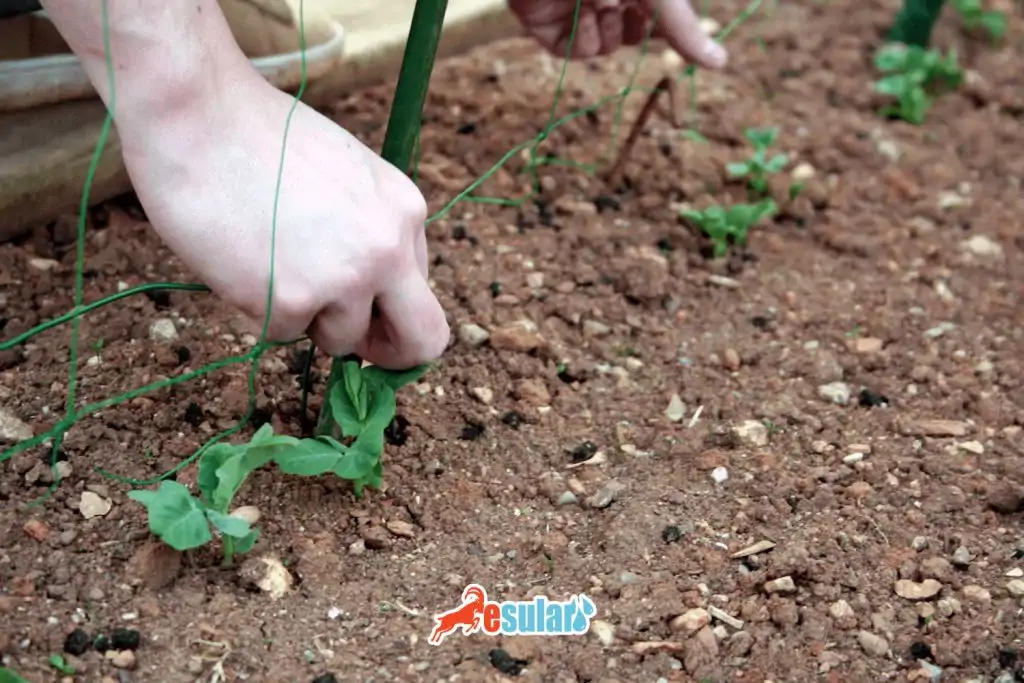
The time for seed sowing depends on the climate conditions of the region. From the beginning of February until March 15, early - semi-early varieties should be sown; from March until the beginning of April, semi-early and late varieties; and after April 15, heat-resistant varieties should be sown. Autumn varieties can also be sown during November-December. Flat sowing is more suitable for fields that receive regular rainfall during the growing period or have sprinkler irrigation possibilities. If the peas are pole types, they should be sown on ridges. Field varieties are generally sown with a seed drill. In flat sowings, seed sowing should be done with 30-40 cm between rows and 5-10 cm on the row. For pole varieties, it should be 50-80 cm between rows and 15-25 cm on the row. Pole varieties are sown in hills at the neck points of the ridges. Therefore, 4-5 seeds are dropped into each hill. An average of 10-12 kg of seeds are sown per decare.
Irrigation in Pea Cultivation
In pea cultivation carried out in the autumn, irrigation is almost never needed as the growth period of the plant usually coincides with a rainy period. However, in sowings made in the spring, irrigation should be done at regular intervals depending on weather and soil conditions to ensure good development. Irrigation is performed at least twice, once in the period before flowering and once in the period after fruit set. In rare cases where the weather is very dry, a third irrigation can be done. Irrigation is generally carried out by the furrow method or in the form of sprinkling. In this way, it is aimed to provide the water required by the plant in a balanced and effective manner.
Fertilization in Pea Cultivation
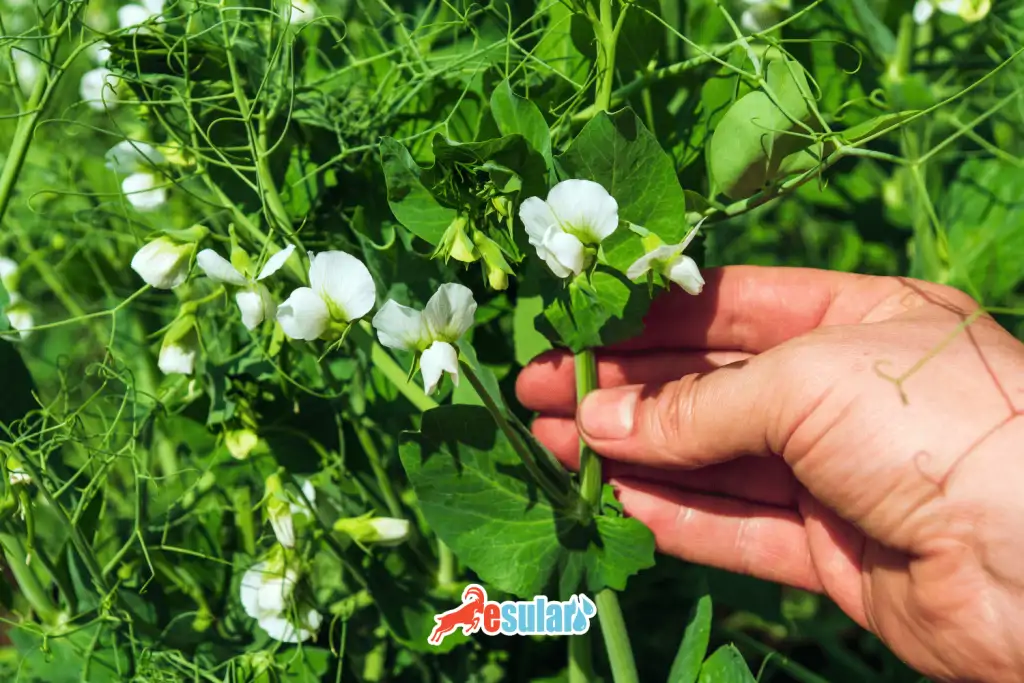
Fertilization in pea cultivation is important to provide the nutrients the plant needs and to increase soil fertility. In the fertilization process, organic and chemical fertilizers are generally used. Organic fertilizers improve the structure of the soil and facilitate the nutrient uptake of plants by increasing the activities of microorganisms. These include compost, farmyard manure, alfalfa, or vetch manure. Chemical fertilizers generally contain nitrogen, phosphorus, and potassium. The pea plant needs these nutrients, especially during the flowering and fruit formation periods. The timing of fertilization is determined based on soil analysis results and the growth stage of the plant. The correct dosage and application method of fertilizers should be adjusted according to the age of the plant and the growing conditions. Foliar fertilizer application can also be done when symptoms of nutrient deficiency are seen in the plant. With correct fertilization practices in pea cultivation, soil fertility increases, plant health is protected, and higher yields are obtained.

Harvesting in Pea Cultivation
For pea cultivation, the harvest period is when the pods and the stem dry and turn brown, the pods harden and break when hollowed out by hand. However, harvesting should begin before the pods burst. Ripened pods should be harvested within two to three days at the latest; especially in dry and hot weather, grains ripen quickly and can turn into a mealy structure if delayed. This reduces the canning quality. Peas for canning are generally harvested mechanically in large areas, while they are harvested by hand in small enterprises. Harvesting is carried out at regular intervals without damaging the plants.
How Long Do Peas Take to Mature?
Pea harvest usually starts 12-16 weeks after for those sown in the spring and 32 weeks after for those sown in the autumn. In harvesting done by hand in small enterprises, plants are mown while they are damp and it is generally done in the early morning hours or towards evening. Harvested plants are left to dry in the field or at the threshing floor. Peas that have reached harvest maturity and are brought to canning factories are grained and grouped in special machines.
Yield in Pea Cultivation
Pea cultivation is quite productive when done under suitable conditions. However, yield varies depending on whether the variety is a field or pole type, the number and size of grains in the pod, and ecological conditions. From one decare of area, 1500-2000 kg of fresh peas with pods and 500-800 kg of fresh shelled peas can be obtained. Performing the harvest gradually affects quality and yield positively.
Yorumlar