Sunflower Cultivation
Sunflower cultivation is a subject whose importance is increasing day by day in the world and in our country along with the increasing population. Vegetable oils play an important role in human nutrition. Sunflower is a plant that is important for vegetable crude oil production due to the high amount of oil (%22-50) it contains. Sunflower oil is one of the oils with the highest nutritional value and meets 12.6% of the world's vegetable crude oil production. In our country, between 220-280 thousand tons of sunflower oil is produced annually, which constitutes 46.7% of Turkey's vegetable crude oil production. In our country, sunflower cultivation can be carried out in many regions, including the Thrace, Aegean, and Black Sea regions. However, due to insufficient sunflower cultivation, our vegetable oil deficit is increasing every year and has exceeded 500 thousand tons. To close this gap, it is necessary to increase the yield potential of oilseed plants and give more importance to second crop farming. The 45-50% oil found in sunflower seeds is used in the liquid oil and margarine industry. High protein is found in the meal remaining after the sunflower oil is extracted, therefore it is widely used in mixed feed production. Additionally, while sunflower is consumed as a snack, it is also used as birdseed. Furthermore, Sunflower is used as a raw material in the production of oil paint, paper, plastic, soap, and cosmetic products. Sunflower cultivation is a good crop rotation plant because it leaves the hoed area clean and airy.
Sunflower Growing Conditions
Sunflower Climate Requirement
Sunflower is an annual plant grown in the continental climate belt and rainy regions of the temperate climate. It has a fairly wide adaptation area and its total heat requirement during the 120-130 day vegetation period is 2600-2850°C. For the seed to germinate, the soil temperature must be a minimum of +4°C, while the ideal soil temperature for germination is at least 10-12°C.
Is sunflower resistant to cold?
The sunflower plant is quite resistant to cold during the seedling stage; it can withstand up to -5°C during the cotyledon leaf stage. However, this resistance gradually decreases until the 6-8 leaf stage, and the plant may be damaged at 0°C in later development stages. The optimum night temperature for the growth and development of the plant is 18-20°C, and the daytime temperature is 24-26°C. High temperatures above 36-40°C can prevent the germination of pollen, which can increase the risk of cross-pollination.
Is sunflower resistant to drought?
Although sunflower is not highly resistant to drought conditions, it can grow successfully in dry conditions where other cultivated plants cannot grow. Since its root system can go as deep as 2 meters, it can use the water in the soil efficiently, so it is not affected by short-term droughts.
How much water does sunflower want? When does sunflower want water?
Sunflower needs a total of 500-600 mm of precipitation throughout its growing period; it is important that this precipitation is distributed within the growing period. The water requirement of the sunflower plant changes in different development stages. In the period from emergence to the beginning of head formation, it uses approximately 20% of the annual total water consumption. The period when it needs water the most is the 40-day process before and after flowering; in this period, it uses 60% of the annual total water consumption. Experiencing drought stress during the flowering period negatively affects yield. Sunflower does not like humid regions; high relative humidity can increase the effect of diseases causing head rot.
What is the Soil Requirement of Sunflower?
Sunflower cultivation is a plant that is not very selective in terms of soil requirements. It can grow successfully in soils of different structures ranging from sandy soils to clayey soils. Deep, organic matter-rich alluvial soils are particularly suitable for sunflower farming. However, it does not prefer stony, sandy, and shallow soils. The pH level of the soil should be between 6.0-7.2. In soils selected for sunflower farming, the ground water table should not be high and there should be no drainage problem. Sunflower's tolerance to salinity is limited; it can withstand a salt concentration of 2-4 mmhos/cm.
How is sunflower soil preparation done?
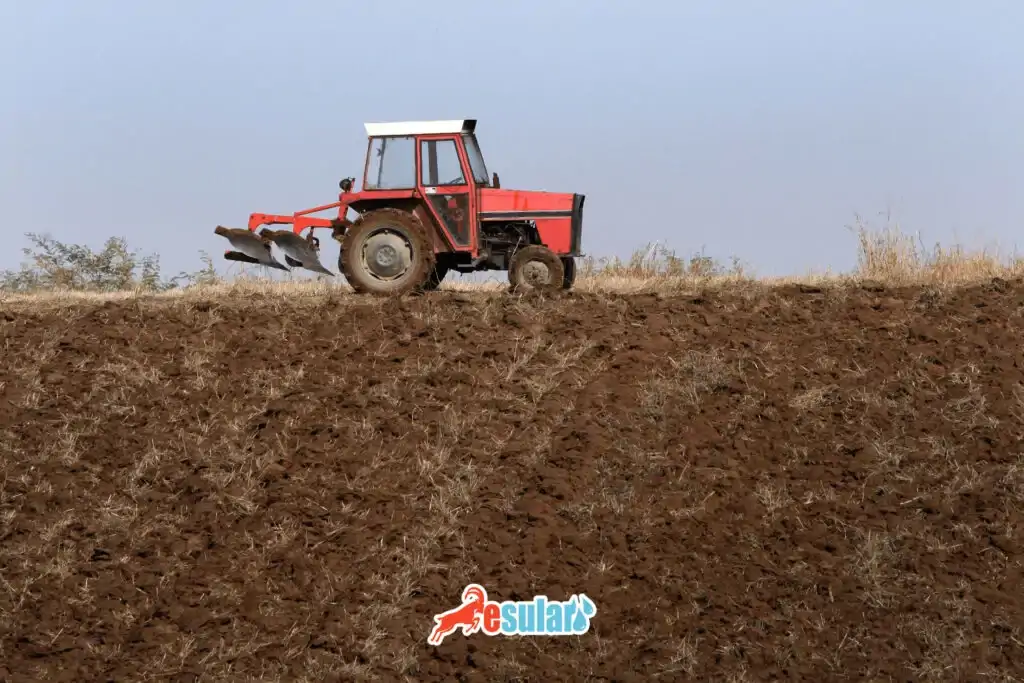
In sunflower cultivation, soil tillage and seedbed preparation may vary depending on the regions. After the harvest of the previous plant (in June or Autumn), the field is tilled with a plow to a depth of (20-25 cm). Especially in wheat planting areas, deep plowing should be done after the wheat harvest and the field should be mixed again with a cultivator in the autumn. The soil, having spent the winter season in this way, is tilled with a cultivator at a depth of 8-10 cm in the spring to preserve soil moisture. By applying fertilizer and herbicide on top, the soil is mixed shallowly again. Then, a roller and a float are passed over to make the field ready for planting.
Sunflower Sowing
Where is sunflower grown?
In our country, sunflower cultivation can be carried out in many regions, including the Thrace, Aegean, and Black Sea regions. Sunflower sowing can be performed in a wide time interval. However, the main crop sowing time is determined by air temperature and soil condition. In this context, main and second crop sunflower sowing can be done from the middle of March until the middle of July. In the Aegean, Southern, and Southeastern Regions, sowing is carried out in March and April; in the Marmara, Central Anatolia, and Black Sea Regions in April; and in the Eastern Anatolia Region in May.
How is sunflower sown?
For a productive sowing, the soil should be sufficiently moist, properly tilled; it should not be excessively fluffy or loose; stubble residues and weeds should be cleared. In this case, the most favorable sowing depth 3-4 cm should be. When the soil tilth is appropriate, 7-8 cm's depth is possible for sowing. However, in sowings deeper than necessary, emergence problems from the soil may occur and irregular emergence may be seen. Although sunflower sowing is generally known as the broadcasting method, on plow furrows, or as the hill method, sowing using a seed drill in a well-prepared field is the most suitable one. With the cotton drills commonly used in our country, 750-1500 g/da, with a well-adjusted precision (pneumatic or mechanical) seed drill, depending on the 1000-grain weight of the seed, much smaller amounts of 250-350 g/da seed are used in sowing. Sowing with a precision seed drill is also important in terms of eliminating thinning labor costs. The row spacing in sowing should be 70 cm in order to allow mechanized soil tillage, and the spacing within the row should be 30-35 cm for oilseed varieties, and 40 cm for snack-type ones. Sowings made denser than necessary can lead to yield losses due to weak plant development and high rates of lodging. In sunflower sowing, care should be taken that the rows are parallel to the wind direction. Sowing depth is determined depending on soil moisture. In a well-prepared seedbed and in early sowings, the sowing depth can be between 5-6 cm. However, in cases where soil tilth is insufficient and especially in late sowings, the sowing depth should be between 6-7.5 cm so that the seed can fall into the moist soil layer.
Sunflower crop rotation
Since the sunflower plant has a dense and healthy green mass, it draws a large amount of nutrients from the soil throughout its growing period. For this reason, a decrease in yield is observed if consecutive planting is done in the same field in every passing period of the year. Sunflower should be taken into crop rotation alternately with plants such as wheat, barley, and rye in dry conditions.
Fertilization in Sunflower
When a seed yield of 120-130 kg per decare and a stalk and head yield of 750 kg are obtained from sunflower, 6.5 kg N, 4.1 kg P2O5, 36.0 kg K2O, and 13.3 kg CaO must be removed from the decare by the plants. It is observed that nitrogen and potassium are taken from the soil the most by the sunflower.
Which fertilizer is applied to sunflower?
- Nitrogen Fertilization: Nitrogen is the most important plant nutrient limiting yield in sunflower. Sunflower takes 66% of the nitrogen it needs in a growing period until the end of the flowering period. For this reason, 50% of the required nitrogen should be applied with sowing, and the other half should be applied when the plants reach a height of 20-25 cm (with the second hoeing). The recommended amount of nitrogen for sunflower is calculated as 1 kg of nitrogen for every targeted 20 kg/da yield. The amount of nitrogen to be applied in dry conditions should be reduced and all of it should be applied with sowing.
- Phosphorus Fertilization: Although the sunflower plant does not have a high phosphorus requirement, 8-10 kg P2O5 per decare should be applied to obtain a certain yield. All of the phosphorus fertilizer should be given before or with sowing.
- Potassium Fertilization: Although the sunflower plant removes a large amount of potassium from the soil, since there is sufficient potassium in our country's soils, applications should be made according to soil analysis results. In potassium deficiency, first yellowing and then brown color and drying may occur on the leaf edges.
How is Sunflower Maintenance Done?
Sunflower seeds germinate and emerge on the soil surface 10-15 days after being sown after suitable conditions are formed. During the growth and development of the plants, necessary maintenance operations should be carried out on time and with the appropriate technique without interruption.
- Hoeing and Weed Control: After the plants emerge on the soil surface, when they reach a height of 10-12 cm (4-6 leaf stage), the first hoeing operation should be done. When the plants reach a height of 25-30 cm, the second hoeing should be performed. The second hoeing is usually applied at the earthing up stage. Since the sunflower plant has a fibrous root system, the hoeing depth should be limited (it should not exceed 10 cm). If top fertilization (N) was applied, it should be applied together with the second hoeing operation. Hoeing should be stopped when the plants reach 40 cm. In sunflower farming, 2-3 hoeings are usually sufficient.
Weeds that pose a problem in sunflower fields can be controlled by hoeing or can be managed using herbicides.
Irrigation in Sunflower
Sunflower cultivation is quite resistant to dry conditions. However, a significant increase in yield can be achieved when irrigation is applied. The period when the sunflower plant needs water the most covers the process from head formation to flowering. Especially the 20-day process before flowering and the 20-day process after flowering is a critical period for sunflower in terms of water consumption. In regions where precipitation is sufficient (600 mm per year and 400 mm spring precipitation), irrigation may generally not be necessary. However, when irrigation is applied, an increase of more than 50% in yield can be obtained. Depending on regional climate and soil conditions, 3-4 irrigations can be applied. The first irrigation is usually carried out at head formation, the second irrigation during the flowering period, and the third irrigation during the milk maturity stage.
Don't forget to check out our article below for the importance of choosing smart irrigation systems in sunflower cultivation!
Sunflower Diseases and Pests
There are various diseases and pests threatening sunflower cultivation. These are:
Diseases:
- Mildew or Downy Mildew
- Rust Disease
- Stem and Head Rot Disease
- Orobanche (Broomrape)
- Diseases such as Wilt disease, Head rot, leaf spot disease, damping-off, phoma, charcoal rot, Virus Diseases, Mycoplasma disease.
Pests:
- Meadow Moth
- Scissors Insect
- Birds
- Snail
- Pests such as Cutworms, Bollworm, Red Spider Mite, Striped Leafworm.
For detailed information about meadow moth in sunflower, you should check out our article below.
When is Sunflower Harvested?
In areas where sunflower is sown, harvest maturity is reached approximately 120 days after sowing, depending on the genetic characteristics of the plant. This period usually coincides with the months of July and August. At the time of harvest, the stalks, leaves, and heads of the plants turn yellow, the yellow flowers on the edges of the heads fall off, at the same time the protective leaves on the edges of the heads take a brown color and the moisture rate in the seeds falls below 25%. For sunflower harvest, normal wheat combine harvesters are generally used. However, the headers of the combine harvesters should be changed and necessary adjustments should be made. During harvest, the speed of the combine harvester should be between 5-8 km/h. The cutting height should be between 30-60 cm. The seeds and heads of the plants to be harvested must be completely dry. The moisture rate in the seed should drop to 12-15% levels. After harvest, the moisture rate in the seeds should be reduced to 9.5-10%, otherwise the seeds may spoil by becoming moldy.