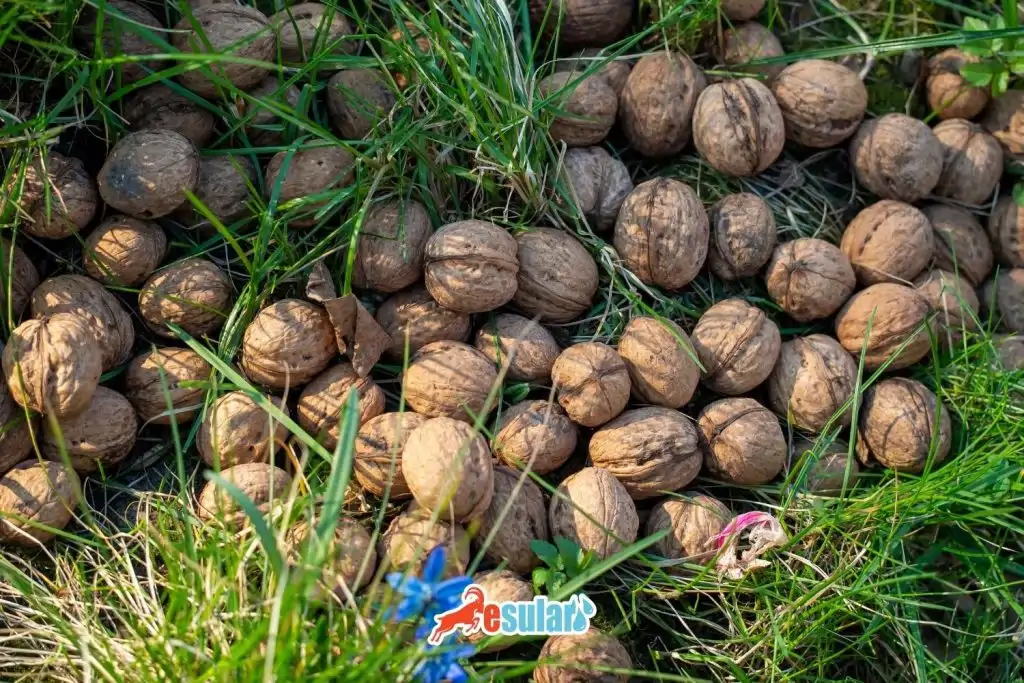
Walnut belongs to the Juglandaceae family. Its Latin name is Juglands Regia. It is a fruit that grows on trees 0-30 in height. It starts flowering in May and ripens around June-July. It has a hard-shelled structure. Inside the shell, there is a fruit rich in Omega 3 fatty acids. It is a fruit with high nutritional value.
It grows in wide areas stretching from the Balkans to the Himalayas, especially in mountain forests and water channels. In your country, although it is possible to grow walnuts in almost every region, it is most frequently and extensively grown in the Aegean, Southeastern Anatolia, and Black Sea regions.
Walnut Irrigation
Walnut irrigation is an important factor for yield increase. Irrigation performed at the correct rate contributes significantly to the yield.
Although Turkey is the homeland of walnut production, the production amount has not yet reached the desired level. The number of fruit-bearing walnut trees, which was 3.5 million in 2000, has reached nearly 9 million today. This number continues to increase every year. Today, more area is allocated to walnut farming every year for production exceeding 200 thousand tons, yet the increase in production is not enough to meet consumption. This means that the interest in walnut cultivation never decreases.
In the Turkish market, there is a high demand especially for the Chandler type walnut, which is thin-shelled, light-colored, and large. The most important criterion is to keep productivity as high as possible. For this, irrigation is of great importance. Especially in modern walnut orchards, the issue of irrigation constitutes one of the indispensables.
We can say that the most important season in walnut irrigation is spring. Especially in the spring months, which is the period when the internal development of the fruits begins and the filling period, it is very important to perform irrigation correctly. The potential state of thirst experienced in this period first stops the development of the fruits, and then significantly affects the yield and quality by slowing down the internal filling of the fruits. Additionally, soil moisture is also very important in this respect. Problems such as internal fruit shriveling, darkening, and spotting inside the fruit occur due to the lack of sufficient moisture during the fruit development period.
Advantages of Drip Irrigation in Walnuts
Irrigation is a very important stage for walnut yield. Performing irrigation correctly is just as important. In a walnut field at the yield stage, it ranges between 1200-1350 mm, although it varies according to the precipitation status of the season. The irrigation period starts with the spring months and continues until the end of harvest. While the method of irrigation can vary as furrow irrigation, sprinkler irrigation, and drip irrigation; the drip irrigation system offers the best solution for walnut yield.
The drip irrigation system, which ensures that the water needed by the plant is given directly to the root zone, allows for irrigation at the right time and in the required amount. One of the biggest advantages is that it allows for uniform irrigation with minimum loss. Another is that it offers the opportunity for fertilization in walnuts alongside irrigation.