Tüm Yazılar
How is Pepper Cultivation Done?
Pepper cultivation is an area that stands out in the agricultural sector and has a large commercial potential. Since pepper is a popular vegetable used in various dishes, it appeals to a wide consumer base. Therefore, pepper cultivation constitutes an important segment of agriculture and provides a profitable source of income for many farmers. The pepper plant can be easily grown in suitable climate and soil conditions and is generally grown in greenhouses or field conditions. High-quality pepper products can be obtained with good care and management, and these products can be successfully marketed in local markets, supermarkets, and other commercial channels. Therefore, pepper cultivation is an important part of agricultural production and offers a wide commercial opportunity to farmers.
What are the Pepper Varieties?
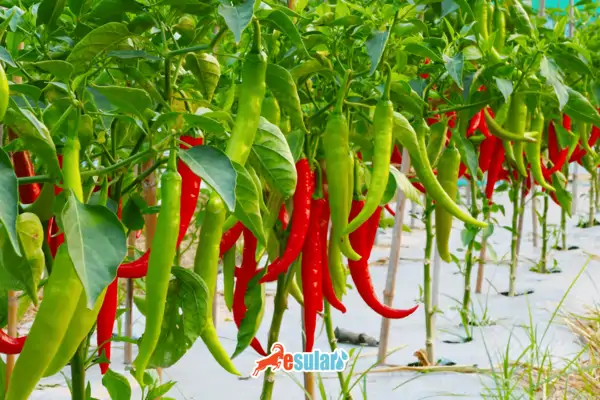
Pepper varieties grown in Turkey are generally classified into five groups according to their shapes and intended uses. First, bell peppers cover a wide range and are produced for use in making stuffed dishes. These varieties generally have thick flesh and a wide body. Pointed peppers are known for their long and thin structures and are grown to be consumed in salads, dishes, and by roasting. Charleston peppers generally attract attention with their large and fleshy structures and are used for stuffing or frying. Peppers suitable for industry are generally grown for industrial processing or canned production. These varieties are generally smaller and less fleshy. Finally, small-fruited and hot peppers are known for their small sizes and intense flavors and are especially preferred for use in pickling or as spices. Each pepper variety is grown to meet different market demands, and diversity is an important element in pepper cultivation.
Climate And Soil Structure In Pepper Cultivation
Pepper is a heat-loving plant. The ideal development temperature for the pepper plant is between 18-26 ºC. It needs higher temperatures, especially in the early periods. The pepper plant shows the best development in areas where soil moisture is high and rich in nutrients. It is easily grown in conditions where the daytime temperature is 21-26 ºC and the nighttime temperature is 15-17 ºC. Also, while fruit set decreases at temperatures above 32 ºC, fertilization does not occur above 38 ºC. Optimum air humidity in pepper cultivation is between 60-70%. In terms of soil preferences, the pepper plant prefers soils that are rich in organic matter, contain various nutrients, are loamy-sandy, and have good water-holding capacity. Heavy-clay or completely sandy soils are not suitable for pepper cultivation. It is ideal for the soil pH to be between 5.6-6.8, and high or low pH values can adversely affect the availability of microelements. Additionally, the pepper plant is sensitive to soil salinity, and the soil EC must be below 1.5 mS.
When And How Is Pepper Seedling Planting Done?
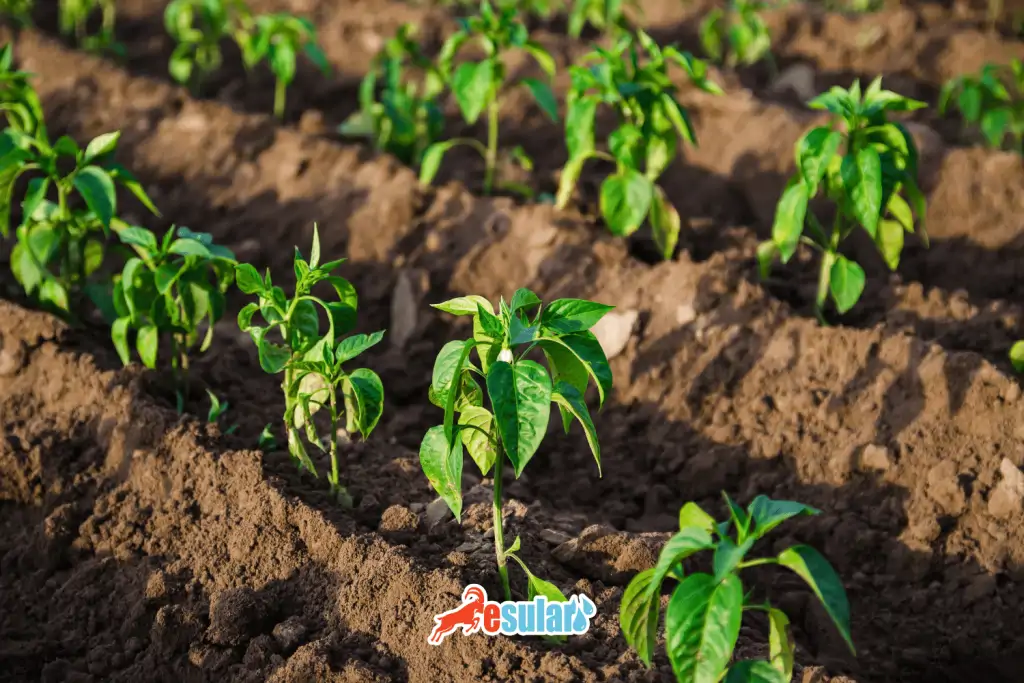
For pepper seedlings to be made suitable for planting, the field must be well-processed at a depth of 20-30 cm and the soil must be crumbled. If the irrigation process is done by the surface method, care should be taken that the water does not contact the plant root collar, because the root collar can be sensitive to diseases. Therefore, it is preferred to provide water in a controlled manner, especially with drip systems. Planting of pepper seedlings should be done on ridges, not on flat areas. For this purpose, after the field is plowed, beds and ridges are created. Beds are generally 80-120 cm wide, and ridges are 40-60 cm wide. 2-4 rows are planted on beds, and single or double rows are planted on ridges. Planting is carried out by leaving a distance of approximately 60-80 cm between seedlings and 30-50 cm on the row. In this way, pepper seedlings are ensured to grow and develop healthily, and a productive harvest is obtained.
Irrigation In Pepper Cultivation
If water is to be given by the surface irrigation method, irrigation should be done little by little and at frequent intervals. If the drip irrigation method is to be used, the amount of water should be measured and chemical fertilizers should be provided to the soil in dissolved form. Since the root system of the pepper is weak, excessive irrigation can cause the leaching of nutrients and root collar blight disease. Sprinkler irrigation can increase pollination and increase the risk of disease. If furrow irrigation is to be done, the size of the furrows should be kept short. If drip irrigation is to be done, one lateral pipe for every two rows or one lateral pipe for each row is sufficient. The intervals of the drippers can vary between 40-50 cm to 75-90 cm depending on the soil type. If drip irrigation is not being done, irrigation paths should be opened between the narrow row spaces in double-row planting some time after planting. If the furrow irrigation method is used, the water should not be raised to the ridges of the beds or the root collar, and the water should be cut off when it reaches half the height of the ridges.
Fertilization In Pepper Cultivation
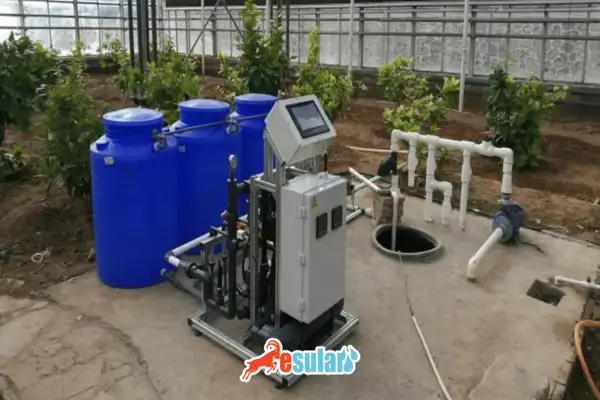
Fertilization in pepper cultivation is an important step for the healthy growth of the plant and to obtain a productive product. A good fertilization program aims to obtain a quality and productive product by providing the nutrients the plant needs in a balanced way. In this process, soil analysis should be performed and the fertilization program should be determined according to these results. It is important to provide other micro and macro elements according to the plant's needs, as well as the basic nutrients nitrogen, phosphorus, and potassium. Fertilizers are generally divided into two groups as organic and chemical. Therefore, the application time, amount, and dosage must be meticulously determined. Applying fertilizers together with irrigation ensures that the plant takes up nutrients more effectively. This method is called the Fertigation method. To get more detailed information on this subject, you can review our article at https://esular.com/gubreleme-ve-sulama-otomasyonu. It is possible to obtain a healthy and productive product with the right fertilization program in pepper cultivation.
What Are The Diseases And Pests Seen In Pepper Cultivation?
Frequently encountered diseases in pepper cultivation include pepper root collar blight, downy mildew, Alternaria, Anthracnose, stem blight, powdery mildew, gray mold, white rot, and fruit rot. These diseases can seriously damage the health and yield of the plant. Additionally, frequently seen pests in peppers include nematodes, cutworms, mole crickets, wireworms, pepper weevil, pepper gall midge, bollworm, aphids, leaf miners, red spider mites, leafhoppers, broad mites, thrips, and beet armyworm. These pests can negatively affect the growth of the plant by feeding on it and cause yield losses. Therefore, early diagnosis of pests and the application of appropriate control methods are important. Integrated pest management methods should be used in the fight against plant diseases and pests, and chemical control should be considered as a last resort. To get more detailed information, you can visit our article at https://esular.com/biber-hastaliklari.
Harvest In Pepper Cultivation
Sowing of peppers in spring is generally carried out in March or April and the harvest process usually starts at the end of June and the beginning of July. Harvest can continue until the middle of October depending on the temperature and the variety grown. Since the pepper plant is quite productive, an average of 9 to 15 harvests can be made in one season. Harvesting is generally carried out at 1-week intervals and continues with regular harvests made by considering the ripening process of the peppers. In this process, harvesting the peppers when they reach the appropriate maturity is important in terms of yield and quality.
How Much Pepper is Produced from 1 Decare of Field?
The yield of pepper depends on many factors, so the amount of pepper that can be obtained from one decare of field may vary. However, in general, the yield in pepper cultivation can vary between 25 to 50 tons per hectare. Therefore, the amount of pepper to be obtained in one decare can be calculated according to this yield range. For example, on average, approximately 10 to 20 tons of pepper can be obtained from one decare of field. However, these figures may vary depending on climate, soil conditions, cultivation methods, and various other factors.
What Is Done To Increase Pepper Yield?
There are several important practices to increase the productivity of pepper. One of these is branch pruning. Branch pruning, which is an effective method to increase yield and quality especially in fleshy peppers, ensures that the plant is stronger and gives higher quality, abundant fruit. This practice is especially recommended for pepper varieties such as California, capia, Hungarian, charleston, and bell peppers. Branch pruning ensures that nutrients and energy are focused on the fruits by cleaning unnecessary shoots and branches of the plant, thus helping to obtain larger, healthy, and delicious peppers.
Kategoriler
Etiketler